Hunza Valley to Skardu is one of the more demanding but rewarding overland routes in Gilgit-Baltistan, connecting the orchard-lined valley of Hunza with the high desert and lake country around Skardu. The drive runs south from Hunza along the Karakoram Highway to Gilgit, then east onto the Jaglot-Skardu Road, following the Indus River through a landscape that shifts from green terraced fields to bare rock gorges and open desert basin. It covers roughly 300 kilometers and typically takes a full day of driving, which is why most travelers treat it as a 2 to 3 day transfer with stops rather than a same-day dash. This guide is for tourists, families, couples, and small groups who are already planning time in both Hunza and Skardu and want a clear picture of the distance, the road, what to see along the way, and how to plan the trip, whether you are self-driving or booking transport through Ilyas Skardu Travels and Tours.
Hunza Valley to Skardu Tour Overview
The Hunza Valley to Skardu route does not run in a straight line. From Karimabad, the road first drops south along the Karakoram Highway to Gilgit, Gilgit-Baltistan’s regional hub, a journey of roughly 100 kilometers that takes about 2 to 3 hours on a generally well-maintained road. From Gilgit, the route continues a short distance further to Jaglot, a junction town where the Karakoram Highway continues south toward Chilas and the Jaglot-Skardu Road branches east. This second leg, sometimes called the JSR, runs for roughly 160 to 180 kilometers along the Indus River to Skardu, and is the more physically demanding stretch: a mountain road cut into steep valley walls, following the river through gorges and past small settlements, with periodic stretches that have been affected by landslides in past seasons.
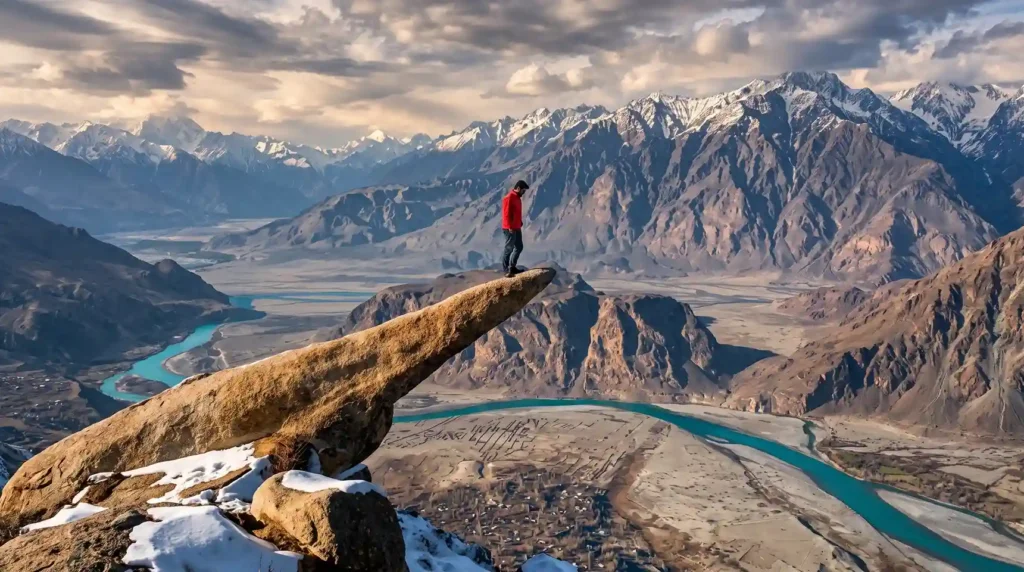
Geographically, the trip moves between two distinct landscapes. Hunza sits at around 2,400 meters, a narrow, terraced valley of apricot and cherry orchards below Rakaposhi and Ultar Sar. Skardu, by contrast, opens into a wide, flat, semi-arid basin at a similar altitude but with a completely different character, ringed by bare brown mountains and dotted with lakes formed by glacial meltwater. The route between them, particularly the section along the Indus after Jaglot, gives travelers a good sense of how much the terrain changes across Gilgit-Baltistan within a single day’s drive. This makes it a genuinely scenic road trip in its own right rather than purely a transfer, and it suits travelers who enjoy watching the landscape change from a vehicle window, photographers who want mountain and river views along the way, and families or groups who are comfortable with a long but non-strenuous driving day. It is not a trekking route, and no walking beyond short stops is required.
Quick Tour Facts
| Detail | Information |
| Route | Hunza Valley to Skardu |
| Approximate distance | Around 300 km (Karimabad to Skardu, via Gilgit and the Jaglot-Skardu Road) |
| Tour duration | 2 to 3 days |
| Tour type | Overland road trip and sightseeing route |
| Departure point | Hunza Valley to Skardu (Karimabad) |
| Return point | Skardu |
| Transport | Private car, SUV, coaster, or tour vehicle |
| Price | Contact Ilyas Skardu Travels and Tours for current pricing |
| Accommodation | Hotels and guesthouses in Hunza, Gilgit, and Skardu |
| Difficulty level | Easy to moderate (long driving day, no trekking required) |
| Best time to travel | April to October |
| Minimum travelers | 1 |
Detailed Itinerary
Day 1: Hunza to Gilgit to Jaglot-Skardu Road
Departure begins in Karimabad or wherever you are based in Hunza. The drive south on the Karakoram Highway to Gilgit takes roughly 2 to 3 hours under normal conditions, with a stop possible at the Rakaposhi View Point for photographs of the peak’s near-vertical north face. From Gilgit, the route continues to Jaglot, where it leaves the Karakoram Highway and joins the Jaglot-Skardu Road. Depending on your start time and how many stops you make, many travelers break the journey here, spending the first night in Gilgit or continuing partway along the JSR before stopping, since covering the entire distance from Hunza to Skardu in a single day is possible but long.
Day 2: Jaglot-Skardu Road to Skardu
This is the core driving day. The Jaglot-Skardu Road covers roughly 160 to 180 kilometers along the Indus River. Multiple traveler accounts describe this leg taking approximately 3 to 4 hours of pure driving time in good conditions without stops, though total elapsed time is usually longer once fuel stops, photo breaks, and the halfway meal stop at Astak Nala are included; some tour itineraries budget closer to 6 to 7 hours for the Gilgit-to-Skardu leg overall. The road follows a steep river gorge for much of its length and has experienced landslide-related closures in past seasons, so this is not a stretch to treat as guaranteed to run on schedule, particularly outside the core April-to-October travel window. Arrival in Skardu is typically by late afternoon or early evening, with time to check into your hotel and, road conditions permitting, a short visit to a nearby lake such as Upper Kachura the same evening.
Day 3 (optional): Skardu Sightseeing
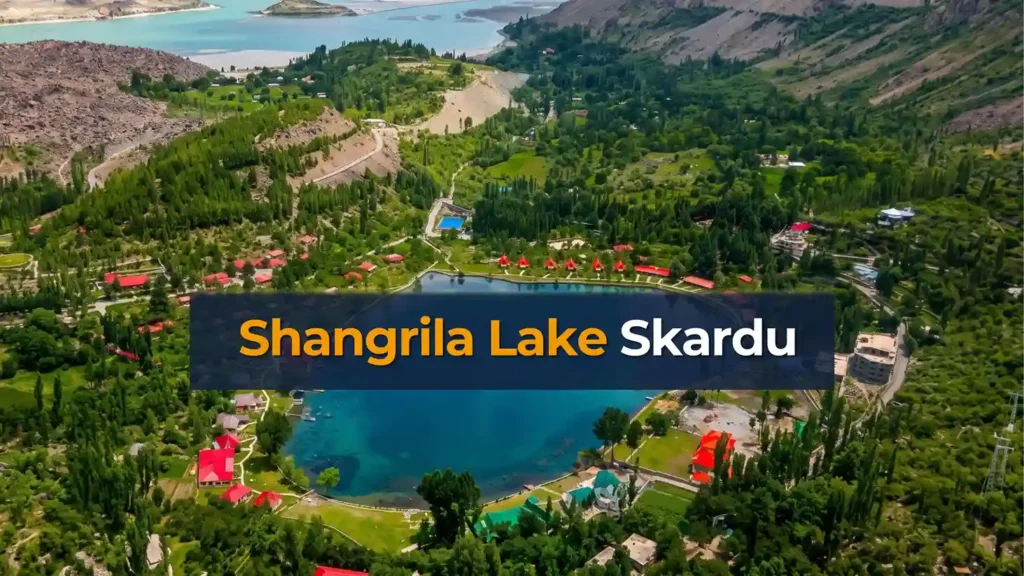
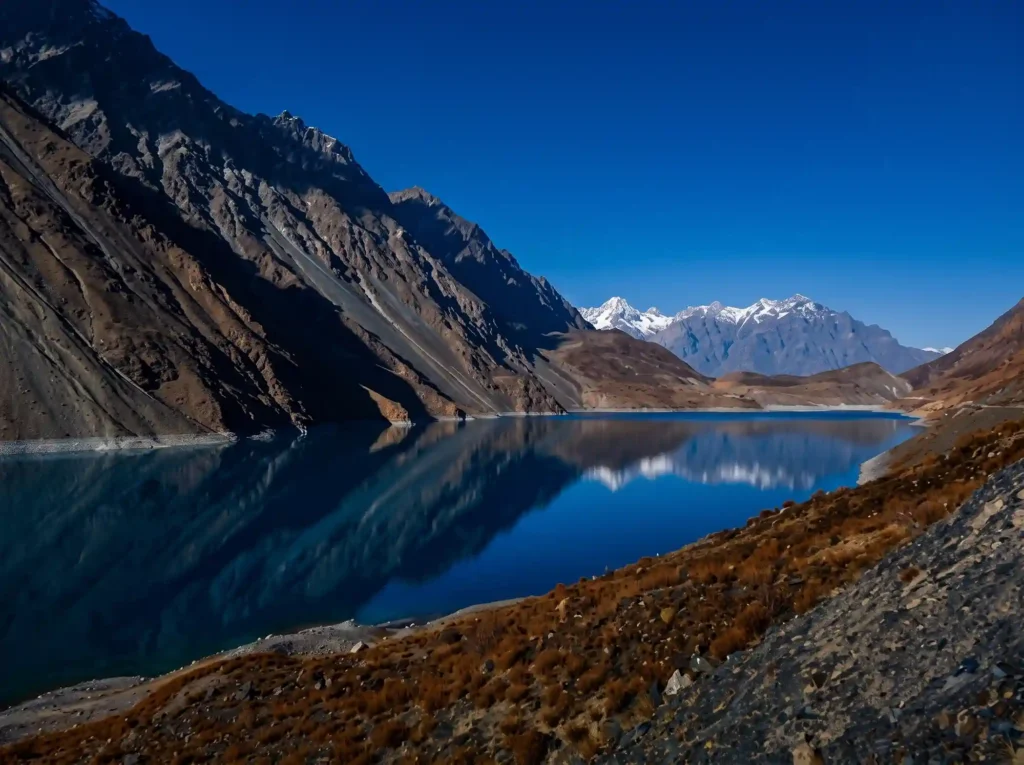
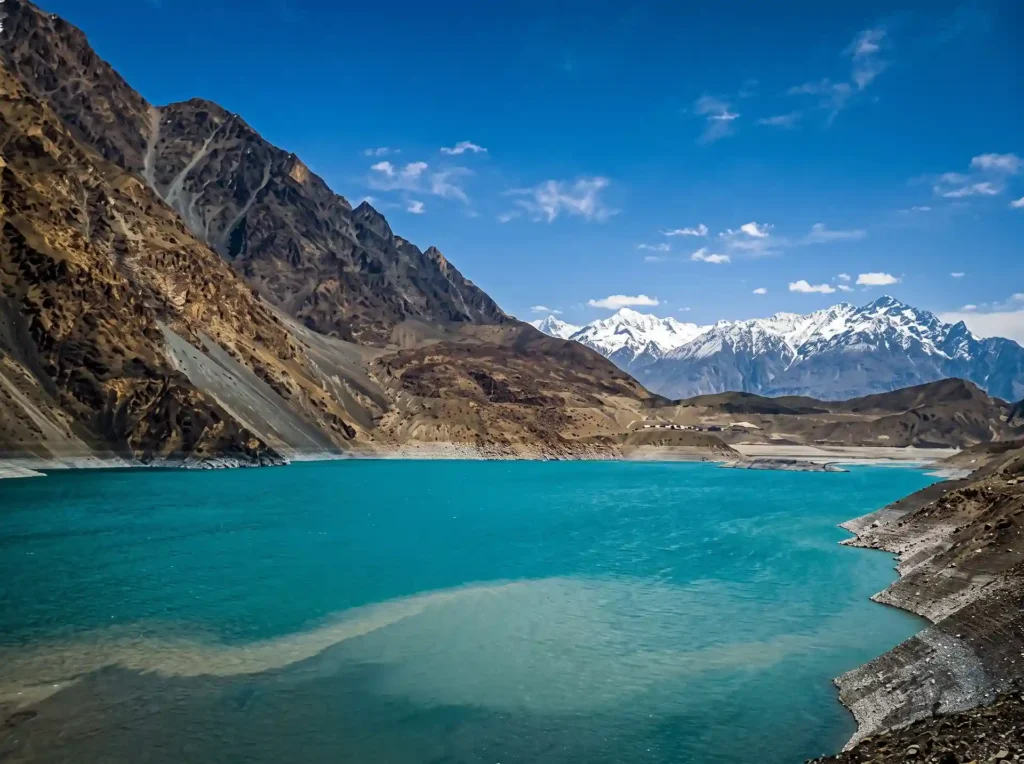
Many travelers use a third day in Skardu itself rather than treating the route as a straight transfer, visiting Shangrila (Lower Kachura) Lake, Upper Kachura Lake, and Satpara Lake, each a short drive from Skardu town. This extends the trip from a point-to-point transfer into a fuller 2 to 3 day route and sightseeing package, which is how Ilyas Skardu Travels and Tours typically structures this itinerary for clients who have not been to Skardu before.
Exact timing throughout this itinerary depends on group pace, weather, and current road conditions on the Jaglot-Skardu Road, so treat the schedule above as a realistic framework rather than a fixed timetable, and build in a buffer day where possible.
Recommended Tourist Places in Skardu for Every Traveler
Explore our recommended Skardu tour packages, carefully designed for solo travelers, families, couples, and groups. Choose from flexible Budget, Standard, and Luxury options to match your travel style and budget.
| Tour(s) | Mode of Transport | Budget | Standard | Luxury |
|---|---|---|---|---|
| Skardu Fort (Kharpocho Fort): History, Location and Visitor Guide | By Road | PKR 90,500 | PKR 115,000 | PKR 194,000 |
| Autumn Tour Packages Pakistan | By Air | PKR 100,500 | PKR 140,500 | PKR 220,000 |
| Shangrila Lake Skardu: Location, Distance, and How to Visit | By Road | PKR 9,500 | PKR 12,500 | PKR 15,000 |
| Baltit Fort Hunza: Karimabad’s Historic Landmark | By Road | PKR 20,000 | PKR 30,000 | PKR 40,000 |
| Organic Village Skardu Tour: Walk to Nangsoq | By Air | PKR 115,000 | PKR 136,000 | PKR 25,000 |
| Attabad Lake Hunza: Complete Travel Guide | By Air | PKR 130,000 | PKR 150,000 | PKR 235,000 |
| Skardu Autumn Tour Package 2026: Golden Valleys, Lakes and Forts | By Road | PKR 168,000 | PKR 250,000 | PKR 390,000 |
Best Time to Visit For Hunza Valley to Skardu
The general travel season for both Hunza and Skardu, and for the road connecting them, runs from April to October, when temperatures are manageable and the main routes are open. Conditions still differ meaningfully within that window:
- Spring (April–May): Hunza’s orchards are in blossom during this period, and daytime temperatures in both valleys are mild. Some higher sections of connecting roads may still carry residual snow or be affected by early-season meltwater, so it is worth checking current conditions close to departure.
- Summer (June–August): The busiest and warmest months for both valleys, with reliable road access and the highest number of vehicles on the Karakoram Highway and the Jaglot-Skardu Road. This is also when landslide risk on the JSR is discussed most often in traveler reports, tied to glacial melt and occasional monsoon-related rain, so it remains sensible to check current road status before setting out even in peak season.
- Autumn (September–October): Widely regarded as one of the more comfortable windows for this route, with clearer skies, cooler temperatures, and the poplar and orchard trees in Hunza turning color. Traffic on both road sections is generally lighter than in summer.
- Winter (November–March): Travel between Hunza Valley to Skardu becomes considerably harder. Temperatures drop well below freezing in both valleys, and mountain roads, including sections of the Karakoram Highway and the Jaglot-Skardu Road, are more prone to snow and temporary closures. This route is not recommended as a standard tourist itinerary outside the April-to-October season, and travelers with fixed dates in winter should build in significant schedule flexibility.
Because both the Karakoram Highway and the Jaglot-Skardu Road can be affected by landslides or temporary closures at short notice, even within the main season, it is worth checking current road status with local authorities or your tour operator shortly before departure rather than relying only on general seasonal guidance.
Cost, Inclusions, and Exclusions
Pricing for the Hunza Valley to Skardu route depends on vehicle type, group size, number of days, and whether the trip includes Skardu sightseeing beyond the transfer itself. Contact Ilyas Skardu Travels and Tours directly for current pricing, since rates vary with fuel costs, season, and vehicle availability.
Because this route commonly spans 2 to 3 days, confirm with your operator in advance whether an overnight stop in Gilgit is included in the plan or arranged separately, since this affects both the total cost and how the two driving days are split.
Getting There / Transportation
Route structure: The practical route from Hunza Valley to Skardu runs Karimabad to Gilgit on the Karakoram Highway (roughly 100 km, about 2 to 3 hours), then Gilgit to Jaglot on the same highway (a short additional stretch), then Jaglot to Skardu on the Jaglot-Skardu Road (roughly 160 to 180 km). Total distance from Karimabad to Skardu is approximately 300 kilometers, and total driving time commonly runs 6 to 8 hours excluding stops, though this can extend significantly if there are landslides, roadworks, or slow-moving traffic on the JSR.
Road conditions: The Karakoram Highway between Hunza and Gilgit is generally in good, paved condition. The Jaglot-Skardu Road was substantially widened and upgraded in recent years, cutting what was historically an 8 to 10-hour journey from Gilgit to Skardu down toward 4 hours under ideal conditions, according to government reporting on the road upgrade; real-world traveler accounts commonly report 3 to 4 hours of pure driving time for the Jaglot-to-Skardu stretch in good conditions, with total journey time from Gilgit often closer to 6 to 7 hours once stops are included. The road has experienced landslide-related closures at various points in past seasons, particularly during and after heavy rain or snowmelt, and clearance by the Frontier Works Organization can take anywhere from several hours to a day or two depending on the scale of the blockage. Checking current road status before departure, including through local district administration updates where available, is genuinely useful rather than a formality on this route.
Transportation options: A private car is adequate for the Karakoram Highway section and the paved parts of the Jaglot-Skardu Road under normal conditions, though an SUV or 4×4 offers more comfort and safety margin on the JSR’s mountain sections. Larger groups often use a coaster or minibus. There is no passenger rail service anywhere in Gilgit-Baltistan, and while shared vans and jeeps operate along parts of this corridor, most tourists arrange a private vehicle with a driver for this specific route given the length of the drive and the value of flexible stops.
Difficulty and Fitness Requirements
This route is easy to moderate. No trekking or physical exertion is required; the demand is on time spent traveling rather than physical effort. The main practical consideration is the length of the driving day on the Jaglot-Skardu Road, which runs through a steep river gorge on a winding mountain road, and can be tiring for travelers prone to motion sickness or those with back or mobility issues who find long stretches in a vehicle uncomfortable. Families traveling with young children, older travelers, or anyone with health conditions affected by long winding drives should plan for the 2 to 3-day version of this route with an overnight break in Gilgit, rather than attempting to cover Hunza Valley to Skardu in a single long day.
What to Bring
- Motion sickness medication if you are prone to it, given the winding sections of the Jaglot-Skardu Road
- A light jacket or fleece, since both Hunza and Skardu stay cool in the mornings and evenings even in summer due to altitude
- Sunglasses and sunscreen for the exposed, high-UV mountain environment
- A reusable water bottle and some snacks, since roadside food options along the JSR are limited mainly to Astak Nala and a handful of small settlements
- A camera or phone with spare storage and a charged battery or power bank, since this route offers extended photography opportunities without reliable charging points along the way
- Cash in Pakistani rupees, since card payment is unreliable outside main towns and fuel stations along this corridor may be cash-only
- A printed or downloaded offline map, since mobile signal is inconsistent along parts of the Jaglot-Skardu Road
Important Travel Information For Hunza Valley To Skardu
Permits and documentation: No special trekking or expedition permit is required for the Hunza Valley to Skardu road journey itself, since this is a standard tourist route rather than a mountaineering approach. Foreign nationals should confirm current Pakistan visa requirements before travel, since Gilgit-Baltistan’s entry rules for foreign tourists have changed over the years; check current guidance with the Pakistani High Commission or Embassy in your home country, or with the Gilgit-Baltistan tourism department, ahead of your trip. Domestic travelers need a valid CNIC.
Road conditions and seasonal access: As described above, the Jaglot-Skardu Road is the more variable section of this route and can be affected by landslides, particularly in summer. Build a buffer day into any Hunza Valley to Skardu itinerary where your onward travel plans allow it, and avoid scheduling this drive for the same day as a flight or other fixed connection in Skardu.
Connectivity: Mobile coverage is generally reliable in Hunza, Gilgit, and Skardu town, but becomes patchy along the more remote stretches of the Jaglot-Skardu Road. Do not assume constant signal for navigation or emergency contact during the drive itself.
Safety: This is a mountain road with drop-offs, narrow sections, and occasional oncoming truck traffic, so a driver experienced with the route is worth prioritizing over vehicle luxury. If self-driving, avoid night driving on the Jaglot-Skardu Road given the terrain and limited lighting.
Photography restrictions: General tourist photography along the route is normally unrestricted, though travelers should avoid photographing military checkpoints or installations, which appear periodically along Gilgit-Baltistan’s highways, in line with standard local guidance.
Insurance considerations: Given the remoteness of parts of this route and its dependence on road conditions that can change quickly, travel insurance covering trip delay, medical treatment, and emergency evacuation is worth arranging before departure.
Booking Information
To book a Hunza Valley to Skardu transfer or tour, contact Ilyas Skardu Travels and Tours directly. When inquiring, provide your preferred travel dates, group size, whether you want the route covered in one long day or split across two with an overnight stop in Gilgit, and whether you would like Skardu-area sightseeing (Shangrila Lake, Upper Kachura Lake, Satpara Lake) added on as a third day. Pricing depends on vehicle type, group size, and trip length, and current rates, vehicle availability, and any seasonal road advisories should be confirmed directly with the team before your travel dates. The itinerary can be customized around your onward travel plans, whether that means connecting with a Skardu flight, joining a longer Baltistan tour, or building in extra time at any of the viewpoints along the way.
Related Tours
- Hunza Valley Tours
- Skardu Tours
- Multi-Day Tour Packages
- Car Rental in Gilgit-Baltistan
- Hotel Booking in Hunza, Gilgit, and Skardu
- Customized Tours
FAQs
How far is it from Hunza Valley to Skardu? The road distance from Karimabad in Hunza to Skardu is approximately 300 kilometers, covering roughly 100 km from Karimabad to Gilgit and a further 160 to 180 km from Jaglot to Skardu on the Jaglot-Skardu Road.
How long does the Hunza Valley to Skardu drive take? Total driving time commonly runs 6 to 8 hours excluding stops, though many travelers split this across two days with an overnight stay in Gilgit rather than driving it in a single stretch. Road conditions on the Jaglot-Skardu Road can extend this considerably if there are landslides or temporary closures.
Is the road from Hunza Valley to Skardu safe and well maintained? The Karakoram Highway section between Hunza and Gilgit is generally in good, paved condition. The Jaglot-Skardu Road has been significantly upgraded in recent years but remains a mountain road through a steep river gorge, and has experienced landslide-related closures in past seasons, so checking current conditions before departure is recommended.
What is the best time of year to travel this route? April through October is the general travel season for both valleys and the road connecting them. Late spring and early autumn tend to offer the most comfortable temperatures and generally stable road conditions, while summer is busier and can see occasional landslide-related delays on the Jaglot-Skardu Road.
Can this route be done in a private car, or do I need a 4×4? A private car can manage this route under normal conditions, though an SUV or 4×4 provides more comfort and a greater safety margin on the mountain sections of the Jaglot-Skardu Road, particularly if conditions are wet or road repairs are underway.
Is this route suitable for families with children or older travelers? Yes, with planning. No walking or physical exertion is required, but the driving day is long, so families and older travelers, or anyone uncomfortable with winding mountain roads, are better served by splitting the trip across two or three days rather than attempting it in one long push.
What is Astak Nala, and why does it come up in trip planning? Astak Nala is a stream crossing roughly at the halfway point of the Jaglot-Skardu Road, known locally as a reliable stop for a simple roadside meal and a break partway through the drive.
Can this trip be combined with Skardu sightseeing or a longer Gilgit-Baltistan tour? Yes. Ilyas Skardu Travels and Tours commonly extends this route into a 2 to 3-day itinerary that includes Skardu-area sightseeing such as Shangrila Lake, Upper Kachura Lake, and Satpara Lake, or connects it into a longer multi-day Hunza and Baltistan tour package.
Tour Highlights
- Karakoram Highway driving from Hunza to Gilgit, passing below Rakaposhi (7,788 m) with photo stops at the Rakaposhi View Point near Ghulmet or Nagar
- The confluence point near Jaglot where the Gilgit and Indus rivers meet, close to where the Karakoram, Himalaya, and Hindu Kush ranges converge
- Distant views of Nanga Parbat (8,126 m) from points along the Indus Valley near Jaglot and Bunji, with the dedicated Nanga Parbat viewpoint near Raikot Bridge lying a short detour south toward Chilas
- A halfway stop at Astak Nala on the Jaglot-Skardu Road, a stream crossing known locally for simple roadside meals and a break from driving
- The Jaglot-Skardu Road itself, a scenic stretch following the Indus through steep-sided gorges that many travelers rate as equal to, or more dramatic than, the Karakoram Highway
- Arrival into the Skardu basin, with Shangrila (Lower Kachura) Lake, Upper Kachura Lake, and Satpara Lake all reachable as short side trips once you arrive
- A genuine sense of Gilgit-Baltistan's geographic range, from Hunza's green terraces to Skardu's cold desert, covered in a single overland journey
Included
- Private transportation for the full Hunza-to-Skardu route
- Driver for the duration of the trip
- Pickup in Hunza Valley and drop-off in Skardu
- Sightseeing stops along the route as outlined in the itinerary
Excluded
- Personal expenses
- Meals, including the stop at Astak Nala or any other roadside meal
- Accommodation in Gilgit or Skardu, unless separately arranged and confirmed as included
Gallery