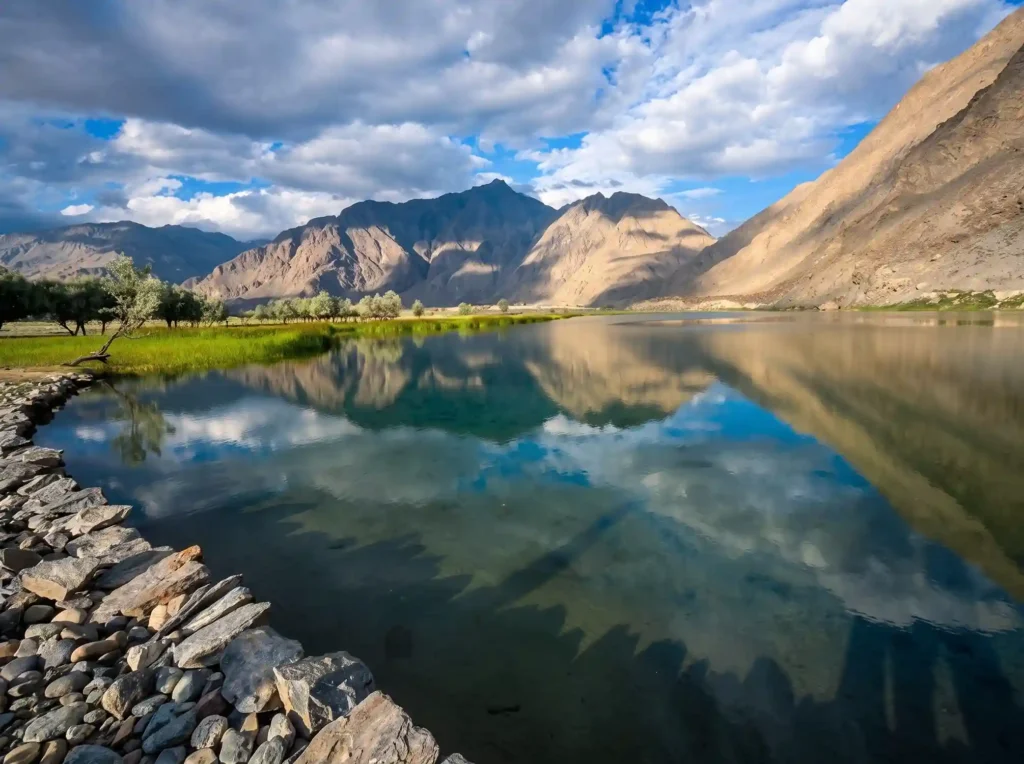
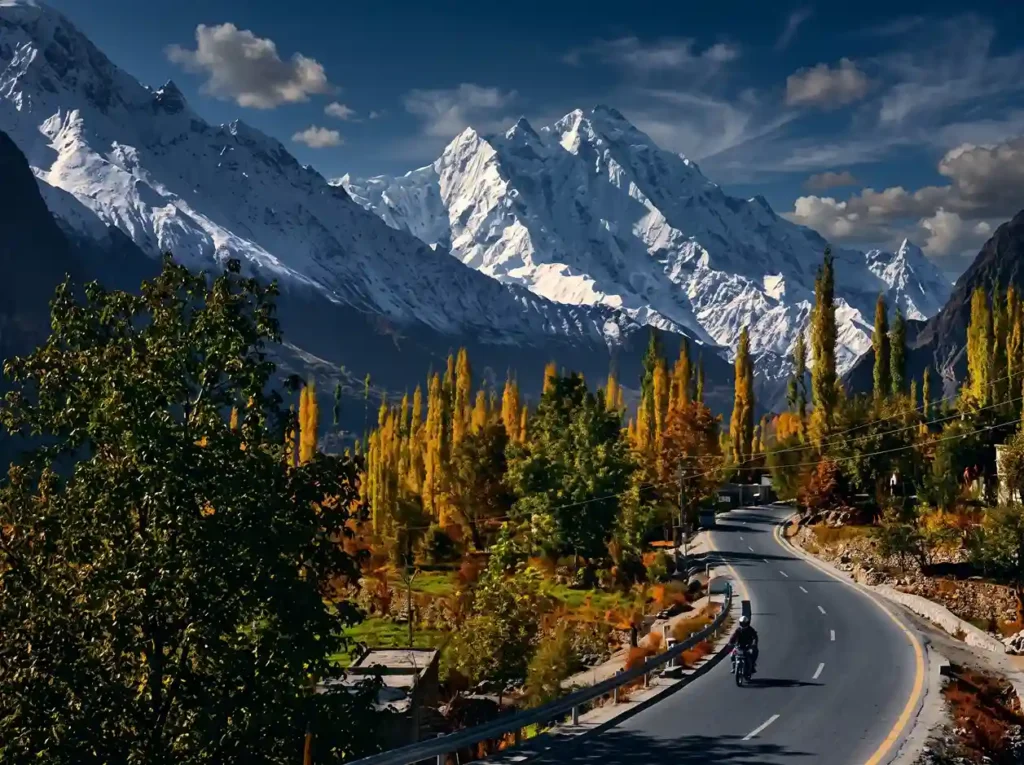
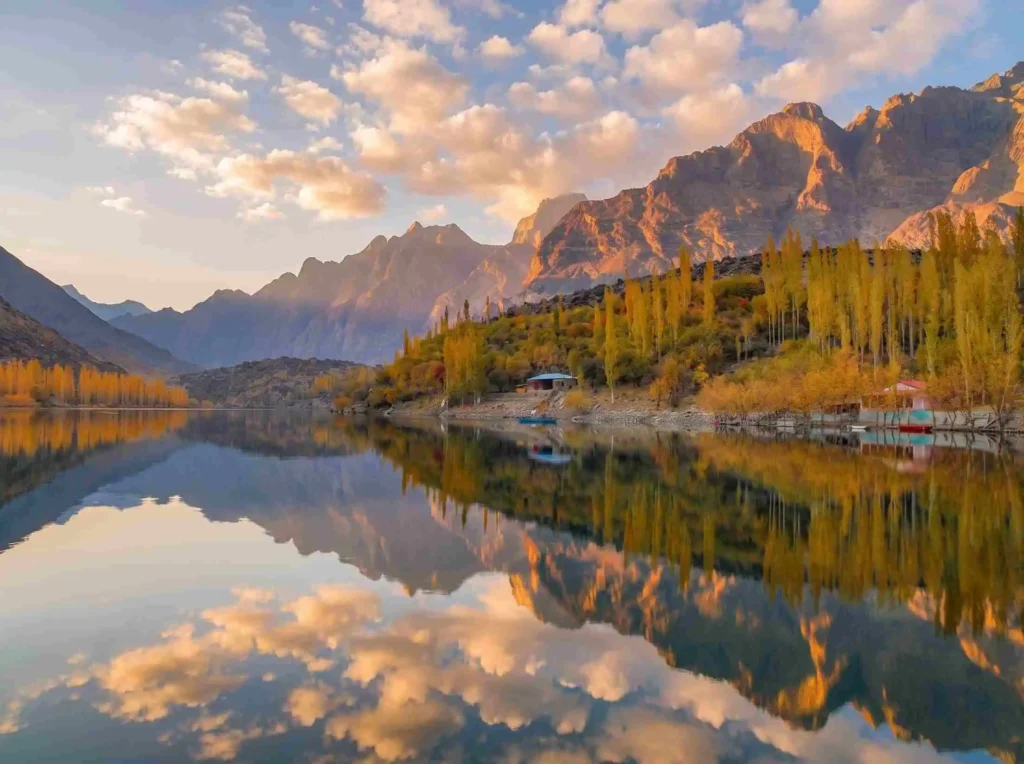
Autumn in Hunza is the season locals themselves tend to bring up first when you ask about the best time to visit. Somewhere between late September and early November, the poplar and apricot trees that line the valley floor and terrace the hillsides turn from green to gold, orange, and deep rust, against a backdrop of Karakoram peaks that are already collecting their first snow. It happens fast, it happens on a schedule that shifts a little every year, and it does not happen everywhere in the valley at the same time. That last part is the piece shortest blog posts skip, and it is the difference between arriving to a valley in full color and arriving a week too early or too late.
This guide covers what actually changes in Hunza during autumn: the weather, the villages and viewpoints where the color shows up first and stays longest, a realistic multi-day plan, and the practical details, permits, connectivity, cash, and packing, that make the difference between a smooth trip and a frustrating one.
Why Autumn Changes the Character of the Valley
Hunza in summer is green and busy. Hunza in spring is blossom season, all pink and white against bare branches. Autumn does something different: it slows the valley down and lights it up at the same time. The apricot orchards that produce Hunza’s famous dried apricots turn first, usually a shade of deep orange, followed by the poplar trees that line the roads and irrigation channels in ribbons of yellow. Walnut and mulberry trees join in a little later, often holding a duller bronze rather than the brighter poplar gold. Against the grey rock and the first dusting of snow on Rakaposhi, Ultar Sar, and Diran, the contrast is sharper than in any other season, which is exactly why so many photographers plan their one trip to Hunza around these weeks specifically.
There is a practical side to this too. Daytime skies in autumn tend to be clearer than the hazier, sometimes monsoon-affected summer months, which means better mountain visibility on the drive in and at every viewpoint along the way. Hotel demand and road traffic are both lower than in July and August, though not as low as most people expect, since October has become one of the valley’s busiest months precisely because word has spread about the colors.
Quick Tour Facts
| Detail | Information |
| Destination | Hunza Valley, Gilgit-Baltistan, Pakistan |
| Best for | Photographers, families, couples, first-time and budget travelers |
| Recommended duration | 4 to 6 days in Hunza (extendable if combined with Skardu) |
| Tour type | Sightseeing, scenic, cultural, and photography |
| Departure/return points | Islamabad, Gilgit, or Skardu, by prior arrangement |
| Transport | Private car, SUV, or coaster depending on group size |
| Accommodation | Hotels and guesthouses in Karimabad, Duikar, or Gulmit |
| Difficulty | Easy to moderate |
| Best time for autumn colors | Roughly early October to early November; peak usually mid-October |
| Minimum travelers | Flexible; solo travelers and small groups both accommodated |
| Price | Varies by group size, route, and accommodation. Contact us for a current quote. |
When Do the Colors Actually Peak? Best Time to Visit Autumn in Hunza
If there is one thing worth getting right before booking, it is the timing. Reports on this vary more than you would expect for something as visible as leaf color, and the reason is straightforward once you understand the geography. Autumn arrives in Hunza from the top down. The cooler, higher villages of upper Hunza, places like Gulmit and Passu in the Gojal region, tend to change color before the lower town of Karimabad. A trip planned around a single fixed date can hit peak color in one part of the valley and still-green trees in another, just twenty or thirty minutes down the road.
With that caveat in place, here is the general pattern most seasoned Hunza operators and repeat visitors agree on:
- Late September to the first days of October: Transition period. Some poplar and apricot trees are turning, others are still green, which gives a layered, gradient look that many photographers actually prefer to full peak color.
- First to third week of October: Widely regarded as the peak window for Karimabad and the central valley. This is when the gold and orange tones are most widespread and most vivid, and when hotel rooms in Karimabad book up fastest.
- Late October into early November: Colors begin to fade and drop at lower elevations, giving the valley a more rustic, thinned-outlook. Upper Hunza villages may already be past peak by this point, while some sheltered lower spots hold on a little longer.
If your travel dates are fixed and cannot move, it is worth telling your operator the exact week so the itinerary can lean toward whichever part of the valley is more likely to be at its best. Foliage timing shifts by a week or two from year to year depending on that season’s temperatures and rainfall, so treat the dates above as a strong general pattern rather than a fixed calendar, and confirm current conditions with us closer to your travel dates.
Hunza Weather in October and November
Weather is the other variable that catches first-time autumn travelers off guard, mainly because the daytime and nighttime numbers are so different from each other.
| Period | Typical daytime | Typical overnight | General conditions |
| Early to mid-October | Roughly 15°C to 20°C | Often near or just above freezing | Mostly clear and dry; strong sun at midday, sharp temperature drop after sunset |
| Late October | Roughly 12°C to 18°C | Can fall below 0°C, especially at higher settlements | Clear skies common; noticeably colder mornings |
| November | Roughly 8°C to 12°C | Frequently below freezing | Cooler and shorter days; colors largely faded by mid-month |
These figures are typical ranges rather than a forecast, since actual conditions shift year to year and can vary noticeably between the valley floor around Karimabad (roughly 2,400 to 2,600 meters) and higher points like Duikar or Passu. Pack for both ends of the day: a comfortable layer for a sunny midday walk through Karimabad’s bazaar, and a proper warm jacket for a sunrise trip to Eagle’s Nest a few hours later. Check a short-range forecast in the days before you travel rather than relying on seasonal averages alone, particularly if a sunrise or sunset viewpoint is on your list, since those depend on clear conditions to be worth the early start.
Best Places to See Autumn in Hunza Colors
Not every spot in Hunza offers the same kind of autumn view, and building a trip around a handful of the right locations matters more than trying to cover the whole valley in a rush.
Karimabad
Karimabad is Hunza’s main town and the natural base for an autumn trip, both for its own orchards and for its position at the center of everything else on this list. The lanes below Baltit Fort, lined with old stone houses and terraced fruit trees, are where the autumn color shows up most conveniently, often within a short walk of wherever you are staying. Karimabad’s bazaar also stays busier and better supplied in autumn than in the shoulder months on either side, which matters if you want a proper meal or a coffee between stops rather than planning around limited village options.
Baltit Fort
Baltit Fort sits on a rocky spur directly above Karimabad and was the seat of Hunza’s ruling Mirs for centuries before the Aga Khan Trust for Culture restored it into the museum it is today. Beyond the fort’s own history, the walk up gives one of the better framed views in the valley: old town rooftops and orchard color in the foreground, Rakaposhi and Ultar Sar behind. Entry ticket prices for both locals and foreign visitors have been reported differently across sources and appear to change from season to season, so confirm the current rate and opening hours locally or with us before your visit rather than relying on an old figure.
Altit Fort and Altit Village
A short drive or walk from Karimabad, Altit Fort is older than Baltit and considerably quieter, since most day-trippers stop at Baltit and skip the extra distance. The path to Altit runs through Altit Village itself, past old wooden balconies and water channels rather than a straightforward car park approach, which makes the walk part of the experience rather than a formality before the ticket booth. As with Baltit, treat any entry fee figure you find online as approximate and confirm it locally.
Duikar and Eagle’s Nest
Duikar, the highest village above Karimabad, is home to the viewpoint almost everyone calls Eagle’s Nest, and it is the single best spot in the valley for a wide mountain panorama. From roughly 2,900 to 3,100 meters, depending on exactly where you stand, the view takes in Rakaposhi, Ultar Sar, Diran, and the wider Karakoram range in one sweep, with the valley and its autumn color laid out below. The road up from Karimabad is steep, rough in sections, and normally done by 4×4 jeep rather than a hike, taking roughly 20 to 45 minutes depending on the vehicle and road conditions on the day. Sunrise is the classic time to go, when the low light hits the peaks first, but it means a cold, early start. Some travelers prefer sunset instead for a gentler wake-up call, accepting slightly flatter light in exchange. Either way, dress far warmer than you think you need to; temperatures at this elevation drop quickly once the sun is low.
Attabad Lake
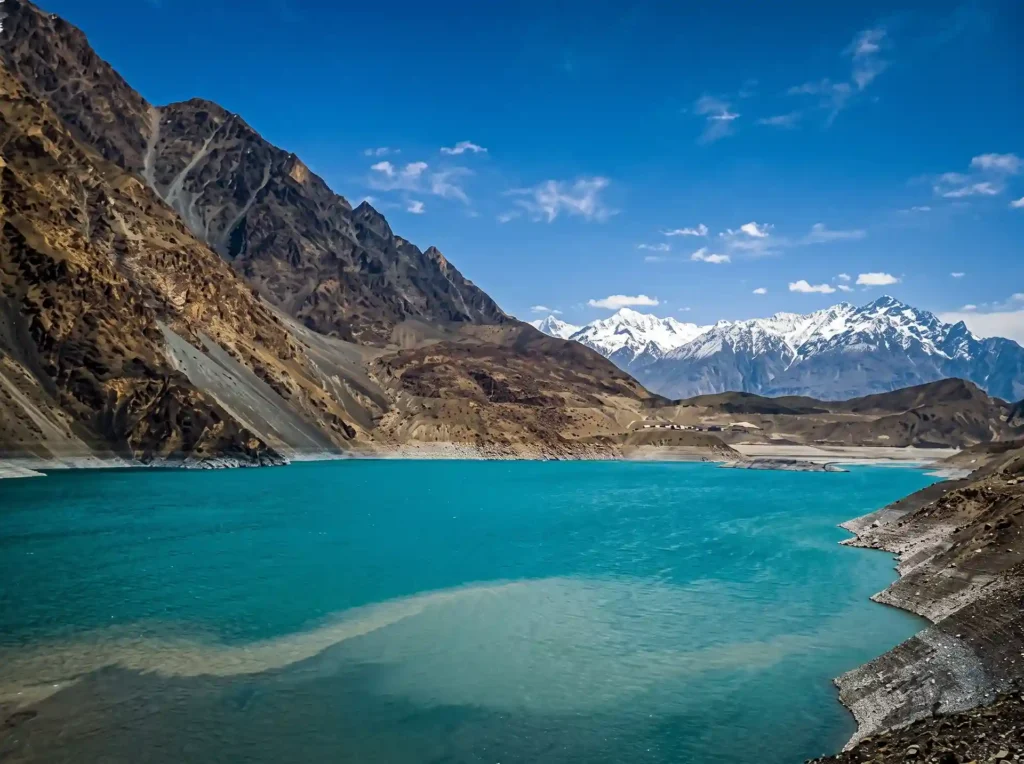
About 45 minutes north of Karimabad along the Karakoram Highway, Attabad Lake is a turquoise lake formed after a 2010 landslide dammed the Hunza River. Its color holds up reasonably well into autumn, and the hillsides around it pick up their own share of gold and rust tones by October, which makes for a striking contrast against the water. A short boat ride, roughly 30 to 45 minutes, is the standard way to see it up close, and lakeside restaurants make it an easy lunch stop on the way north.
Passu, Gulmit, and Upper Hunza
Continuing north past Attabad brings you into Gojal, upper Hunza, where the road runs close enough to the Passu Cones (locally called Tupopdan) that no detour is needed to see them. This stretch, taking in Gulmit village and the roadside Passu Cones viewpoint, is often the first part of the valley to show full autumn color, sometimes a week or more ahead of Karimabad, because of the higher, cooler elevation. If your dates land earlier in the season and Karimabad still looks green, Upper Hunza is often where the color has already arrived. The Hussaini Suspension Bridge nearby is an optional stop for travelers who want the photo or the experience of crossing it, and skipping it costs you nothing in terms of the wider views.
Recommended Skardu Tour Packages for Every Traveler
Explore our recommended Skardu tour packages, carefully designed for solo travelers, families, couples, and groups. Choose from flexible Budget, Standard, and Luxury options to match your travel style and budget.
| Tour(s) | Mode of Transport | Budget | Standard | Luxury |
|---|---|---|---|---|
| 5-Day Trip to Skardu: A Complete 5 Days 4 Nights Itinerary | By Road | PKR 90,500 | PKR 115,000 | PKR 194,000 |
| Hunza Tour Package | By Air | PKR 100,500 | PKR 140,500 | PKR 220,000 |
| Blind Lake Skardu Tour: A Half-Day Trip Through Shigar Valley | By Road | PKR 9,500 | PKR 12,500 | PKR 15,000 |
| Baltit Fort Hunza: Karimabad’s Historic Landmark | By Road | PKR 20,000 | PKR 30,000 | PKR 40,000 |
| Organic Village Skardu Tour: Walk to Nangsoq | By Air | PKR 115,000 | PKR 136,000 | PKR 25,000 |
| Attabad Lake Hunza: Complete Travel Guide | By Air | PKR 130,000 | PKR 150,000 | PKR 235,000 |
| Manthoka Waterfall Skardu: A Complete Guide | By Road | PKR 168,000 | PKR 250,000 | PKR 390,000 |
A Sample Autumn in Hunza Itinerary
This is written as a 4-day plan inside Hunza itself, the length that suits most travelers who want to see the valley’s autumn highlights properly without rushing. It can be shortened to 3 days by combining Duikar into the Karimabad day, or extended with an extra night in Gulmit for a slower pace through upper Hunza.
Day 1: Arrival and Karimabad
Arrival in Hunza, typically after a drive up the Karakoram Highway or a flight into Gilgit followed by a shorter transfer, with the rest of the day left open for settling in and a first walk through Karimabad. Late afternoon light on the orchards below Baltit Fort is worth timing a walk around, since the low sun brings out the color more than the flatter light of midday.
Day 2: Baltit Fort, Altit Fort, and the Old Village Lanes
A full day built around Hunza’s two forts, with the walk between them through Altit Village as much a part of the day as the forts themselves. Afternoon is usually left free for Karimabad’s bazaar, where dried apricots, walnuts, and local handicrafts are the main draw.
Day 3: Duikar Sunrise, then Attabad Lake and Upper Hunza
An early jeep rides up to Duikar for sunrise at Eagle’s Nest, followed by breakfast and a return to Karimabad, then a drive north to Attabad Lake and on to Passu or Gulmit for the afternoon. This is a long day by Hunza standards, mixing an early start with several hours on the road, so build in some flexibility rather than a tight schedule.
Day 4: Departure or Extension
Return journey toward Gilgit or Islamabad, or an extra day added here for travelers who want a slower morning in upper Hunza, a Nagar Valley side trip, or simply more time without a fixed plan. If you are continuing on to Skardu, ask about connecting the two rather than booking them as separate trips.
Autumn Photography in Hunza
Autumn draws a specific kind of traveler to Hunza: people who have planned an entire trip around a handful of photographs. A few practical points make a real difference here. Early morning and late afternoon light brings out the color far more than the flat light of midday, so plan the Duikar visit and any orchard walks around those windows rather than the middle of the day. Reflections at Attabad Lake are strongest when the water is calm, typically earlier in the day before wind picks up. A polarizing filter helps cut glare on the lake and saturate both the sky and the turquoise water. Because the peak color window is short, roughly three to four weeks at most in any one part of the valley, booking flexible dates or building in a spare day or two gives you a better chance of catching the colors at their best rather than committing to a single fixed week months in advance.
Getting to Hunza
From Islamabad, the standard road route runs via the Hazara Motorway, Mansehra, Besham, Dasu, Chilas, and Gilgit before reaching Hunza, a drive of roughly 600 to 650 kilometers that typically takes 14 to 18 hours depending on traffic and road conditions, usually split over two days with an overnight stop in Chilas or Gilgit. Flying to Gilgit, roughly a one-hour flight on a limited schedule, followed by a two to three-hour drive north, cuts most of a day off the trip, though these mountain flights are weather-dependent and can be delayed or cancelled at short notice.
From Skardu, Hunza is reached via the Karakoram Highway through Gilgit, a route commonly cited at around 280 to 290 kilometers and 5 to 6 hours in good conditions, though some sources put the fuller journey, factoring in stops and variable road conditions, closer to 7 to 8 hours. Given this spread, it is worth treating the Skardu to Hunza leg as most of a driving day rather than a quick hop, and building the itinerary around an overnight stop in Gilgit if your schedule allows it. Confirm current road status before departure, since sections of this route can be affected by seasonal roadwork or, less commonly in autumn than in summer, landslides.
Within Hunza itself, private vehicles handle all sightseeing, since public transport between the valley’s main stops is limited. A sedan is fine for Karimabad, Altit, and Attabad Lake; the road up to Duikar requires a 4×4.
Cost of an Autumn Hunza Tour
Pricing for an autumn trip to Hunza depends on group size, vehicle type, accommodation category, and how many days you spend in the valley, so a single fixed number would not be accurate here. As a general pattern, expect rates to sit somewhat higher during the peak color weeks in October than in the quieter Late-September or mid-November shoulder periods, driven mainly by hotel demand in Karimabad rather than transport costs. For a sense of scale, our standing autumn in Hunza Tour Package runs from budget to luxury tiers across a 3 to 7-day structure; the same logic applies to an autumn-timed trip, adjusted for the shorter, more color-focused itinerary described above. Contact our team with your travel dates and group size for a current quote.
Difficulty and Fitness for an Autumn Trip
This is an easy to moderate trip built around sightseeing, short walks, and scenic drives, not trekking. Baltit and Altit Forts both involve stone stairs and some uneven flooring, manageable for most ages and fitness levels with a bit of care but not wheelchair accessible. The road to Duikar is jeep-only, not a hike, so reaching Eagle’s Nest does not require any particular fitness beyond sitting through a bumpy 20 to 45-minute ride. The main physical consideration in autumn specifically is the cold at higher points like Duikar, which affects comfort more than difficulty. Travelers with mobility limitations should mention this when booking so the plan can work around the fort staircases and the jeep ride.
What to Pack for Autumn in Hunza?
- Layered clothing: a light top layer for sunny midday walks, a proper insulated jacket for mornings, evenings, and Duikar
- A warm hat and gloves if visiting Eagle’s Nest for sunrise; temperatures there can sit well below the valley floor reading
- Comfortable, closed walking shoes for fort staircases and uneven village lanes
- Sunglasses and sunscreen; high-altitude sun is stronger than the temperature suggests, even on cool autumn days
- A basic first-aid kit with any personal medication, since pharmacy options thin out north of Gilgit
- A power bank, since cold weather and long driving days both drain phone batteries faster
- Cash in Pakistani Rupees; card acceptance is limited outside larger hotels
Important Travel Information
Permits. No special NOC (No Objection Certificate) is currently required for foreign or domestic tourists visiting Karimabad, Duikar, Attabad Lake, or the other stops covered in this guide as part of a standard sightseeing itinerary. A valid passport for foreign nationals or CNIC for Pakistani nationals is sufficient at checkpoints. Rules can change, so confirm current requirements with us if your travel dates are close to any policy update you have seen reported elsewhere.
Road and weather conditions. Autumn generally brings drier, clearer conditions than summer, but early snowfall at higher elevations is possible from late October onward and can affect the Duikar road or higher side trips. Confirm current road status before departure, particularly for travel scheduled in the second half of October or into November.
Connectivity. Mobile coverage is real but uneven. SCOM, the government-operated network, has the most consistent reach across the valley, including spots where other operators are weak. Most mid-range and above hotels in Karimabad offer Wi-Fi, though speeds vary.
Cash. ATMs exist in Gilgit and in parts of Hunza, Aliabad in particular, but are not fully reliable for foreign cards and can run short of cash in busy periods. Carry enough Pakistani Rupees for your trip before heading north.
Photography. Generally unrestricted at forts, viewpoints, and villages. A few sensitive areas near border infrastructure further north have specific restrictions, which do not apply to the Karimabad-to-Passu stretch covered in this guide.
None of this is a reason to avoid an autumn trip. It is the reason to confirm current pricing, road status, and hotel availability with us in the days before departure rather than assuming details found online months in advance are still current.
Booking Your Hunza in Autumn Tour
Autumn is one of the tighter booking windows in Hunza’s calendar, since the peak color weeks in October draw both domestic and international travelers to the same handful of hotels in Karimabad and Duikar. If your dates fall inside the first three weeks of October, booking several weeks ahead genuinely improves your options, particularly for view-facing rooms near Eagle’s Nest. Ask about current availability and a route built around your exact travel week so the itinerary can favor upper or central Hunza depending on where the color is likely to be at its best.
Tour Highlights
- Explore the golden autumn colors of Hunza Valley
- Visit historic Baltit Fort and Altit Fort
- Walk through the traditional lanes of Karimabad and Altit Village
- Enjoy sunrise at Duikar and Eagle's Nest
- Experience the turquoise waters of Attabad Lake
- Visit Gulmit, Passu and the famous Passu Cones
- Enjoy scenic views of Rakaposhi, Ultar Sar and Diran
- Experience Hunza's local culture, orchards and traditional markets
- Capture stunning autumn landscapes and mountain photography
- Enjoy a scenic journey along the Karakoram Highway
Included
- Private transport according to group size and itinerary
- Experienced driver throughout the tour
- Hotel accommodation according to selected package
- Daily breakfast at the hotel
- Sightseeing according to the agreed itinerary
- Pickup and drop-off from the agreed departure/return point
- 4x4 jeep for Duikar and Eagle's Nest
- Fuel and vehicle-related expenses
- Local tour assistance and coordination
Excluded
- Lunch and dinner
- Fort entrance tickets
- Boat ride at Attabad Lake
- Hussaini Suspension Bridge entry or activity charges
- Personal shopping and expenses
- Additional activities not mentioned in the itinerary
- Travel insurance
- Medical or emergency expenses
- Any additional transportation outside the agreed itinerary
- Expenses caused by road closures, weather delays, or itinerary changes
Gallery