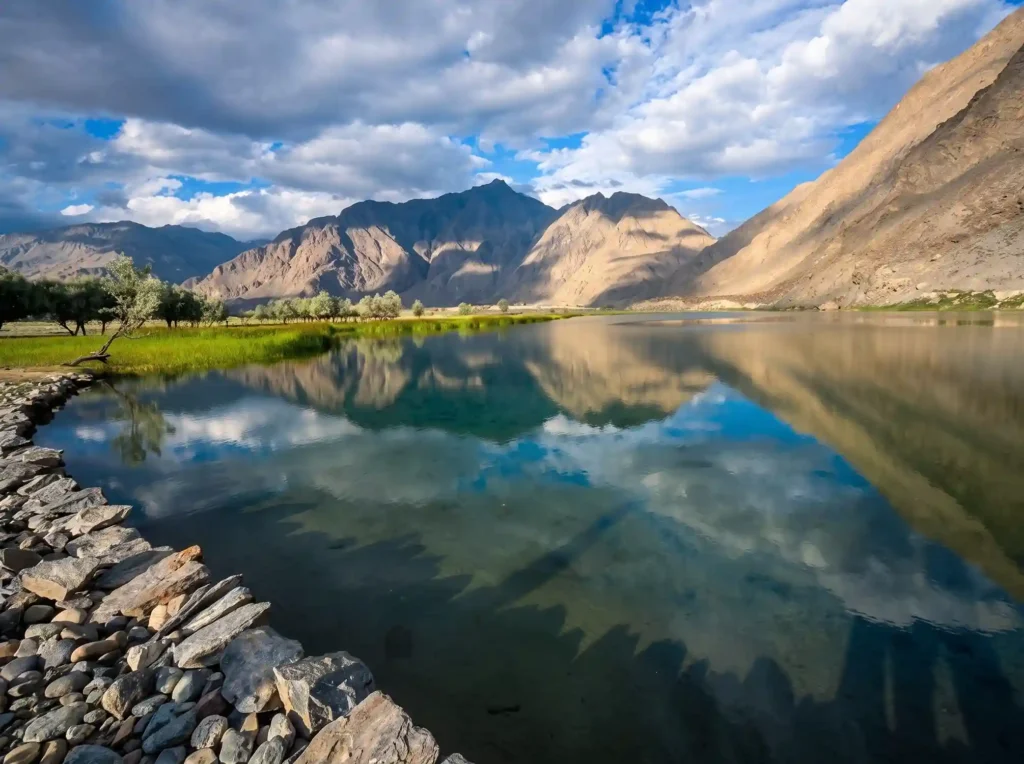
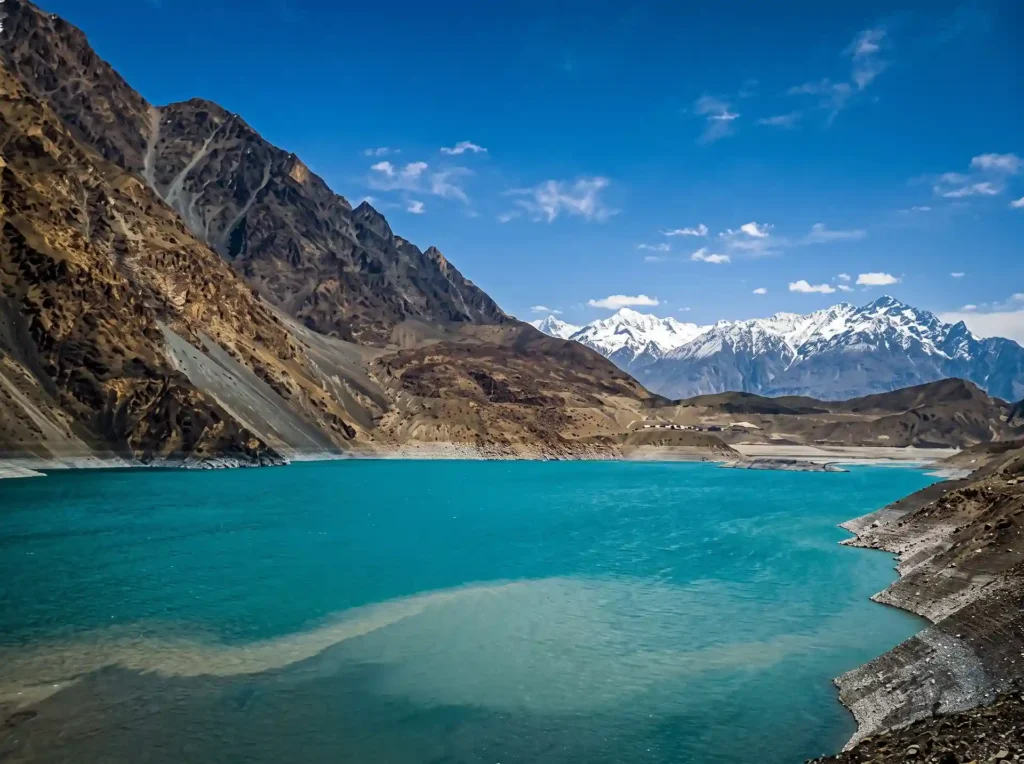
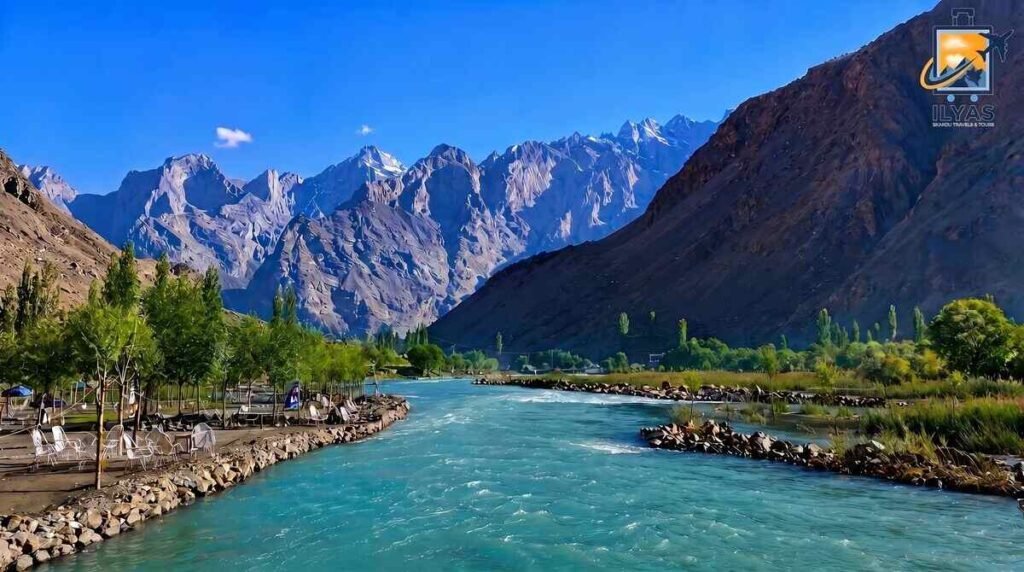
Attabad Lake is one of the first things people picture when they think of Attabad Lake Hunza, and it earns that reputation honestly. It’s not an ancient lake with centuries of folklore attached to it. It’s barely fifteen years old, formed by a landslide that buried a village, and that history is part of what makes it worth understanding before you photograph it. This guide covers where Attabad Lake sits, how it came to exist, when to visit, what there is to do on and around the water, and how to fit it into a wider Hunza itinerary without wasting a day.
Where Is Attabad Lake Located?
Attabad Lake sits in the Gojal area of Upper Hunza, in Hunza district, Gilgit-Baltistan, right alongside the Karakoram Highway (the N-35). It formed in the channel of the Hunza River near Attabad village, roughly 14 to 15 kilometers up-valley (east) of Karimabad, the town most visitors use as their base in Hunza. If you’re trying to place it on a map for the first time, think of it this way: Karimabad and Baltit Fort mark the heart of Central Hunza, and as you keep driving north along the KKH toward Gulmit, Passu, and eventually the Chinese border at Khunjerab Pass, you pass directly alongside Attabad Lake. It is not a side trip that requires a detour. It’s part of the main road.
That said, “distance from Karimabad” gets reported differently across guides, and it’s worth explaining why. The landslide itself occurred about 14 km from Karimabad, but the lake stretches for many kilometers beyond that point, and the highway winds along its shore rather than running in a straight line. So depending on which stretch a source measures to, you’ll see figures anywhere from roughly 14 km to over 25 km, and drive times quoted from 30 minutes to nearly an hour. In practical terms, plan on a short drive of around half an hour to 45 minutes from central Karimabad to a good viewpoint or boating point, and build in extra time for photo stops along the way.
The wider geography runs like this: Attabad Lake sits within Gojal, Gojal is the northernmost tehsil of Hunza district, Hunza district sits within Gilgit-Baltistan, and Gilgit-Baltistan is the northernmost administrative territory of Pakistan. That chain is worth knowing, because “Hunza,” “Upper Hunza,” and “Gojal Valley” get used loosely across different guides to mean slightly different things.
How Attabad Lake Was Formed: The 2010 Landslide
Attabad Lake exists because of a disaster, and it’s worth knowing the real sequence of events rather than the shortened version that gets repeated on most travel sites.
On 4 January 2010, a massive section of the mountainside above Attabad village gave way. Geological surveys point to a combination of factors: the slope sat at the boundary between granite and weaker rock, it had already been weakened by earlier rockfalls and a 2002 earthquake, and freeze-thaw cycles had been working cracks open for years. When it finally failed, an estimated 45 to 55 million cubic meters of rock and debris came down, burying part of Attabad village, destroying dozens of homes, and killing twenty people.
The debris landed directly across the Hunza River, forming a natural dam roughly 120 to 125 meters high and about 1.5 kilometers long. With nowhere to go, the river began backing up behind the blockage. By June 2010 it had formed a lake about 21 kilometers long and over 100 meters deep, flooding lower Shishkat completely and partially flooding Gulmit. Around 6,000 people upstream were displaced, and roughly 25,000 more were cut off, because the rising water had submerged close to 20 kilometers of the Karakoram Highway, at the time the only road link through the valley. For months, the only way to move people and goods past the lake was by boat, ferrying them to trucks waiting on the other side.
Engineers cut a spillway into the debris dam in 2012 to relieve pressure and lower the water level by around 10 meters, but the highway itself remained underwater for years. The real fix was a 24-kilometer realignment of the KKH, built at a higher elevation around the lake with two major bridges and five tunnels covering about 7 kilometers combined. Known locally as the Pakistan-China Friendship Tunnels, this route was completed in September 2015 at a cost of roughly $275 million, and it’s still what you drive through today heading north from Karimabad toward Passu and Khunjerab Pass.
It’s worth sitting with the contrast built into this place: twenty people died and a village disappeared, and the lake that resulted has become one of the most photographed spots in Gilgit-Baltistan, generating income for guesthouses, boat operators, and restaurants that didn’t exist before 2010.
Quick Facts
| Detail | Information |
| Location | Gojal, Upper Hunza, Hunza district, Gilgit-Baltistan, Pakistan |
| Formed | January 2010, following a landslide that dammed the Hunza River |
| Elevation | Approximately 2,559 meters (8,396 ft) |
| Approx. length | Around 21 km at its largest extent in 2010; current size has reduced due to natural sedimentation (see below) |
| Approx. depth | Roughly 100 to 109 meters at its deepest, per post-formation surveys |
| Distance from Karimabad | Roughly 14 to 25 km depending on the measuring point; about 30-45 minutes by road |
| Distance from Gilgit city | Approximately 125 km, around 2.5 to 3 hours by road on the KKH |
| Distance from Islamabad | Approximately 600-620 km by road, though actual drive time (15-18 hours) depends heavily on road conditions; flying Islamabad-Gilgit and driving the remaining stretch is faster |
| Access road | Karakoram Highway (N-35), via the Pak-China Friendship Tunnels |
| Best time to visit | Roughly April to October; peak color and warmest weather June to August |
| Main activities | Boating, jet skiing, photography, lakeside walks, fishing |
Prices for boating and jet skiing change by season and operator, so treat any figure you see, including in this guide, as a rough starting point to confirm locally rather than a fixed rate.
How to Reach Attabad Lake
Almost everyone reaches Attabad Lake as part of a longer Hunza or Gilgit-Baltistan trip rather than as a standalone destination, and the route depends on where you’re starting from.
From Islamabad or Rawalpindi
The overland route runs via Abbottabad, Besham, and Chilas, then joins the Karakoram Highway up to Gilgit and on to Hunza. It’s a long drive, commonly taking 15 to 18 hours depending on road conditions and weather, and most travelers break the journey with an overnight stop rather than attempting it in one go. An alternative in the warmer months (roughly mid-June through October) is the Babusar Top route through Naran and Chilas, usable only when the pass is clear of snow. Flying Islamabad to Gilgit cuts the trip to around an hour in the air, though flights on this route are genuinely weather dependent and get delayed or cancelled when cloud cover sets in over the mountains, so build in a buffer day rather than a tight connection.
From Gilgit
This is the most common last leg for anyone flying in. It’s roughly 125 km along the KKH to Attabad Lake, generally taking around 2.5 to 3 hours by private car or hired jeep, longer with recent rockfall damage or stops at viewpoints like Rakaposhi along the way. Regular vans and shared transport also run this route.
From Karimabad
If you’re already based in Karimabad, which most visitors are, reaching Attabad Lake is a short excursion rather than a full day trip. Hire a local taxi, arrange transport through your guesthouse, or book it as part of a wider Hunza tour package that already includes it alongside Passu Cones and the Hussaini Suspension Bridge.
By public transport
Local vans (Coasters and Hiaces) run along the KKH between Aliabad, Karimabad, and the villages further north, and can drop you near the lake. This works, but it’s less flexible for stopping at viewpoints or boating docks, so most first-time visitors find a private car or a small group tour more practical for this particular stretch.
Best Time to Visit Attabad Lake Hunza
There isn’t one single “correct” season for Attabad Lake. It depends on what you actually want from the visit.
| Season | Months | What to expect |
| Spring | March to May | Mild days, cooler nights, fewer crowds than summer, but weather can still be unpredictable with occasional late-season snow at higher points along the route |
| Summer | June to August | Warmest and most reliable weather, lake color at its most vivid due to peak glacier melt, all boating and water activities running, but also the busiest period for accommodation and boat availability |
| Autumn | September to October | Clearer skies, cooler temperatures, thinner crowds, still generally good road access; color intensity starts to fade later in the season as glacier melt slows |
| Winter | November to March | Cold, with parts of the lake’s edges potentially freezing; heavy snowfall can affect road conditions on some approach routes, and several tourist facilities scale back or close for the season |
If you specifically want the lake at its most turquoise, aim for June through August. That’s counterintuitive to some visitors, since summer also means more sediment washing in from glacier melt, but the reflected light off that fine glacial silt is exactly what produces the vivid blue-green color the lake is known for. Clearer, less silty water in the shoulder seasons often actually looks less dramatically blue in photos, even though the water itself is arguably cleaner.
Winter travel is possible and some people specifically want the frozen, quieter version of the lake, but road conditions on the wider route (particularly outside the tunnel-protected stretch) can change quickly with snowfall, and not every guesthouse or boat operator stays open through the coldest months. If you’re planning a winter visit, confirm current road status and facility availability before you commit to firm dates.
Why the Lake Looks Different Than It Used To
If you’ve seen older photos of Attabad Lake next to more recent ones, you may have noticed the shoreline looks different, and in mid-2026 this became a genuine talking point after videos circulated online showing large stretches of exposed sediment where open water used to be, leading some people online to claim the lake was “drying up” or disappearing.
The reality is more interesting than the alarmist version. Attabad Lake Hunza was never a conventional, geologically stable lake. It’s a landslide-dammed reservoir, meaning its size and shoreline are governed by how much water and sediment the Hunza River and its glacier-fed tributaries carry into it, how much drains out through the engineered spillway, and how much silt settles on the lakebed over time. A 2024 research study tracking the lake’s surface area since 2010 found a gradual, ongoing reduction in open water, driven mainly by sediment accumulating at the upstream end where the Hunza River enters the lake. The same research noted the rate of change slowed noticeably after 2016, suggesting the lake has been moving toward a more stable state rather than vanishing.
Local climate experts quoted in Pakistani media coverage of the 2026 videos made the same point: the lake hasn’t dried up, it’s silting up, and that’s a natural process common to landslide-dammed lakes fed by glacial rivers carrying heavy sediment loads. Whether the currently exposed mudflats stay exposed, expand further, or get submerged again in future years depends on glacier melt, rainfall, and river inflow from year to year, so it isn’t something anyone can predict with certainty.
The practical takeaway: Attabad Lake is still a functioning, boatable lake, and the water that remains still shows the turquoise color it’s known for, especially in the main summer season. But the shoreline can genuinely look different from one trip to the next, and if you’ve come across dramatic online claims about the lake disappearing, it’s worth knowing the factual version before assuming your visit won’t be worthwhile. It will be. It just may not look identical to a photo taken five or ten years ago.
Things to Do at Attabad Lake
Boating is the main activity and reasonably the first thing most people plan around. Local operators run a mix of traditional wooden boats, motorized speedboats, and larger group boats from docks along the shore, with rides typically running 30 to 90 minutes. Recent visitor reports put shared rides in the rough range of a few thousand Pakistani rupees per person for a short trip, but this varies by boat type, group size, season, and operator, so treat any figure as a starting point to confirm on-site rather than a fixed rate. Ask specifically about life jackets.
Jet skiing is available seasonally through local rental operators, mainly during the warmer months when the lake is fully open. Pricing and availability shift with season and demand, so confirm on arrival.
Photography works well at almost any time of day, though early morning and late afternoon light brings out the color contrast between the water and surrounding rock faces most clearly. The moment you emerge from the tunnels directly onto the lakeshore is also worth being ready for with a camera.
Fishing is possible, since the lake holds trout, and it’s a quieter alternative for travelers who’d rather sit at the shore than get on the water. Check locally whether a permit or specific access point applies.
Camping along sections of the shore suits travelers on a slower-paced Gojal Valley itinerary. If camping independently, check locally about designated spots and current restrictions.
Swimming is possible in theory, but the water is glacier-fed and stays cold even in peak summer, and there are no lifeguards, so most visitors limit themselves to wading rather than swimming out.
Recommended Skardu Tour Packages for Every Traveler
Explore our recommended Skardu tour packages, carefully designed for solo travelers, families, couples, and groups. Choose from flexible Budget, Standard, and Luxury options to match your travel style and budget.
| Tour(s) | Mode of Transport | Budget | Standard | Luxury |
|---|---|---|---|---|
| 5-Day Trip to Skardu: A Complete 5 Days 4 Nights Itinerary | By Road | PKR 90,500 | PKR 115,000 | PKR 194,000 |
| Hunza Tour Package | By Air | PKR 100,500 | PKR 140,500 | PKR 220,000 |
| Blind Lake Skardu Tour: A Half-Day Trip Through Shigar Valley | By Road | PKR 9,500 | PKR 12,500 | PKR 15,000 |
| Baltit Fort Hunza: Karimabad’s Historic Landmark | By Road | PKR 20,000 | PKR 30,000 | PKR 40,000 |
| Organic Village Skardu Tour: Walk to Nangsoq | By Air | PKR 115,000 | PKR 136,000 | PKR 25,000 |
| Khamosh Waterfall Skardu Tour | By Air | PKR 130,000 | PKR 150,000 | PKR 235,000 |
| Snowfall in Skardu: Winter Tour Guide | By Road | PKR 168,000 | PKR 250,000 | PKR 390,000 |
Nearby Attractions Worth Combining with Attabad Lake
Because Attabad Lake sits directly on the Karakoram Highway, it naturally combines with several other Upper Hunza stops rather than needing its own dedicated day.
Passu Cones — The dramatic, jagged peaks above Passu village are roughly a 20 to 30-minute drive further north along the KKH from Attabad Lake, making them an easy add-on to the same day.
Hussaini Suspension Bridge — One of the more well-known rope-and-plank bridges in the region, located near Hussaini village not far past Passu. It’s a popular stop for travelers who want the photo and the short adrenaline walk across the river.
Gulmit — A small Gojal Valley town close to the lake, useful as a quieter overnight base than Karimabad if you want to explore Upper Hunza without backtracking each day.
Khunjerab Pass — The Pakistan-China border crossing sits roughly 150 km north of Attabad Lake, at an elevation of around 4,693 meters, making it one of the highest paved border crossings anywhere. It’s typically a 3 to 4 hour drive in good conditions, longer if snow or weather slows the road, and the pass itself can close seasonally, so check current conditions before planning a same-day round trip.
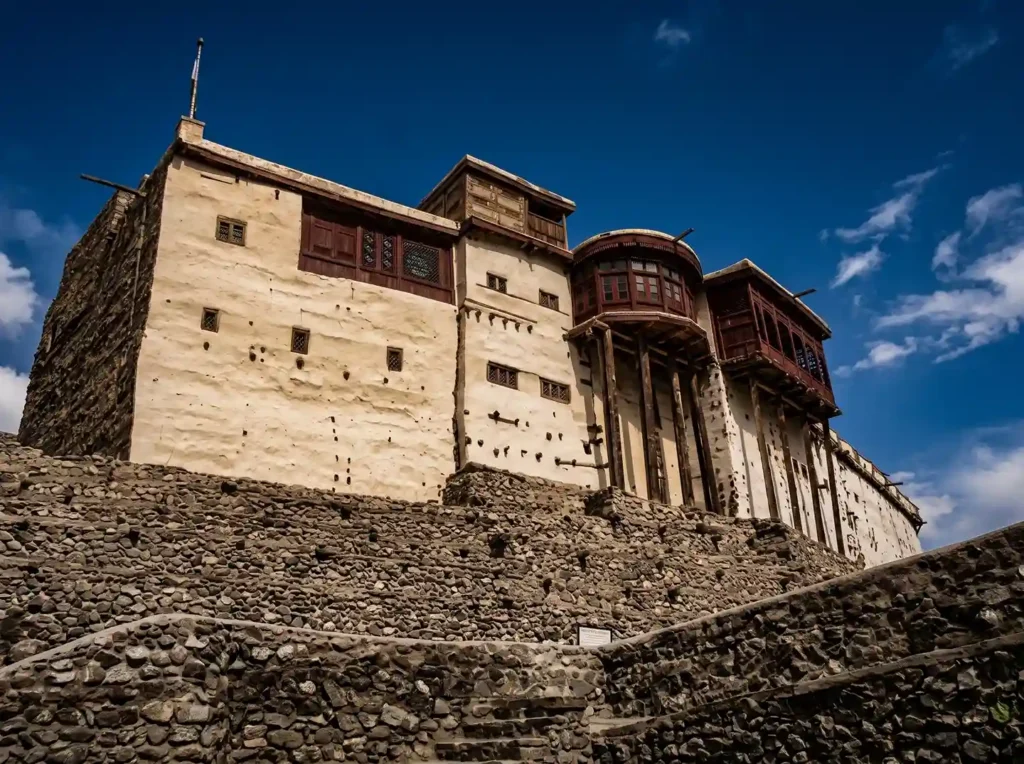
Baltit Fort and Altit Fort — Both sit in Central Hunza near Karimabad, on the opposite side of Attabad Lake from Passu, and work well paired with a Hunza cultural day rather than the Attabad-Passu-Khunjerab route.
A Realistic Way to Fit Attabad Lake into Your Trip
As a half-day stop, based in Karimabad: the drive to the lake, an hour or so for boating and photos, and the drive back, with time left over for Baltit Fort or Karimabad Bazaar the same day.
As part of a full Upper Hunza day: leave Karimabad in the morning, spend an hour or two at Attabad Lake, continue north to the Hussaini Suspension Bridge and Passu Cones, and either return to Karimabad in the evening or overnight in Gulmit if continuing toward Khunjerab Pass the next day. This is the most common structure for travelers on a Hunza tour package that includes Upper Hunza.
As a stop on a longer Gilgit-Baltistan circuit: for travelers combining Hunza with Skardu, Shigar, or Khaplu, Attabad Lake typically slots in on the day you travel between Gilgit and Karimabad, since it sits directly on that road. If Skardu is part of the plan, Skardu tour packages can be timed around the same overland route.
Whichever structure you choose, avoid scheduling Attabad Lake, Passu, Khunjerab Pass, and a return drive all in a single day. It’s technically possible in good conditions, but it leaves almost no margin for the delays (a slow truck on the KKH, weather at the pass) that are completely normal in this part of the country.
What to Pack and Practical Notes
- Layers, even in summer. At roughly 2,559 meters elevation, evenings and boat rides across open water are noticeably colder than the daytime temperature in Karimabad suggests.
- Cash. ATMs are limited past Aliabad, and boat operators, small restaurants, and roadside stalls generally expect cash.
- Sun protection. The altitude means stronger UV exposure than the temperature alone suggests.
- Basic connectivity expectations. Mobile signal along this stretch of the KKH can be patchy, so don’t count on constant connectivity north of Karimabad.
- Confirm road status before departure. Rockfall, landslides elsewhere on the route, and seasonal snow at higher points can affect travel times, so checking current conditions locally before setting out is worth building into any Gilgit-Baltistan trip.
Where to Stay Near Attabad Lake
Most travelers base themselves in Karimabad and treat Attabad Lake as a day trip, which works well given the short drive. For those combining Attabad with Passu and Khunjerab Pass, a growing number of guesthouses and resorts have opened directly around the lake and in nearby Gulmit. Facilities, pricing, and seasonal opening hours vary by property and change from year to year, so confirm current availability directly with your accommodation or tour operator rather than relying on older reviews.
Final Thoughts
Attabad Lake is one of the rare places where the backstory genuinely changes how you look at the view. It’s not an ancient feature of the Hunza landscape, it’s the direct result of a 2010 landslide that reshaped this stretch of the Karakoram Highway and displaced thousands of people, and the tourism it now supports has become a real part of the local economy in Gojal. Whether you visit for an hour on the way to Passu Cones or build a slower Upper Hunza itinerary around it, going in with an accurate picture of the lake’s location, history, and shifting shoreline makes the visit more interesting than treating it as just another photo stop. If you’re mapping out where Attabad Lake fits into a wider Hunza or Gilgit-Baltistan trip, the team at Ilyas Skardu Travels and Tours can help build an itinerary around it that matches the time and season you have available.
Tour Highlights
- Visit the stunning turquoise waters of Attabad Lake
- Enjoy a scenic boat ride on Attabad Lake
- Explore the dramatic landscapes of Upper Hunza and Gojal Valley
- Drive along the historic Karakoram Highway (KKH)
- Pass through the Pakistan-China Friendship Tunnels
- Capture beautiful views of the lake and surrounding mountains
- Visit Passu Cones and enjoy spectacular mountain scenery
- Explore the famous Hussaini Suspension Bridge
- Discover the charming village and cultural landscape of Gulmit
Included
- Comfortable private transportation during the tour
- Experienced local driver
- Pickup and drop-off from the agreed location
- Fuel and transportation expenses
- Attabad Lake sightseeing
Excluded
- Hotel or guesthouse accommodation
- Food, meals, and beverages
- Boat ride charges at Attabad Lake
- Jet skiing or other water-sports charges
- Entry tickets to attractions, where applicable
- Fishing permits or equipment
- Personal shopping and expenses
- Camping equipment and camping fees
- Travel insurance
Gallery