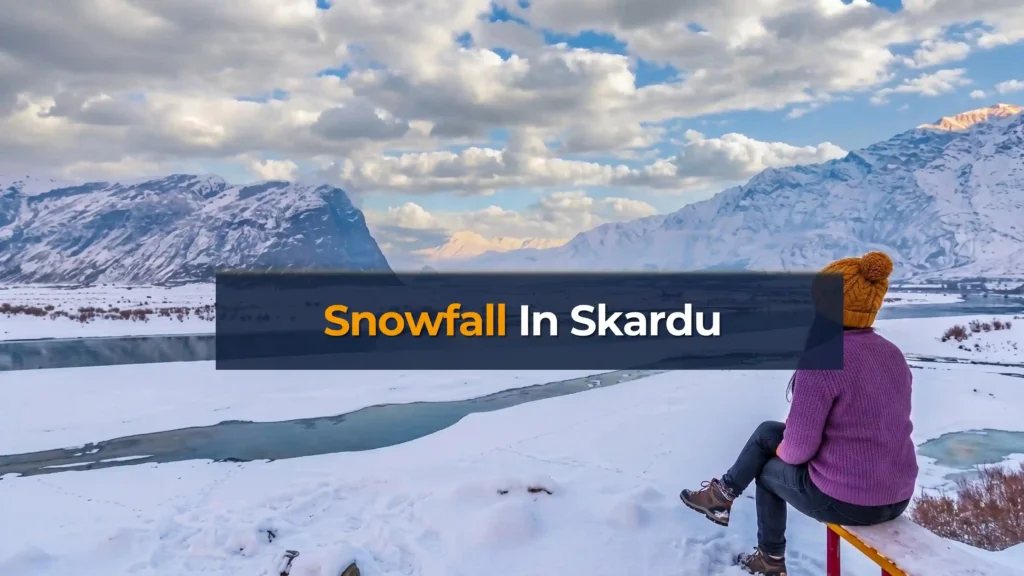
The first thing worth knowing about snowfall in Skardu is that nobody, including us, can promise it will happen on your exact dates. What we can tell you is what the odds look like, what the valley is actually like when it’s cold and quiet instead of green and crowded, and how to build a trip that still works even on the years when the sky stays clear.
Skardu sits at roughly 2,200 to 2,500 meters in the Karakoram, and from December through March it turns into a genuinely different place than the summer version most photos show. The bazaar empties out, Satpara Lake edges toward frozen at its margins, and on a good week the Katpana sand dunes end up wearing a layer of snow over sand, which is the kind of image that doesn’t really exist anywhere else in Pakistan. Our Snowfall in Skardu Winter Tour is a 4 to 7 day trip built specifically for this season: it covers Skardu city, the cold desert, Shangrila and the Kachura lakes, Satpara, and Shigar Valley, with a schedule flexible enough to absorb the weather instead of fighting it.
What This Tour Actually Covers
This isn’t a trekking trip, and it isn’t the summer Skardu itinerary with a warmer jacket. It’s built around the places that genuinely stay reachable and worthwhile between December and March: Skardu city itself, Katpana Cold Desert, Shangrila Resort and Upper Kachura Lake, Satpara Lake, Kharpocho Fort, and Shigar Valley with its centuries-old fort. Deosai National Park is deliberately left off this itinerary. The plateau sits above 4,000 meters and its access road is typically closed from November through May under heavy snow, so any page promising a winter Deosai visit is describing something that isn’t there for most of the season.
The pace is gentle. You’re not racing between viewpoints. Most days involve a couple of hours of driving on plowed local roads, some walking on packed snow or ice near the lakes, and a lot of standing still to look at something. That suits photographers and slower travelers well, and it also suits families, as long as everyone is genuinely comfortable on cold, sometimes slippery ground.
Quick Tour Facts
| Detail | Information |
| Tour name | Snowfall in Skardu Winter Tour |
| Destination | Skardu, Gilgit-Baltistan |
| Duration | 4 to 7 days |
| Departure / return | Islamabad or Skardu, depending on package |
| Best months for snow | January and February |
| Winter season overall | December through March |
| Difficulty | Easy to moderate |
| Transport | Private car, SUV, or 4×4; flights from Islamabad where conditions allow |
| Price | Contact for current pricing, as rates vary by group size, vehicle, and season |
When Snowfall Actually Happens
Snow can start falling in Skardu as early as late November, and light snow events continue on and off into March. But the season isn’t evenly cold or evenly snowy. December tends to bring the first real snow along with the sharpest drop in daylight hours. January is the coldest month, with average highs hovering a few degrees below freezing and lows well into double-digit negatives. February is usually the snowiest single month, seeing the most snow days and the highest average accumulation of the winter, even though the total moisture involved is small by most standards, since Skardu sits in a high-altitude desert climate where precipitation is light but frequent in winter. March starts to warm up, and by then you’re as likely to see melting slush as fresh powder.
None of this means you’re guaranteed a snowfall event on any given week. Skardu’s winter weather is described consistently across meteorological data and local reporting as unpredictable at the day-to-day level, even when the month-to-month pattern is fairly well understood. If witnessing an active snowfall, not just snow already on the ground, is the whole point of your trip, January and February give you the best odds, and building a slightly longer stay (5 to 7 days rather than 4) gives you more chances to catch one.
Detailed Itinerary
The itinerary below is written for the 7 day version. Shorter 4 and 5 day packages combine or drop days depending on what you want to prioritize, most commonly compressing the Shigar Valley day into the Satpara/Kharpocho day. Every day here assumes reasonable winter conditions; when roads or weather don’t cooperate, your driver and the tour team will resequence the plan rather than push through anything unsafe.
Day 1: Arrival in Skardu
Whether you fly in or arrive by road, day one is kept light on purpose. Check into your hotel in Skardu city, get warm, and use the afternoon for an easy walk around town, the old bazaar, and a first look at the Indus. If you flew in, this is also the day to mentally reset your expectations around timing. Winter flights into Skardu can run late or shift by a day, and starting the tour with a buffer built in avoids the stress of an aggressive schedule.
Day 2: Katpana Cold Desert
This is usually the day people came for. Katpana sits at about 2,226 meters, close to Skardu airport, and its sand dunes are known specifically for occasionally wearing a layer of snow in winter, a combination that photographs like nothing else in the country. Morning light tends to be best here, both for photography and because the desert’s exposed setting means winds pick up as the day goes on. Temperatures at Katpana in winter regularly drop below minus 15 degrees Celsius overnight, so this is very much a daytime visit rather than a place to linger after dark.
Day 3: Shangrila Resort and Upper Kachura Lake
Shangrila’s grounds, built around the lower Kachura lake area, and the nearby Upper Kachura Lake both take on a completely different character in winter, with far fewer visitors and, in a good year, snow along the shoreline and the surrounding slopes. Depending on how cold the preceding weeks have been, parts of the lake edges may show ice. Walking near any icy shoreline calls for care and solid footwear, not confidence.
Day 4: Satpara Lake, Kharpocho Fort, and Manthal Buddha Rock
Satpara Lake sits close enough to town to be a manageable half-day trip even when the higher passes are snowed in. In the afternoon, Kharpocho Fort gives you a genuine sense of the geography, standing on a ridge above where the Indus and Shigar rivers meet, a spot chosen for exactly that visibility when the fort was first built more than 400 years ago. Manthal Buddha Rock, a short detour on the same road, adds a quieter, older layer to the day: a carved meditating Buddha figure that predates Islam’s arrival in the region by several centuries.
Day 5: Shigar Valley and Shigar Fort
The drive to Shigar takes you along the Shigar river valley, past stone farmhouses and orchards that look stark and sculptural under snow rather than green. Shigar Fort, a restored royal residence turned heritage hotel, anchors the old town. Even if you don’t stay there, it’s worth walking through the grounds and the surrounding village lanes.
Day 6: Flexible Day
This day exists specifically to absorb whatever the weather did to days 1 through 5. If everything has gone smoothly, it becomes a second, unhurried pass through whichever spot produced the best light or the best snow, often Katpana or Satpara. If a flight delay or a snowbound road ate into an earlier day, this is where that time gets recovered. Treat this flexibility as a feature, not a gap in the plan.
Day 7: Departure
Transfer to Skardu airport or begin the road journey back, depending on your booking. If you’re flying out, avoid scheduling a same-day onward international connection; winter departures from Skardu can shift by hours or, less often, by a day.
Recommended Skardu Tour Packages for Every Traveler
Explore our recommended Skardu tour packages, carefully designed for solo travelers, families, couples, and groups. Choose from flexible Budget, Standard, and Luxury options to match your travel style and budget.
| Tour(s) | Mode of Transport | Budget | Standard | Luxury |
|---|---|---|---|---|
| Skardu Honeymoon Packages | By Road | PKR 90,500 | PKR 115,000 | PKR 194,000 |
| Hunza Tour Package | By Air | PKR 100,500 | PKR 140,500 | PKR 220,000 |
| Blind Lake Skardu Tour: A Half-Day Trip Through Shigar Valley | By Road | PKR 9,500 | PKR 12,500 | PKR 15,000 |
| Baltit Fort Hunza: Karimabad’s Historic Landmark | By Road | PKR 20,000 | PKR 30,000 | PKR 40,000 |
| Marsur Rock Skardu Tour | By Air | PKR 115,000 | PKR 136,000 | PKR 25,000 |
| Cold Desert Skardu Tour: Katpana Sand Dunes Half-Day Trip | By Air | PKR 130,000 | PKR 150,000 | PKR 235,000 |
| Deosai National Park Skardu Tour | By Road | PKR 168,000 | PKR 250,000 | PKR 390,000 |
Best Time to Visit and Seasonal Notes
| Season | Months | General Conditions | Recommended For |
| Deep winter | December to February | Coldest period, most consistent snow cover, highest chance of an active snowfall event in January and February | Photographers, travelers specifically chasing snow, those comfortable with sub-zero nights |
| Late winter | March | Warmer days, melting snow at lower elevations, occasional late-season snow | Travelers who want a taste of winter scenery without the harshest cold |
| Outside this window | April onward | Snow retreats to higher elevations; not the focus of this tour | Travelers wanting green-season Skardu instead |
Whichever week you choose, check the forecast and road status in the days immediately before departure. Seasonal access changes fast enough in Gilgit-Baltistan that anything printed here is a guide, not a guarantee.
Cost, Inclusions, and Exclusions
Pricing for this tour depends on group size, choice of vehicle, hotel category, and whether you’re flying or driving to Skardu, so we’d rather have an honest conversation about your dates than quote a number that won’t hold up. Contact the team with your group size and preferred dates for current PKR pricing.
Getting There: Flight or Road
You can reach Skardu two ways: a roughly 55 to 60-minute flight from Islamabad, or a road journey along the Karakoram Highway that typically takes most of a full day, closer to 12 to 14 hours depending on conditions and stops. In winter, flights are noticeably less reliable than in summer. Poor visibility, snow, or high winds can delay or cancel a departure, and because the Islamabad-Skardu route is flown visually rather than on instruments alone, marginal weather grounds flights that a road traveler wouldn’t even notice. If your flight is cancelled, the standard options are to wait for the next available seat, which can mean anywhere from a few hours to a couple of days in peak disruption, or to switch to the road route. This is exactly why the itinerary above includes a flexible day, and why we’d recommend against booking a tight international connection on your departure date if you’re flying out of Skardu in winter.
If you’re driving, a private car, SUV, or 4×4 is standard, and a local, experienced driver matters more in winter than in any other season. The Gilgit-Baltistan tourism department has been explicit on this point in its public advisories, urging visitors traveling by private vehicle to hire local, experienced drivers and to prioritize caution over speed on the region’s narrow mountain roads.
Difficulty and Fitness Requirements
This tour is rated easy to moderate. You don’t need trekking fitness or prior high-altitude experience. What you do need is comfort walking on cold, sometimes icy or snow-packed ground, since several stops (lake edges, fort approaches, desert dunes) involve uneven or slippery footing. Take extra care near frozen or partially frozen lake shorelines, and don’t test the ice. Steep sections around the forts and any icy patches on the dune approach at Katpana are the two spots where a bit of extra caution goes a long way.
What to Bring
Pack for genuine cold, not just a chilly evening. Daytime highs in Skardu in January and February often sit close to or below freezing, and nights regularly drop into double-digit negative temperatures, sometimes considerably colder at exposed sites like Katpana. Bring insulated, windproof outerwear, thermal base layers, a hat and gloves, and boots with real traction rather than fashion boots, since several stops involve packed snow or ice. Sunglasses matter here too. At this altitude, sun reflecting off snow can be surprisingly intense even in the middle of winter. A basic lip balm and moisturizer help with the dry, cold air, and it’s worth packing a portable phone charger, since cold temperatures drain batteries faster than usual.
Important Travel Information
Snowfall in Skardu is genuinely seasonal and can’t be guaranteed on any specific date; it generally occurs from December through March, with January and February offering the best odds based on available weather data. Winter weather can affect both flights and roads, and higher-altitude destinations, Deosai in particular, are typically inaccessible for the whole season. The Gilgit-Baltistan tourism department has repeatedly advised travelers to confirm current road and weather conditions before departure, and that guidance is worth following literally, not just as a disclaimer. Hotel and guesthouse availability in Skardu also shifts in winter, since some properties reduce services or close for parts of the season, so confirm your accommodation is actually operating on your dates before you travel.
Booking Information
To get an accurate quote and itinerary, send us your preferred travel dates, number of travelers, departure city, transportation preference, and accommodation requirements. Let us know specifically if experiencing fresh snowfall is your main goal, since we’ll factor that into which weeks we recommend and how we set expectations. Because snowfall itself can’t be promised, we’ll always be upfront about the odds for your chosen dates before you commit.
Tour Highlights
- Katpana Cold Desert's sand dunes under a coat of snow, one of the only places on earth where that combination exists
- Shangrila Resort and Upper Kachura Lake in their winter stillness, with far fewer visitors than the summer season brings
- Satpara Lake with its edges icing over against a backdrop of snow-loaded slopes
- Kharpocho Fort, built in the late 16th century by King Ali Sher Khan Anchan on a ridge above the Indus and Shigar confluence, with a clear view over the valley
- Shigar Fort and the old wooden town of Shigar under snow, quieter and starker than in any other season
- Manthal Buddha Rock, an 8th or 9th century carved relief from Baltistan's Buddhist period, a short detour on the way toward Satpara
- Genuinely low crowds. Winter is Skardu's off-season, so you're often the only vehicle at a viewpoint
Included
- Private transportation for the full itinerary (car, SUV, or 4x4 depending on package)
- Driver and fuel
- Hotel accommodation according to the selected package
- Airport pickup and drop-off where applicable
- Sightseeing per the itinerary above
- Basic tour assistance throughout
Excluded
- Air tickets, unless specifically added to your package
- Meals, unless stated in your specific package
- Personal expenses
- Entry tickets at sites that charge them
- A professional guide (available as an add-on)
- Winter clothing and equipment
- Additional activities beyond the standard itinerary
- Any costs arising from weather-related delays, such as an extra hotel night if a flight is postponed
Gallery