Most people visiting Skardu hear about Shigar Valley as a side trip, something to fit in on the way to somewhere bigger. That undersells it a little. Shigar Valley Skardu is where you get a 400-year-old fort you can actually sleep in, a mosque that predates the fort by three centuries, and villages that still run on apricot orchards and glacial water channels. It’s also the traditional gateway toward K2 and the Baltoro Glacier, which is part of why the valley carries more historical weight than its size suggests.
This guide covers what’s actually in Shigar Valley: its history, the main sites, when to go, and how to get there from Skardu, so you can decide how much time it deserves on your itinerary and plan around it properly.
Where Shigar Valley Skardu Sits, and Why It Matters
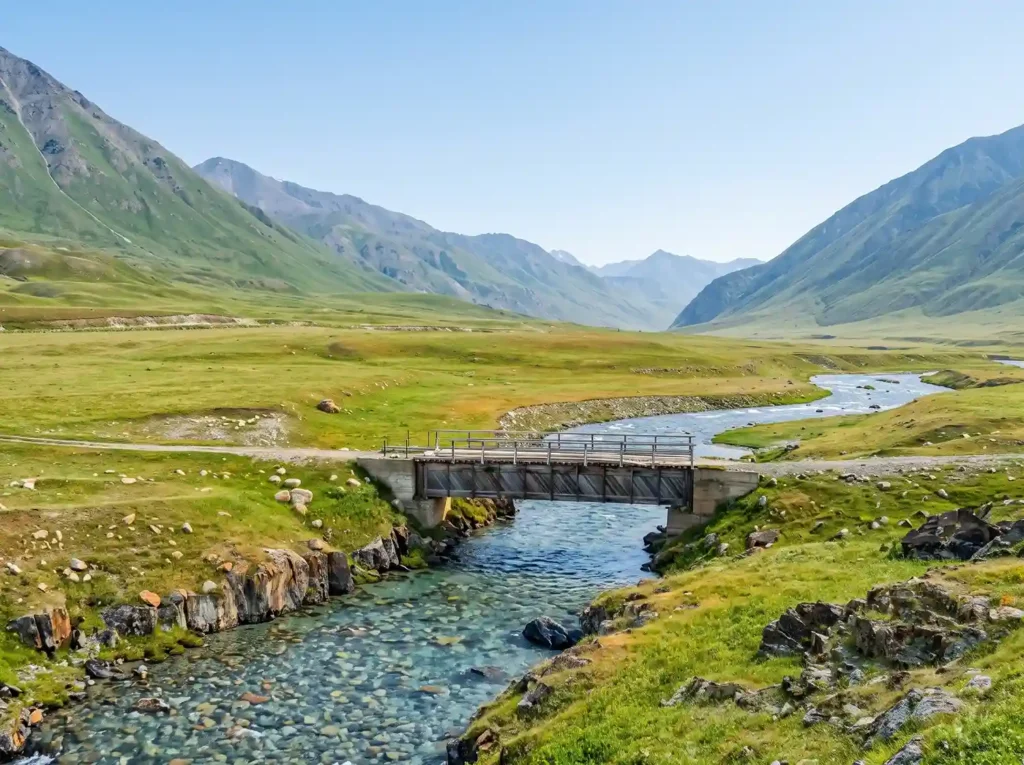
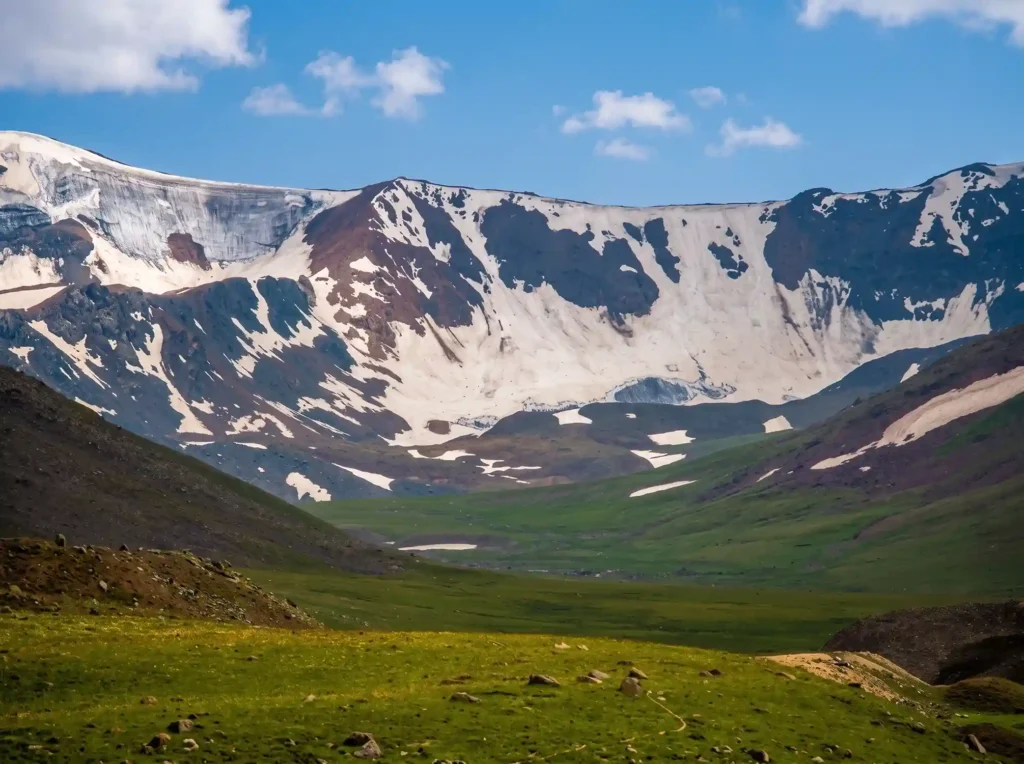
Shigar Valley Skardu runs along the Shigar River, which joins the Indus a short distance from Skardu city. Geographically, it sits at the edge of the Karakoram Range and has long served as the last stretch of settled, cultivated land before the route climbs toward the Baltoro Glacier and the high peaks beyond it, including K2, the Gasherbrums, and Broad Peak. Expeditions heading into that part of the Karakoram have historically organized and provisioned in Shigar before setting off, which is part of why the valley has a disproportionate amount of history for its size.
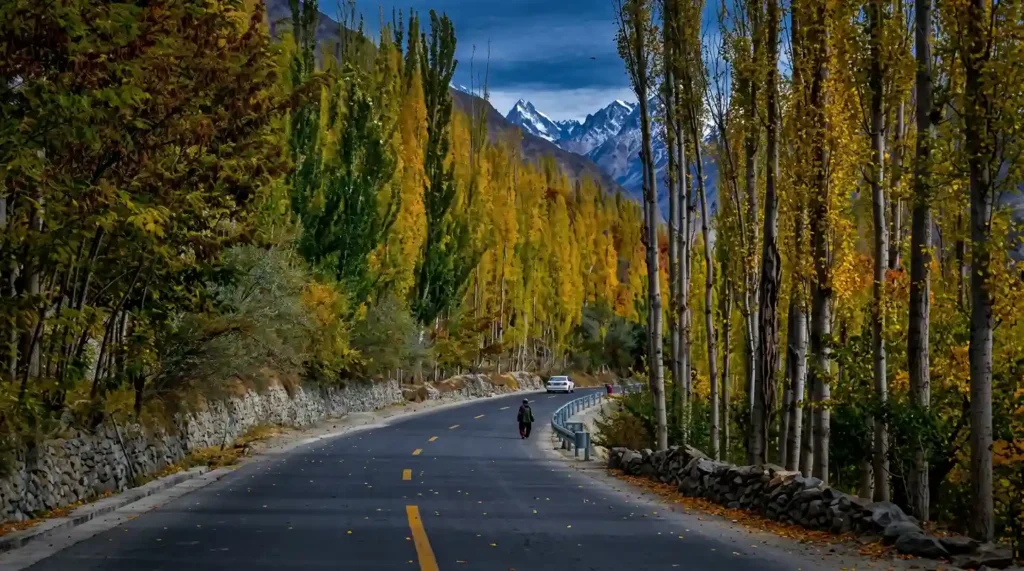
Closer to ground level, Shigar today is a collection of villages built around irrigation channels, orchards, and stone-and-wood farmhouses. The Shigar riverbank is lined with poplar trees and terraced fields, and the town itself still functions as a working agricultural community rather than existing purely for visitors. That working character is part of what makes the valley worth the detour: you’re not looking at a recreated version of Balti life, you’re looking at the ongoing version of it.
Quick Facts
| Detail | Information |
| Location | Shigar District, Gilgit-Baltistan, Pakistan |
| Distance from Skardu | Roughly 30 to 40 km, depending on the route taken |
| Drive time from Skardu | Usually 45 minutes to just over an hour on paved road; longer if you stop along the way |
| Best time to visit | Late March to October; peak season is June to September |
| Main attractions | Shigar Fort (Fong Khar), Amburiq Mosque, Blind Lake, Shigar View Point, Katpana Cold Desert en route |
| Suggested duration | Half day for a quick visit, full day to see the fort and mosque properly, overnight if staying at the fort |
| Access | Private car, hired jeep, or as part of a guided Skardu tour |
| Difficulty | Easy; mostly flat walking around the town and fort grounds |
Road conditions and travel times can shift with weather and construction, so it’s worth confirming current status with your driver or operator before departure, especially outside peak season.
The History Behind Shigar Valley
Shigar’s ruling history is tied to the Amacha dynasty, whose ancestors are said to have fled persecution in Ganish, a settlement in Hunza, and settled in Shigar around the 11th century. Their earliest stronghold, Khar-e-Dong, sat higher on the cliffs above the current town; its ruins are still visible from below. That original fort was later destroyed during a period of regional conflict.
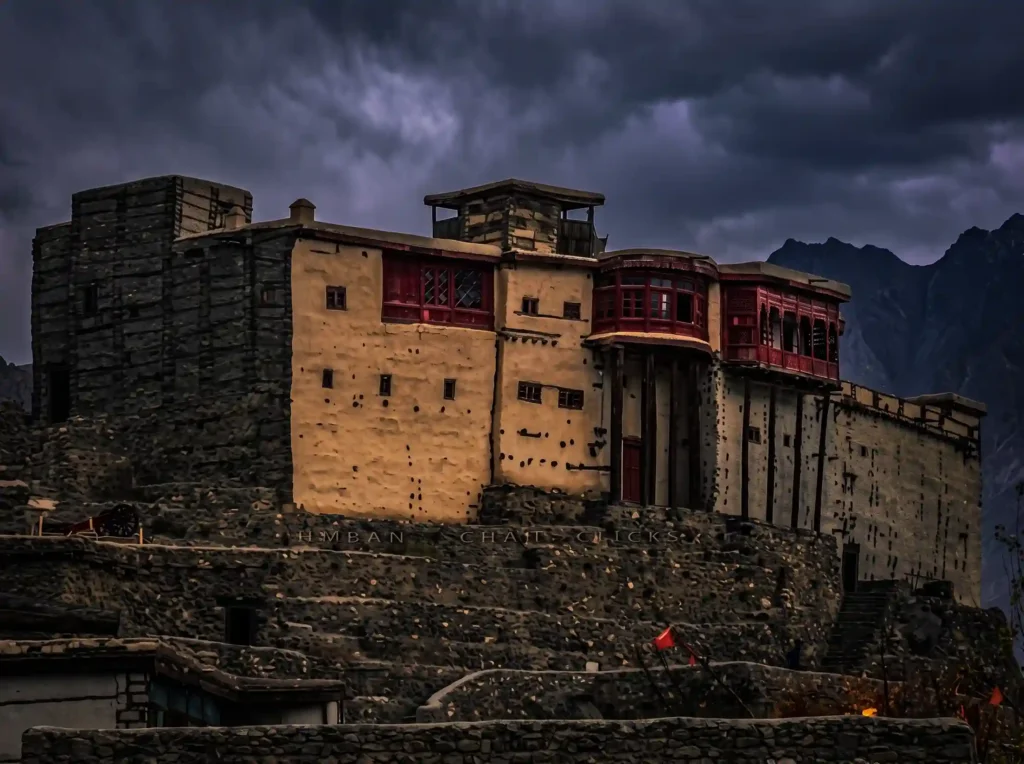
The structure most visitors associate with Shigar today, the fort known as Fong Khar or “Palace on the Rock,” was built in the early 17th century, commonly dated to around 1634, by Raja Hassan Khan, the 20th ruler of the Amacha line. It was constructed directly on a large boulder, which is where the name comes from, and craftsmen were brought in from Kashmir to work on it, which explains the mix of Balti, Tibetan, and Kashmiri architectural detail you’ll see in the woodwork and layout.
The Amacha dynasty ruled Shigar for generations before the fort eventually fell into disuse after the family’s decline. It sat empty for decades until the Aga Khan Cultural Service Pakistan carried out a major restoration between 1999 and 2004. The project preserved the original structure rather than rebuilding it from scratch, and it earned a UNESCO Asia-Pacific Heritage Award for cultural conservation in 2006. Today part of the fort operates as a small museum and part of it operates as a heritage hotel, which means the building is still lived in rather than sealed off behind glass.
Shigar Fort: The Valley’s Centerpiece
Shigar Fort is the reason most itineraries include the valley at all, and it earns the attention. The museum section walks you through the Amacha family’s history, with explanations of Balti architecture, the fort’s construction, and daily life under the old ruling family. Displayed items typically include household objects, textiles, and documents connected to the royal household, giving a more grounded sense of the region’s past than a plaque-and-photo museum usually manages.
Outside the museum rooms, the fort’s gardens are worth slowing down for. Cherry, apricot, and apple trees line the grounds, and small water channels run through the lawns, the kind of detail that’s easy to miss if you’re moving quickly between rooms. There’s also a smaller mosque adjacent to the main fort entrance, built in a similar four-sided style to other traditional mosques in Shigar, with a central supporting column and an east-facing terrace.
If you want to stay overnight, the fort operates as the Serena Shigar Fort, a heritage hotel with around 20 rooms across a few different categories, from garden rooms to restored heritage suites. Staying here is a genuinely different experience from a day visit, since you get the grounds to yourself in the early morning and evening after the day-trip crowd has left. Rates and room availability change by season, so confirm current pricing directly with Serena or through your tour operator before counting on a specific room type.
Amburiq Mosque and the Valley’s Older Layers
If Shigar Fort represents the valley’s royal history, Amburiq Mosque represents something older: the arrival of Islam in this part of the Karakoram. Local accounts date the mosque to the 14th century, built by Persian craftsmen who traveled with the preacher Syed Ali Hamdani, generally placed sometime between 1372 and 1383. It’s considered the first mosque built in Shigar Valley Skardu and one of the oldest surviving examples of wooden mosque architecture in Baltistan.
The building itself is small, a compact wooden structure using the traditional “cribbage and cator” construction technique, with a central tower that architectural historians point to as a carryover from earlier Buddhist building styles in the region. That blending, Buddhist structural habits applied to an Islamic building, is a good visual shorthand for how layered this valley’s religious and cultural history actually is. The mosque was restored between 1998 and 2000, with a small museum now housed inside to explain its background. It sits slightly off the main road in Shigar, so it’s worth asking your driver to make the stop rather than assuming it’s included automatically.
Places to Visit in Shigar Valley
Beyond the fort and the mosque, a handful of other spots round out a visit to Shigar Valley Skardu:
- Blind Lake (Jarba Zhou or Zharba Lake): A lake near Shigar with no visible inlet or outlet, which is how it got its name. It sits between the Indus and Shigar rivers and is a popular stop for photography, particularly in calm early-morning light when the water reflects the surrounding hills.
- Shigar View Point: A roadside lookout on the way into the valley that gives a wide view over the Shigar River and the cultivated land below. It’s a quick stop, usually just long enough for photos before continuing.
- Hashupi Bagh (the apple garden): An orchard area on the way to Shigar known for apple and cherry trees, often used as a rest stop. In fruiting season, it’s also a chance to buy fresh produce directly from the growers.
- Katpana Cold Desert (Sarfaranga): Not technically part of Shigar Valley, but most road routes from Skardu pass along its edge, so it’s usually seen on the same trip. The pale sand and dune formations are a striking contrast to the green valley just beyond it.
- Shigar Bazaar: The small town center, useful for a tea stop, basic supplies, or a look at everyday Balti life away from the tourist sites.
Things to Do in Shigar Valley
A visit here works better as a slow half-day than a checklist of stops. Realistically, most travelers end up doing some combination of the following:
- Taking the guided museum tour inside Shigar Fort, which usually runs on a set schedule rather than on demand
- Walking the fort gardens and orchards at a slower pace than the museum tour allows
- Visiting Amburiq Mosque and asking a local guide to explain the woodwork and its Buddhist-influenced tower
- Photographing Blind Lake in the early morning or late afternoon, when the light is flattest on the water
- Eating at one of the small local restaurants in Shigar town, where Balti dishes like mamtu (steamed dumplings) or thukpa-style noodle soups are common
- Buying handwoven textiles or dried fruit from small shops near the fort, which supports local craftspeople rather than imported souvenir stock
- Staying overnight at Serena Shigar Fort if your schedule allows it, for a quieter, slower version of the same visit
None of this requires any real fitness or technical skill. Walking surfaces around the fort and town are flat to gently sloped, which makes Shigar Valley one of the more accessible day trips from Skardu for families with young kids or older travelers.
Best Time to Visit Shigar Valley
Shigar Valley is accessible for most of the year, but conditions and what you’ll actually see change a lot by season.
| Season | Months | What to Expect |
| Spring | March to May | Orchards begin blossoming, temperatures are mild, and the valley is noticeably greener than in winter. Good for photography and fewer crowds. |
| Summer | June to September | Peak travel season. Warm days, cool evenings, orchards fruiting by mid to late summer. Most tour groups and day trips run during this window. |
| Autumn | October | Fewer visitors, cooler air, and the poplar and orchard trees turn shades of gold and orange. A strong option for photographers who prefer quieter sites. |
| Winter | November to February | Cold, with occasional snow at higher elevation. Some services in Shigar town scale back. Roads are usually passable but conditions can change quickly, so check ahead if traveling in this window. |
If your priority is orchard blossoms, aim for spring. If it’s warm weather and full services, summer is the safer bet. If you’d rather avoid crowds and don’t mind cooler temperatures, autumn is worth considering.
How to Visit Shigar Valley from Skardu
Most visitors reach Skardu itself by a short domestic flight from Islamabad, which typically takes about an hour when weather allows, or by a longer overland route through the northern areas. Flights to Skardu are weather-dependent and can be delayed or rerouted, so it’s worth building a buffer day into your schedule rather than booking a tight connection immediately after landing.
From Skardu city, the drive to Shigar Valley runs along a paved road that skirts the edge of the Katpana Cold Desert before crossing the Shigar river area into the valley itself. The road is in reasonably good condition and manageable in a standard car, though a jeep or 4×4 gives more flexibility if you plan to detour off the main route. Most travelers arrange transport through their hotel, a local driver, or as part of a guided day tour rather than self-driving, since local drivers know the current road conditions and any seasonal detours.
Shigar Valley works well both as a standalone half-day or full-day trip from Skardu and as one stop within a longer Skardu itinerary that also covers Kachura Lakes, Katpana Desert, and Kharpocho Fort. If you’re short on time, it’s realistic to combine Shigar Fort, Amburiq Mosque, and Blind Lake into a single day and still be back in Skardu by evening.
Recommended Skardu Tour Packages for Every Traveler
Explore our recommended Skardu tour packages, carefully designed for solo travelers, families, couples, and groups. Choose from flexible Budget, Standard, and Luxury options to match your travel style and budget.
| Tour(s) | Mode of Transport | Budget | Standard | Luxury |
|---|---|---|---|---|
| Kharpocho Fort Skardu: History, Location, Timing and Ticket Price | By Road | PKR 90,500 | PKR 115,000 | PKR 194,000 |
| Skardu Desert: A Complete Guide to Pakistan’s Highest Cold Desert | By Air | PKR 100,500 | PKR 140,500 | PKR 220,000 |
| Blind Lake Skardu Tour: A Half-Day Trip Through Shigar Valley | By Road | PKR 9,500 | PKR 12,500 | PKR 15,000 |
| Baltit Fort Hunza: Karimabad’s Historic Landmark | By Road | PKR 20,000 | PKR 30,000 | PKR 40,000 |
| Organic Village Skardu Tour: Walk to Nangsoq | By Air | PKR 115,000 | PKR 136,000 | PKR 25,000 |
| Attabad Lake Hunza: Complete Travel Guide | By Air | PKR 130,000 | PKR 150,000 | PKR 235,000 |
| Manthoka Waterfall Skardu: A Complete Guide | By Road | PKR 168,000 | PKR 250,000 | PKR 390,000 |
Where to Stay in Shigar Valley
The standout option is Serena Shigar Fort itself, a heritage hotel inside the restored fort with rooms ranging from simpler garden accommodations to restored heritage suites. It’s not a budget option, but it’s a genuinely different way to experience the site compared to a day visit, since guests get access to the grounds outside normal visiting hours.
Outside the fort, Shigar town has a smaller number of guesthouses and mid-range stays, generally simpler and more budget-friendly than Serena. Availability and pricing shift by season, so it’s worth confirming current rates and room availability before you travel, particularly during the June to September peak.
Many visitors choose to stay in Skardu city instead and treat Shigar as a day trip, which keeps you closer to other attractions and gives more choice in accommodation type and price range.
Practical Travel Information
A few things worth knowing before you go:
- Altitude: Shigar sits at a lower elevation than high-altitude spots like Deosai, so altitude sickness is less of a concern here, but mornings and evenings still get cool even in summer.
- Connectivity: Mobile signal in Shigar town is generally workable but can be inconsistent, and it thins out quickly once you’re outside the main settled area. Don’t count on a strong connection for work calls or navigation apps.
- Permits: Shigar Valley Skardu itself does not typically require a special permit for general tourism, but if your trip extends further up the valley toward Askole or the Baltoro approach, permit and registration requirements can apply. Confirm current requirements with your operator if your itinerary goes beyond the main valley.
- Photography: Photography is generally welcome at the fort grounds and mosque exterior, though it’s respectful to ask before photographing people directly, particularly inside the mosque or during prayer times.
- What to bring: Layers. Summer days can be warm enough for a t-shirt, but a light jacket earns its place once the sun drops. Comfortable walking shoes are enough; nothing technical is required for a standard valley visit.
Adding Shigar Valley to Your Skardu Itinerary
Shigar Valley pairs naturally with several other stops covered in our Skardu travel guide. If you’re building a multi-day trip, it fits well alongside a visit to Kharpocho Fort in Skardu city, an afternoon at Katpana Cold Desert, and a stop at Satpara Lake. Travelers extending further into Gilgit-Baltistan often continue on to Khaplu Valley or loop back through Deosai National Park depending on the season.
If you’d rather not plan the logistics yourself, our Skardu tour packages include Shigar Valley as part of several multi-day itineraries, with transport and a local driver arranged for you. You can also check our Skardu hotels and accommodation guide if you’re deciding between staying in Skardu city or at Shigar Fort itself.
Planning Your Visit
Shigar Valley Skardu rewards a bit of patience. It’s easy to treat it as a quick photo stop on the way to somewhere else, but the fort museum, the mosque, and the orchard villages hold up to a slower, half-day pace better than a rushed one. If you’re putting together a Skardu itinerary and want Shigar included properly rather than squeezed in, get in touch with our team and we’ll help you work out timing that actually fits the rest of your trip. You can also ask about current availability at Serena Shigar Fort if an overnight stay is something you’re considering.
Tour Highlights
- Explore the historic Shigar Fort (Fong Khar)
- Visit the ancient Amburiq Mosque
- Enjoy scenic views of Shigar Valley and Shigar River
- Visit Blind Lake (Jarba Zhou)
- Explore Shigar Bazaar and local Balti culture
- Visit orchards and traditional villages
- Stop at Shigar View Point for panoramic views
- Enjoy the scenic route through Katpana Cold Desert
- Experience traditional Balti architecture and heritage
Included
- Private transportation
- Experienced local driver
- Pick-up and drop-off from Skardu
- Visit to Shigar Fort
- Visit to Amburiq Mosque
- Visit to Blind Lake
- Shigar Valley sightseeing
- Driver/transport expenses during the tour
Excluded
- Hotel accommodation
- Meals and drinks
- Entry tickets or admission fees
- Personal expenses
- Travel insurance
- Optional activities
- Photography or guide charges not mentioned
- Expenses due to weather or road closures
- Any service not specifically mentioned in the package
Gallery