Deosai National Park sits at an average elevation of 4,114 meters above sea level, making it one of the highest plateaus in the world. Spread across roughly 3,000 square kilometers in Gilgit-Baltistan, Pakistan, it borders Skardu in the south and the Line of Control in the north. Most people who visit describe it as unlike anywhere else they’ve been in Pakistan, and that’s not marketing language. The landscape genuinely looks like a different planet: endless rolling grasslands, glacial rivers, wildflowers in every direction, and a sky that feels unusually close. Many travelers include a trip to Skardu as part of their journey to Deosai, combining the beauty of the city with the raw, untouched landscapes of the plateau.
If you’re seriously considering a trip to Deosai, this guide will tell you what the place is actually like, when to go, what to watch for, what it costs, and how to put the logistics together without the usual headaches.
What Makes Deosai Worth the Trip
The name “Deosai” comes from the Shina language and roughly translates to “land of the giants,” which gives you some sense of the scale. When the snow melts in summer, the plateau transforms into one of the most biodiverse alpine ecosystems in South Asia.
The park was established in 1993, largely to protect the Himalayan brown bear. At the time, only a handful of bears remained in the region. Today, the population has grown to over 40 individuals, which is considered a meaningful conservation recovery for a critically threatened species.
Beyond the bears, Deosai hosts snow leopards, red foxes, wolves, golden eagles, Tibetan wolves, and hundreds of migratory bird species. The Sheosar Lake, located inside the park at around 4,142 meters, is one of the highest lakes in Pakistan and draws both photographers and birdwatchers in serious numbers.
What most travel articles skip is this: Deosai is not a traditional tourist site. There are no luxury lodges inside the park. Mobile coverage is nearly nonexistent. Weather can shift from clear skies to snowfall within a few hours, even in July. It rewards people who come prepared and penalizes people who don’t.
If you’re visiting for the first time, read this blog for full details it also highlights the Best Skardu Travel Agency Tour Packages & Car Rental Services that can help arrange vehicles, guides, and permits, making your trip smooth and hassle-free.

Best Time to Explore Deosai National Park
The park is accessible from late June through early October. Outside those months, heavy snow closes the main access roads entirely.
July and August are the best months for most visitors. The wildflowers are fully in bloom, the plateau is green, and wildlife sightings are more frequent because animals are active and more visible. Temperatures during the day stay between 10 and 20 degrees Celsius, though nighttime temperatures regularly drop to near freezing even in August.
September is quieter, the crowds thin out, and the light is excellent for photography. The downside is that early September can bring unpredictable rain, and by late September, snow becomes a real possibility on the higher sections.
Late June can be worth considering if you want to see the snowmelt in action, but some areas may still be inaccessible and road conditions can be rough.
One practical detail most guides miss: book your transport and accommodation in Skardu well in advance if you’re traveling in July or August. Those months see concentrated demand, and the good guesthouses fill up fast.

How to Get to Deosai
The main access point is Skardu, which you can reach either by flying from Islamabad or by taking the Karakoram Highway through Chilas. The flight is around 45 minutes and worth it if you can afford the fare. The road journey from Islamabad to Skardu takes roughly 18 to 22 hours depending on road conditions and stops.
From Skardu, Deosai is approximately 30 kilometers to the entry point at Bara Pani. The road is unpaved and rough in sections, requiring a high-clearance 4WD vehicle. You should not attempt this in a standard sedan.
Most visitors arrange a jeep through a local operator in Skardu. This is genuinely the most practical option for first-time visitors because the drivers know the road, they understand the weather patterns, and they can help you navigate the permit process. You can also rent a car in Skardu where you’ll find all kinds of vehicles available, and use it to reach Deosai if you prefer self-driving. Local knowledge matters more here than in most places.

Entry Permits and Park Fees
Deosai National Park requires an entry permit, and you need to register at the checkpost at Bara Pani. As of recent seasons, the fee structure is as follows (confirm current rates before your trip as these can change):
| Category | Fee (PKR approximate) |
| Pakistani nationals (per person) | 200–500 |
| Foreign nationals (per person) | 1,000–2,000 |
| Vehicle entry | 300–1000 |
| Camping (per night) | 1000–5,000 |
The Wildlife Department of Gilgit-Baltistan manages the park. Rangers at Bara Pani can also provide updated information on wildlife activity zones and areas that may be restricted during breeding seasons.
Wildlife Watching in Deosai
If spotting the Himalayan brown bear is your goal, the area around Sheosar Lake and the Kala Pani valley gives you the best odds. Bears are most active in the early morning and late afternoon. They’re generally not aggressive toward humans unless provoked or surprised at close range, but you should maintain distance and avoid approaching them.
Snow leopard sightings are rare and largely opportunistic. Most people who see one in Deosai weren’t specifically looking for them. Your best strategy is to spend time in the field, move quietly, and scan ridgelines and rocky outcrops with binoculars.
Bird activity is exceptional in summer. Ruddy shelducks, bar-headed geese, and various raptor species are commonly seen around the lakes and rivers. If you’re a birder, bring a field guide and plan to spend at least two full days inside the park.
One thing that isn’t discussed much in travel guides: the insects. Deosai has significant mosquito activity near the water bodies in July and August. Bring repellent and cover up in the evenings, especially near Sheosar Lake.

Trekking and Camping in Deosai
Deosai has several recognized trekking routes, ranging from day hikes to multi-day traverses.
The Sheosar Lake Circuit is a half-day walk suitable for most fitness levels. The path loops around the lake and gives good views of the surrounding plateau and the Karakoram peaks in the distance.
The Astore Valley Traverse is a more serious multi-day route that crosses Deosai and descends toward the Astore Valley. This requires proper camping equipment, food supplies, and ideally a local guide who knows the terrain. The route is not clearly marked in all sections.
The Chilam to Skardu Route via Deosai is a longer trek popular with experienced mountaineers. It takes 5 to 7 days and crosses high passes above 4,500 meters. This is not a beginner route.

For camping, designated sites exist near Bara Pani and Sheosar Lake. Free camping is technically permitted in most areas of the park, but check with rangers at the entry point for current rules. You need to carry all your supplies in and pack everything out. There are no facilities inside the park beyond the ranger posts.
Temperatures drop sharply at night. Even in mid-summer, a sleeping bag rated to minus 10 Celsius is not overkill. Altitude sickness is a real consideration at these elevations, especially if you’ve come directly from Islamabad. Spend a night in Skardu before heading up.
Photography at Deosai
The plateau is one of the best photography locations in Pakistan. The combination of high altitude light, open landscapes, wildflowers, and wildlife creates conditions that are hard to find anywhere else in South Asia.
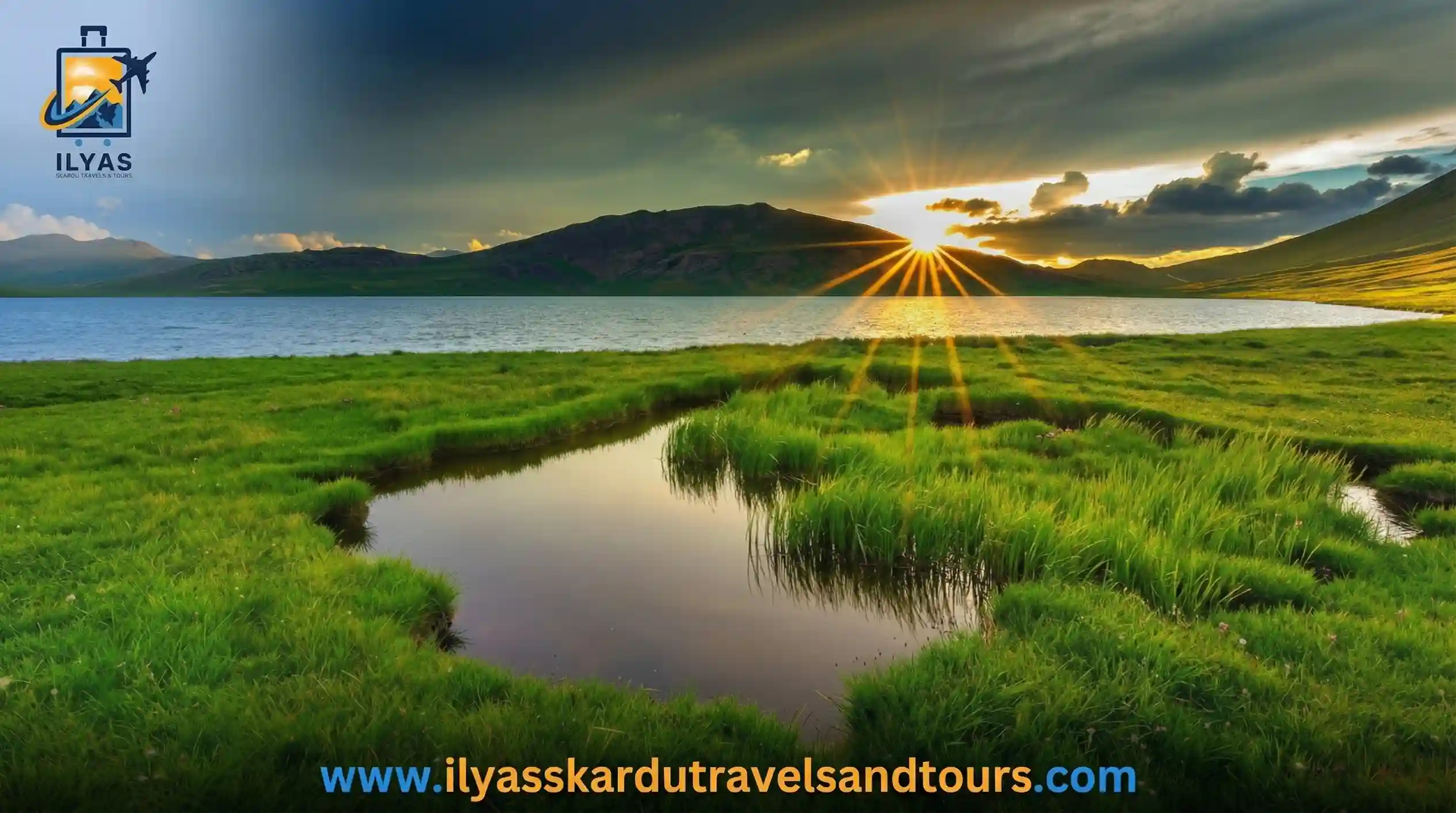
Sheosar Lake at sunrise is the most photographed scene in the park. The reflections are sharpest in early morning before the wind picks up. Arrive before 6am if you want the best light.
Wildflower meadows in July are extraordinary. The diversity of flowering plants at this altitude is partly what makes Deosai a biodiversity hotspot. Macro photography of the flowers is worth dedicating a few hours to.
Wildlife photography requires patience and a telephoto lens of at least 300mm. You won’t get close to bears or snow leopards without putting them at risk, so focal length matters here.
Dust is a factor on the jeep tracks, and the air is dry. Clean your lenses frequently and protect your gear during the drive in.

Common Mistakes to Avoid
Underestimating the altitude. Skardu itself sits at 2,228 meters. Deosai adds another 1,900 meters on top of that. Some people feel fine; others experience headaches, nausea, and fatigue. Don’t push through serious symptoms. Descend if needed.
Relying on mobile data for navigation. No coverage inside the park. Download offline maps before you go. Maps.me with the Pakistan region downloaded works reasonably well for basic navigation.
Going without a guide on multi-day routes. The plateau can be disorienting in poor visibility. Trails are not consistently marked. A local guide is not just convenient, it’s genuinely safer.
Traveling in a vehicle that isn’t suited for the road. The track from Skardu to Bara Pani and beyond is rough. A 4WD with good clearance is necessary, not optional.
Leaving waste in the park. Deosai’s conservation status depends on responsible tourism. Carry bags for your waste, don’t leave food near wildlife areas, and respect the ranger guidelines.
Practical Information Summary
| Detail | Info |
| Location | Gilgit-Baltistan, Pakistan |
| Elevation | Average 4,114m |
| Open season | Late June to early October |
| Nearest city | Skardu (30km to entry) |
| Access vehicle | 4WD required |
| Mobile coverage | Mostly no signal; only a few spots may get weak SCOM connectivity. |
| Nearest hospital | RHQ Skardu and Combined Military Hospital |
| Conservation authority | Wildlife Department, Gilgit-Baltistan |
Conclusion
Deosai National Park is the kind of place that stays with people long after the trip ends. The scale of it, the silence, the wildlife, the altitude, it adds up to something that’s genuinely hard to find in most places in the world. It also requires a bit more preparation than a typical mountain destination.
Get your timing right, hire a reliable local operator, go in with the right gear, and give yourself at least two full days inside the park rather than treating it as a day trip. If you’re building a trip around Gilgit-Baltistan, working with a trusted travel service can make a huge difference. Contact us to plan your journey and explore our exceptional travel services that include Deosai trips and other destinations in the region, making logistics considerably easier.
The plateau has been recovering quietly for decades. Visiting it properly, with care for the environment and respect for the wildlife, is part of how it stays worth visiting.
FAQs About Deosai National Park
What is the best time to explore Deosai National Park?
July and August are the best months. The plateau is fully accessible, wildflowers are in bloom, and wildlife activity is at its peak. Temperatures are manageable during the day, though nights are cold at any point in the season. September is a good alternative if you prefer fewer visitors.
How do you get to Deosai National Park from Islamabad?
Fly to Skardu from Islamabad (around 45 minutes) or take the Karakoram Highway by road (18 to 22 hours). From Skardu, hire a 4WD jeep for the 30-kilometer drive to the park entrance at Bara Pani. The road requires a high-clearance vehicle throughout.
Is Deosai National Park safe for tourists?
Yes, for visitors who plan properly. The main risks are altitude sickness, sudden weather changes, and getting lost on unmarked trails. Go with a local guide for multi-day routes, carry warm gear, and download offline maps before entering the park since there is no mobile signal inside.
What wildlife can you see in Deosai National Park?
Deosai is home to Himalayan brown bears, snow leopards, red foxes, wolves, golden eagles, bar-headed geese, and ruddy shelducks. Brown bears are the most commonly spotted large mammals. Snow leopard sightings are rare but possible. Summer brings significant migratory bird activity around the lakes.
Do you need a permit to enter Deosai National Park?
Yes. Entry permits are issued at the Bara Pani checkpost managed by the Wildlife Department of Gilgit-Baltistan. Fees vary by nationality and activity. It’s worth confirming current rates before your trip as they are subject to change by season.
Can you camp inside Deosai National Park?
Yes. Camping is permitted at designated areas near Bara Pani and Sheosar Lake. Wild camping in other zones is generally allowed but check with rangers on arrival. You must bring all supplies and carry all waste out. There are no waste disposal facilities inside the park.
What should I pack for Deosai National Park?
Pack layers, including a down jacket and a waterproof outer shell. A sleeping bag rated to at least minus 10 Celsius is recommended for camping. Bring sunscreen (UV exposure is intense at altitude), insect repellent for evenings near water, enough food and water for your full stay, and offline maps downloaded before departure.
Is Deosai accessible for non-trekkers?
Mostly yes. You can explore a good portion of the park by jeep and do short walks around Sheosar Lake without any serious trekking experience. The longer routes like the Astore Valley traverse require fitness and preparation, but the core plateau experience is accessible to most visitors with a reliable vehicle.