Autumn is the one season in Gilgit-Baltistan where the landscape does something dramatically different from the rest of the year, and it only lasts a handful of weeks. A Gilgit Baltistan autumn tour package built around this window takes travelers through valleys where poplar and apricot orchards turn gold and rust against the grey of the Karakoram peaks, with cool, clear days that make sightseeing and photography easier than the hazier summer months. This guide covers the practical side of that trip: when to go, which route actually makes sense for your dates, what’s included, and what tends to catch first-time visitors off guard.
Why Autumn Draws Travelers to Gilgit-Baltistan
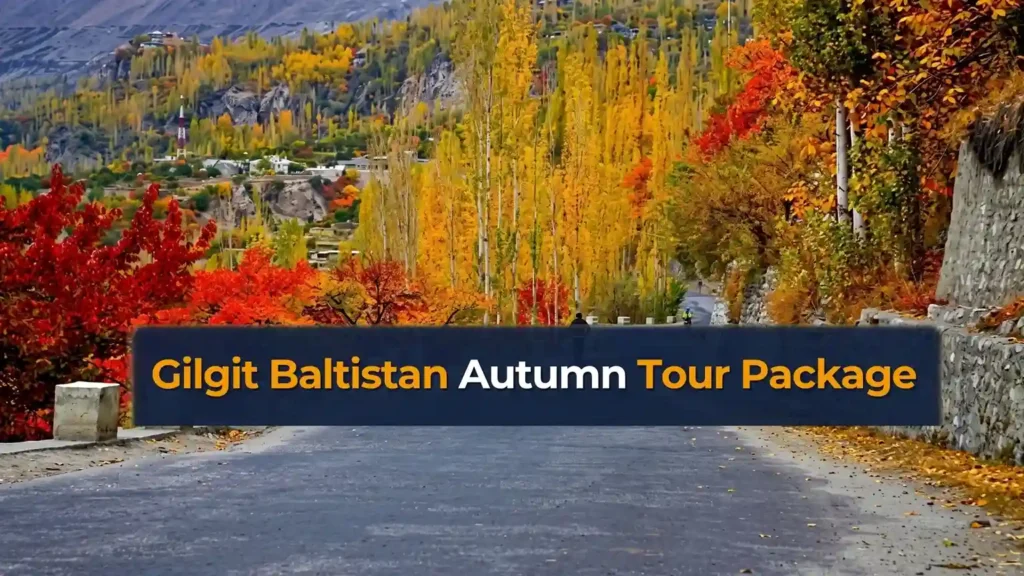
The short version: the same orchards and terraced fields that turn the valleys green in summer change color in autumn, and the shift happens fast enough that it’s genuinely worth timing a trip around. Poplar, apricot, apple, and mulberry trees along the Karakoram Highway and in the Skardu-side valleys turn shades of yellow, orange, and deep red, usually starting in the upper, cooler valleys first and moving down over a few weeks. Daytime temperatures are mild enough for walking around forts and villages in a light jacket, skies tend to be clearer than in the monsoon-affected summer months, and the crowds are noticeably thinner than in peak summer, though hotel rooms in Karimabad and a few other hubs still book out during the best weeks.
None of this is uniform across the region, though, which is the part most autumn tour listings gloss over. Foliage in Hunza and upper Hunza (Gulmit, Passu) tends to peak from mid-October into early November, while lower and southern valleys change a little later. On the Skardu side, poplar-lined stretches around Shigar and Khaplu follow a similar rhythm but aren’t as widely documented, so travelers relying on generic “autumn in Gilgit-Baltistan” advice sometimes arrive a week or two off from peak color in the specific valley they wanted to see. If your dates are fixed and non-negotiable, it’s worth telling your tour operator the exact week so they can point you toward whichever valley is more likely to be at its best.
Quick Tour Facts
| Detail | Information |
| Tour Name | Gilgit Baltistan Autumn Tour Package |
| Region | Gilgit-Baltistan, Pakistan |
| Duration | 5 to 7 days (route-dependent) |
| Tour Type | Autumn, nature, scenic, cultural, and photography sightseeing |
| Departure Point | Islamabad, Gilgit, or Skardu (custom pickup available) |
| Return Point | Islamabad, Gilgit, or Skardu (custom drop-off available) |
| Transport | Private car, SUV, or coaster, sized to group |
| Accommodation | Hotels, guesthouses, or lodges by package category |
| Difficulty | Easy to moderate |
| Best Time | Mid-September through early November, varies by route |
| Price | Contact for current rate; price depends on group size, vehicle, and route |
Two Routes, Not One Itinerary
Gilgit-Baltistan is too large to cover properly in a single 5 to 7 day loop, and trying to hit Hunza, Ghizer, Astore, Skardu, and Khaplu all in one trip usually means long driving days and very little time actually spent anywhere. Instead of forcing every district into one itinerary, this package is built around two separate route options. Pick the one that matches your interests and the time of year you’re traveling, or ask about combining elements of both if you have more than a week.
Route Option 1: Hunza, Nagar, Gilgit, and Ghizer (Karakoram Highway Route)
This route follows the Karakoram Highway north from Gilgit and suits travelers who want forts, mountain viewpoints, and the most photographed autumn scenery in the region, with relatively easier road conditions than the Skardu side.
Day 1: Arrival in Gilgit (by air from Islamabad, or overland via the Karakoram Highway) and transfer toward Hunza.
Day 2: Karimabad sightseeing, including Baltit Fort and Altit Fort, both several centuries old and built by the former Hunza ruling family, plus a walk through the old village lanes below the fort.
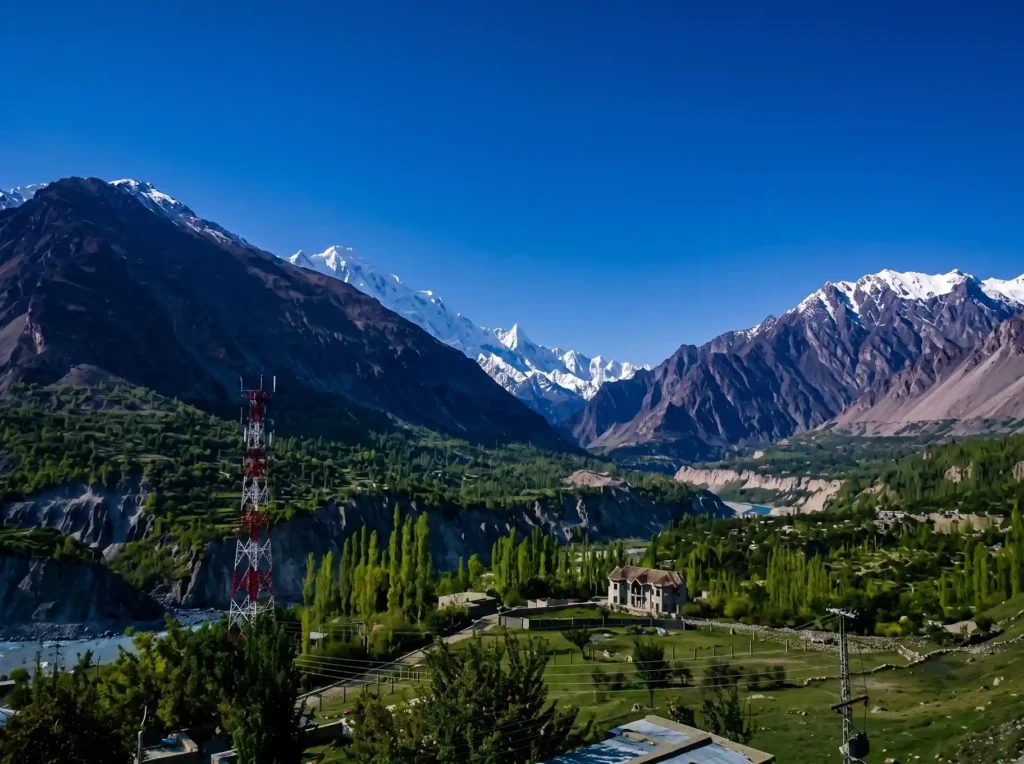
Day 3: Attabad Lake and the drive up toward Passu, where the Passu Cones and the suspension bridges over the Hunza River are the main draw. This is also one of the better stretches for autumn color in the upper valley.
Day 4: Nagar Valley or Naltar Valley, depending on road conditions and traveler interest. Nagar is quieter and less visited than Hunza proper; Naltar involves a side road off the KKH and is known for its own distinct autumn palette.
Day 5: Ghizer district (Phandar, Yasin, or Ishkoman valleys) for travelers with the extra days, or a return toward Gilgit for shorter itineraries.
Day 6-7: Return drive to Gilgit or Islamabad, with a stop at the Rakaposhi viewpoint and, on the Islamabad leg, Thalichi or Taxila depending on timing.
Route Option 2: Skardu, Shigar, Khaplu, and Kharmang (Baltistan Route)
This route suits travelers more interested in forts with a distinct Balti architectural style, high-altitude lakes, and a slower pace, with somewhat rougher road sections than the KKH.
Day 1: Arrival in Skardu, by air from Islamabad or by road via the Karakoram Highway and the Skardu road junction. Transfer and rest.
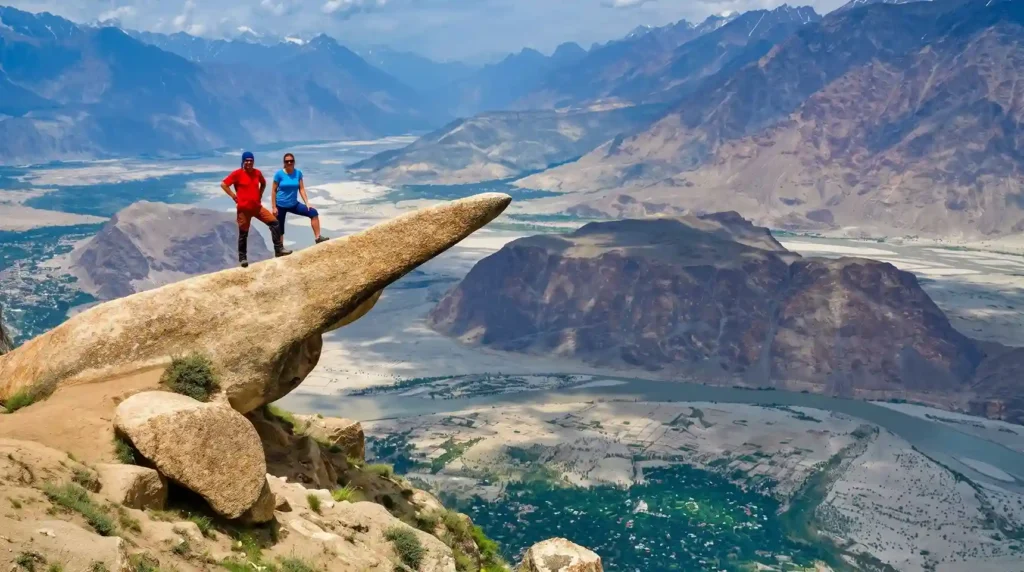
Day 2: Skardu city sights: Kachura Lakes and the Shangrila resort area, plus Satpara Lake and a look at the Katpana Cold Desert, an unusual patch of sand dunes at high altitude.
Day 3: Shigar Valley, including Shigar Fort (now run as a heritage guesthouse) and the polo ground nearby. Shigar’s poplar trees are a good bet for autumn color if timed for mid to late October.
Day 4: Khaplu, home to Khaplu Palace, another restored Balti royal residence, with a quieter, more rural feel than Skardu city.
Day 5: Kharmang district for travelers with time, or a second day exploring Khaplu’s surrounding villages.
Day 6-7: Return to Skardu and onward to Islamabad or Gilgit.
A note on Deosai and Astore: several generic autumn itineraries for this region include Deosai National Park as a standard stop. In practice, Deosai closes for the winter around the last week of October each year because of snowfall, and the exact date shifts slightly from year to year. If your travel dates fall in October, ask your operator to confirm the plateau is still open before it’s added to your route. If you’re traveling in November, plan around Deosai rather than counting on it.
Best Time to Visit and Seasonal Notes
| Period | General Conditions | Notes |
| Mid to late September | Transition weeks; greenery still dominant, early color starting in upper valleys | Good for travelers who want milder crowds and don’t need peak foliage |
| Early to mid-October | Foliage building toward peak in Hunza and Gojal; Skardu-side valleys slightly behind | Deosai and Astore-side high routes still generally accessible, subject to confirmation |
| Mid-October to early November | Widely reported as the peak color window for Hunza and upper Hunza; Shigar and Khaplu typically close behind | Hotel availability in Karimabad tightens; book ahead |
| Late October onward | Babusar Top and Deosai typically close for winter around this point | Route planning should avoid depending on these unless confirmed open |
| Mid to late November | Colors fading at lower elevations; noticeably colder mornings and evenings | Fewer crowds, but check road status before booking this late |
Exact closure dates for Babusar Top, Deosai, and any high-altitude side roads change every year depending on snowfall, so treat the dates above as a general pattern rather than a fixed calendar. Confirm current road status with your operator close to your departure date.
Cost, Inclusions, and Exclusions
Pricing for this tour depends on group size, vehicle type, chosen route, accommodation category, and exact duration, so a single fixed number wouldn’t be accurate here. Contact the team for a current quote based on your dates and preferences; expect the price to shift somewhat between shoulder weeks (mid-September, mid-November) and the peak color weeks in October, when demand and hotel rates both rise.
Getting There and Transportation
Most travelers reach Gilgit-Baltistan either by flying into Gilgit or Skardu from Islamabad, weather permitting, since these flights are known for frequent delays and cancellations due to visibility, or by driving up the Karakoram Highway from Islamabad, a long overland journey that itself passes through scenic stretches worth building a rest stop around. Within the region, private vehicles are used for all sightseeing and inter-valley travel, sized to the group: a car or SUV for smaller groups, a coaster for larger ones. Road conditions on both routes can change with rain, early snowfall, or maintenance work, so build a little flexibility into any tight schedule rather than planning back-to-back long drives with no buffer day.
Recommended Skardu Tour Packages for Every Traveler
Explore our recommended Skardu tour packages, carefully designed for solo travelers, families, couples, and groups. Choose from flexible Budget, Standard, and Luxury options to match your travel style and budget.
| Tour(s) | Mode of Transport | Budget | Standard | Luxury |
|---|---|---|---|---|
| Skardu Tour Packages from Islamabad | By Road | PKR 90,500 | PKR 115,000 | PKR 194,000 |
| Hunza Tour Package | By Air | PKR 100,500 | PKR 140,500 | PKR 220,000 |
| Trip to Hunza: Your Complete Travel Guide and Itinerary | By Road | PKR 9,500 | PKR 12,500 | PKR 15,000 |
| Baltit Fort Hunza: Karimabad’s Historic Landmark | By Road | PKR 20,000 | PKR 30,000 | PKR 40,000 |
| Marsur Rock Skardu Tour | By Air | PKR 115,000 | PKR 136,000 | PKR 25,000 |
| Satpara Lake Skardu | By Air | PKR 130,000 | PKR 150,000 | PKR 235,000 |
| Deosai National Park Skardu Tour | By Road | PKR 168,000 | PKR 250,000 | PKR 390,000 |
Difficulty and Fitness Requirements
This is an easy to moderate tour built around sightseeing, short walks, and scenic drives rather than trekking. Basic fitness is enough for the standard itinerary. Some stops, particularly the forts and a few viewpoints, involve stairs, uneven ground, or short uphill walks, so comfortable footwear matters more than any particular fitness level. Travelers with mobility limitations should mention this when booking so the itinerary can be adjusted around the more physically demanding stops.
What to Bring
Autumn mornings and evenings in Gilgit-Baltistan get cold even when the afternoons are pleasant, and the gap between the two widens the higher you go. A few layers work better than one heavy jacket, since you’ll likely be pulling layers on and off through the day. Bring comfortable walking shoes for uneven fort courtyards and village lanes, sunglasses and sunscreen for the strong high-altitude sun, any personal medication you need, and a printed or digital copy of your ID and travel documents. A basic camera or a phone with decent low-light performance is worth the extra thought here, since a lot of the best foliage shots happen in the softer early morning and late afternoon light.
Important Travel Information
Road conditions across both routes are affected by rain, early season snowfall, and occasional landslides, particularly on longer highway stretches. Some high-altitude side trips, including Deosai and the Babusar Top crossing, have seasonal access limits and typically close by late October or early November depending on the year’s snowfall. Mobile network coverage is patchy in several valleys, more reliable in main towns like Karimabad and Skardu than in side valleys. None of this should be read as a reason to avoid the trip. It’s the reason to confirm current road and weather status with your operator in the days before departure rather than assuming a listed itinerary is guaranteed as written months in advance.
Booking Information
Advance booking is recommended for the autumn season, especially for travel dates in the first three weeks of October, when demand for Hunza hotels in particular picks up. Contact the team for current pricing, hotel availability, transportation options, and to build a route around your specific dates and interests. Group size, vehicle type, and accommodation category all affect the final quote, so it helps to have those details ready when you reach out.
Tour Highlights
- Autumn Foliage & Golden Valleys
- Stunning Karakoram Mountain Views
- Baltit Fort & Altit Fort
- Attabad Lake & Passu Cones
- Nagar & Naltar Valleys
- Katpana Cold Desert
- Shigar Fort & Khaplu Palace
- Kharmang & Khaplu Villages
- Perfect Photography Opportunities
- Private Transport & Guided Tour
- Comfortable Hotel/Guesthouse Stay
- Flexible 5–7 Day Itinerary
- Best Season: Mid-September to Early November
Included
- Private transportation for the selected route and package
- Driver and guide assistance throughout the trip
- Accommodation according to the selected package category
- Itinerary planning and trip coordination
- Basic on-tour support
Excluded
- Domestic or international flights, unless specifically added to the package
- Meals, unless stated in the package
- Personal expenses and optional activities
- Entry tickets where applicable (forts, parks)
- Travel insurance
Gallery