
Most people associate cherry blossoms with Japan. Every April, tourists crowd Kyoto’s Maruyama Park, elbowing each other for the same angle. What far fewer people know is that about 4,500 kilometers west, the valleys of Gilgit Baltistan are putting on a nearly identical show. And almost nobody is there to see it.
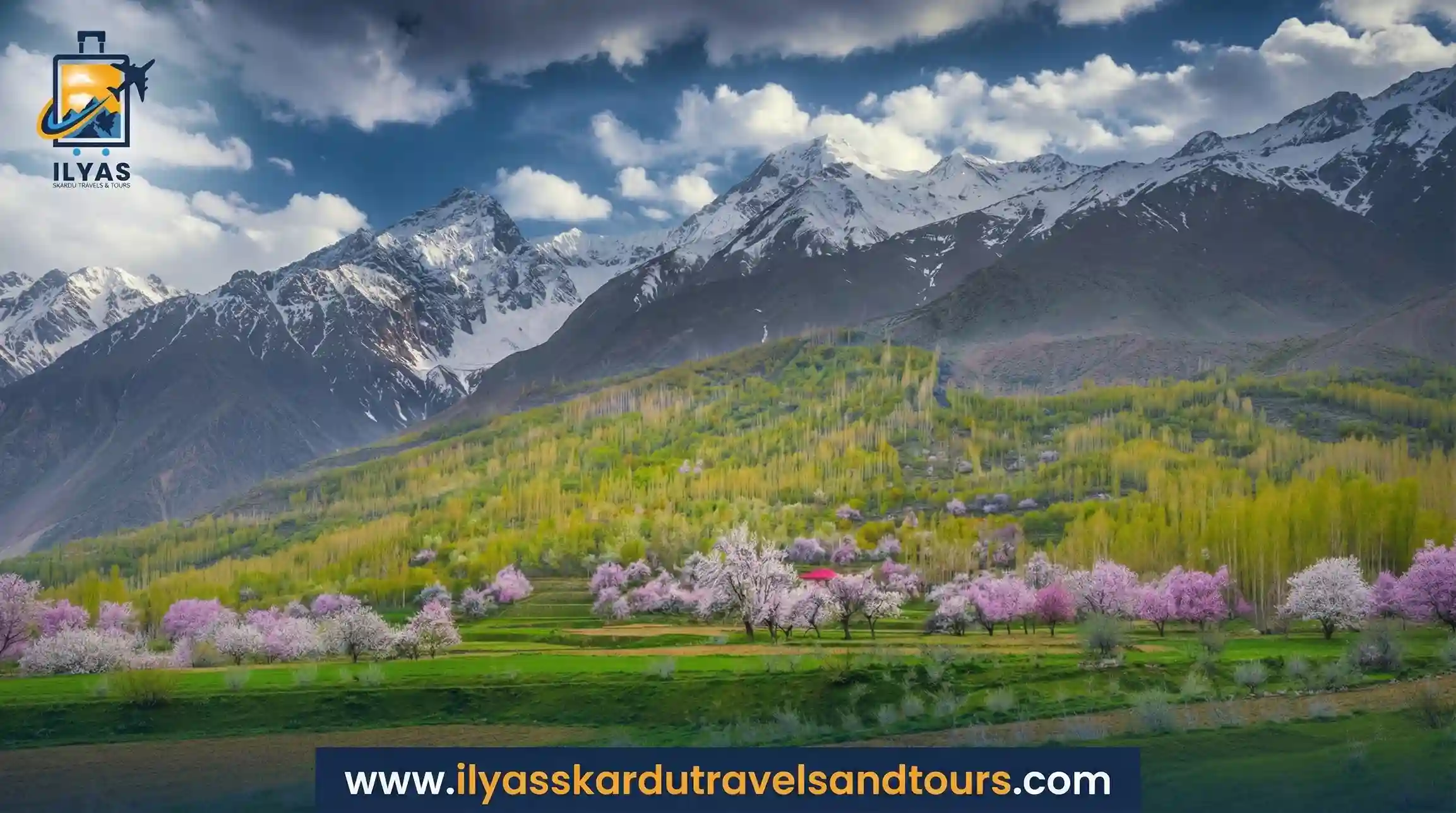
Every spring, cherry and apricot trees across Gilgit Baltistan burst into bloom against a backdrop of snow-capped Karakoram peaks. Pink and white petals drift across terraced orchards, old stone forts, and mountain roads. The scale is enormous. Entire valley floors turn pink. The crowds are a fraction of what you’d find at any comparable spot in Asia.
But this is about more than just photos. The cherry and apricot blossoms mark the end of a long, hard winter for local communities. Orchards that feed families throughout the year come alive in late March and April, painting the valleys with vibrant pink and white petals, and the whole region shifts into a different rhythm. To experience this in the best way, travelers can take advantage of Skardu tour packages which guide you to the peak bloom spots, the most scenic valleys, and provide tips on what to expect on the ground.
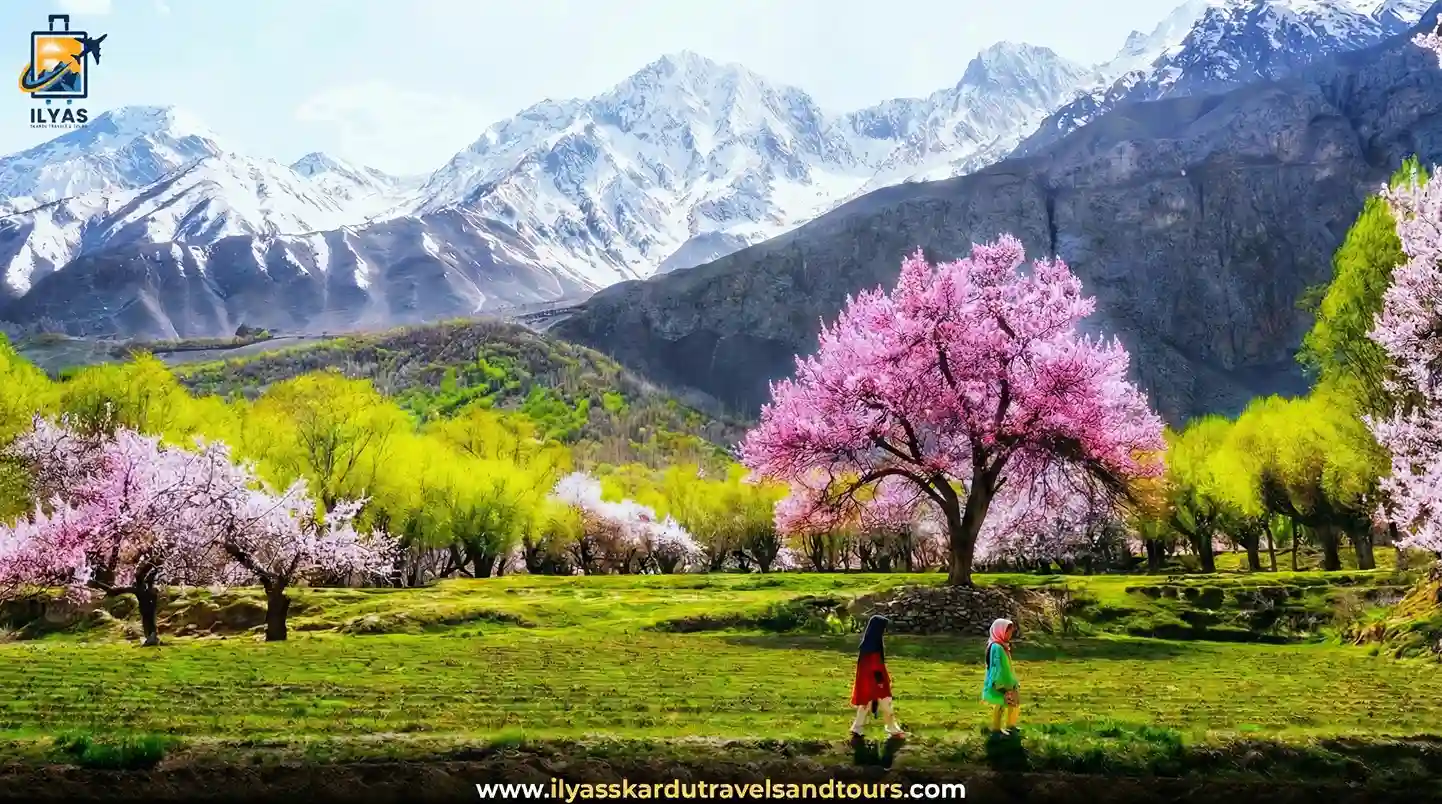
When Is Cherry Blossom Season in Gilgit Baltistan?
The season does not happen all at once. Because the valleys sit at different altitudes, blooming starts lower and gradually moves up as temperatures warm through spring. This staggered timing is actually useful for travelers. It means you can follow the blossoms across different valleys over two to three weeks rather than trying to be in one place at exactly the right moment.
A rough guide by location:
- Gilgit city and lower valleys: Mid-February to early March
- Hunza and Nagar: Late March to mid-April
- Skardu, Shigar, and Khaplu: Late March through May
The sweet spot for most visitors is late March to mid-April. At that point Hunza Valley is at its most vivid, Skardu’s orchards are blooming, and the snowline sits high enough on the peaks to give contrast without blocking roads.
A few things affect exact timing each year. A warmer winter pushes blooms earlier. A cold snap in March can delay things by a week or two. Higher elevations bloom later, so Skardu, which sits higher than Gilgit town, tends to peak a week or so after lower areas. Cherry and apricot trees also bloom at slightly different times. Apricots usually come first, by a few days, in the same valley.
One thing that surprises first-time visitors: the short spring season can create a rare overlap of snowfall and blossoms. Pink and white flowers against snow-covered fields is something photographers particularly prize. You cannot plan for it exactly, but if you are there in early April, there is a reasonable chance you will catch it.
Check local travel forums or tour operators closer to your travel date for that year’s specific timing.

What’s Actually Blooming (It’s Not Just Cherry)
The term “cherry blossom” gets used loosely here, and it is worth clarifying before you go. During spring in GB, visitors also see blossoms from apricot, almond, apple, and pear trees. In practice, apricot blossoms are often more dominant than cherry, especially in Hunza, where apricot orchards have been a food source and trade crop for centuries. The visual effect is similar but apricot blooms tend to be slightly warmer in tone.
Apricot trees usually bloom first. Arrive in mid-March and you will likely catch the tail end of apricot season and the beginning of cherry. By mid-April you are mostly into cherry and early apple blossoms. A two-week window gives you the best chance of overlapping both.
Top Places to See Cherry Blossoms in Gilgit Baltistan
Hunza Valley
Hunza is where most people start, and there is a good reason for that. The valley sits at around 2,400 meters and is lined with terraced orchards that have been maintained for centuries. The combination of apricot and cherry blossoms against the backdrop of Rakaposhi and Ultar Sar is genuinely extraordinary.
Some of the best spots for blossom photography in Hunza include the foothills of Rakaposhi, Altit Fort, Karimabad, Gulmit, and the old settlement of Ganesh. Baltit Fort framed by blossoming trees is one of the most photographed scenes in Pakistan. Get there at sunrise if you can.
The view from Eagle’s Nest, a high ridgeline above Duikar, looking down over the valley as orchards bloom below with Rakaposhi and Ultar Sar rising behind them, is one of the more remarkable sights in Pakistan. The scale alone makes it feel different from anything you would see at lower elevations.
Hunza Spring Blossom Festival: The annual festival marks the beginning of spring and includes traditional dance performances, live music, local handicraft exhibitions, and food stalls. This is not a tourist event grafted onto the landscape. It is something the community has celebrated for generations.

Skardu Valley
During cherry blossom season, typically mid-March to end of April, Skardu fills with pink and white blossoms lining streets and gardens. The surrounding areas of Kachura, Manthoka, and villages along the Shigar River add to the scenery.
What sets Skardu apart is the combination of blossoms with the cold desert landscape around it. The contrast between the sandy, almost lunar terrain along the Indus and the sudden explosion of pink in the orchards is striking in a way that is hard to photograph but immediately clear when you see it in person.

Shigar Valley
Shigar is about an hour’s drive from Skardu and significantly less visited, which makes it worth the detour. The valley narrows between towering rock walls. The old Shigar Fort, now a beautifully restored heritage hotel run by the Aga Khan Cultural Service, sits at its heart. The orchards stretch along the river in long, unbroken rows.
The orchards here tend to bloom slightly later than those in Skardu town. It is quieter, the pace feels slower, and it gives you a clearer sense of what rural GB life actually looks like. Worth a day trip at minimum, and a full overnight if you can manage it.

Khaplu Valley
Further east in Ghanche district, Khaplu blooms a bit later than Hunza and Shigar. The drive from Skardu takes three to four hours and follows the Shyok River through dramatic gorge scenery. Khaplu offers views of Masherbrum, Gasherbrum, and Sogha Valley, making it one of the better spots for both mountain scenery and blossom photography.
Khaplu Palace, another restored heritage site, sits above terraced orchards that turn white and pink in mid-April and provides one of the better elevated vantage points for photographing the valley below. If you want to avoid crowds entirely, Khaplu is your best bet.

Nagar Valley
Across the river from Hunza, Nagar gets overlooked by most tourists who stay on the Karakoram Highway side. That is a mistake. The Hopar Glacier and Nagar’s orchards together make for a full day’s exploration. During blossom season, the village paths between Nilt and Hopar are as scenic as anything in Hunza.

Choundha Valley
Less known than the others, Choundha Valley near Skardu sits at roughly 2,500 meters and has become a destination in its own right during spring. The valley is surrounded by towering peaks and forests, and is considered one of the more spectacular areas in Pakistan during bloom season. This is the one to seek out if you want something genuinely off the main circuit.
How to Plan Your Cherry Blossom Trip
Getting There
Fly into either Gilgit or Skardu from Islamabad. Flights take about an hour but are weather-dependent and cancellations are common in early spring. Book flexible tickets and always have a road backup plan.
By road, the Karakoram Highway from Besham to Gilgit takes 8 to 10 hours. The full drive from Islamabad to Hunza is roughly 16 to 18 hours, usually broken over two days with a stop in Chilas or Gilgit. The road can be affected by rockslides in early spring, so check conditions before you go.
Once in Gilgit-Baltistan, rent a jeep or hire a local driver. Many of the best cherry blossom spots are accessible only by rugged roads, and a local guide ensures you reach viewpoints that are off the usual map. For those seeking a truly immersive experience, these routes form the perfect Spring Adventure in Skardu combining breathtaking blossoms with scenic mountain drives and hidden valley exploration.
Where to Stay
Book accommodation at least four to six weeks ahead for spring travel. April is peak season and popular guesthouses in Hunza sell out weeks in advance. Options range from basic family-run guesthouses (1,500 to 3,000 PKR per night) to mid-range hotels in Karimabad and Skardu (5,000 to 15,000 PKR). The Serena hotels in Gilgit and Hunza are the best upscale options.
For a more immersive experience, smaller valley guesthouses put you right in the middle of the orchards. Ask the host when the blooms in their specific area typically peak. They will know better than any website.
How Long Do You Need?
A minimum of five to seven days lets you cover Hunza and Skardu reasonably well. Ten to fourteen days is better if you want to include Shigar, Khaplu, and Choundha without rushing. If you only have a long weekend, focus on Hunza. Fly in, spend three nights in Karimabad, and fly back.
Booking a Tour vs. Going Independent
Both are viable. Independent travel works well if you are comfortable with logistics, arranging transport in Gilgit or Skardu, booking guesthouses in smaller valleys, and adjusting plans as conditions change.
For those who prefer a guided experience, several operators run spring blossom tours covering multiple valleys over 8 to 12 days. A local guide does not just show you viewpoints. They tell you which family owns which orchard, explain why certain villages have more diverse tree varieties, and take you to the small festivals that sometimes coincide with bloom season.
Ilyas Skardu Travels and Tours is one of the established local operators based in Skardu, with particular knowledge of the Baltistan valleys, Shigar, Khaplu, and Choundha, that are harder to navigate without local ground knowledge. They can also help with logistics around unpredictable flight cancellations, which is genuinely valuable if you are on a fixed schedule. Local operators know current bloom conditions better than agencies operating remotely, which can make a real difference when you are trying to hit peak bloom during a short window.
Photography Tips for Blossom Season
Golden hour, the hour after sunrise and before sunset, is when the light on the valley floors and peaks is at its best. In Hunza, Eagle’s Nest faces west and is particularly good at sunset. For Rakaposhi views, early morning works better.
Use the mountains as your background, not the sky. The contrast between snow-covered peaks and blooming trees is what makes GB blossom photos distinctive. Look for human elements too. A farmer in the orchard, old stone walls, traditional wooden architecture. These add context and make the images feel grounded rather than generic.
Rain or overcast skies are not a problem. Soft light after rain can produce better photos than bright sun, and the petals look more saturated when wet. A lens in the 70 to 200mm range is useful for capturing blossoms against distant peaks.
Drone regulations: CAA Pakistan requires a permit for commercial aerial photography. Check current rules before bringing a drone.
What Else to Do During Blossom Season
Spring in GB is not just about blossoms. The season coincides with several other worthwhile experiences:
- Nowruz celebrations: Some northern communities mark the Persian new year with local food, music, and gatherings in late March and early April.
- Trout fishing: The Hunza and Gilgit rivers open up in spring after winter closure.
- Early trekking season: Lower altitude trails become accessible in April while higher passes are still snow-covered. The walk from Karimabad to Ultar Meadows is doable in April for fit hikers.
- Village festivals: Some communities hold small spring celebrations tied to the beginning of farming season. These are not tourist events, but local guides can connect you to them if you are interested.
Why This Season Matters Beyond Tourism
For communities in Gilgit Baltistan, the blossom season is the beginning of the agricultural calendar. Apricots hold particular importance in the region’s economy. Traditional sun-drying methods are used to produce dried apricots, a staple in local diets and a source of income for many families. Apricot kernels are used to extract oil, and the fruit is made into jams and juices.
Watching an orchard bloom in Hunza or Khaplu is not just pleasant scenery. It is witnessing a livelihood come to life after a long winter, making the experience far richer than a purely photographic visit. To explore these hidden blossom spots at your own pace, it’s ideal to rent a car in Skardu giving you the freedom to visit remote orchards and scenic viewpoints off the usual tourist paths.
Practical Things to Know Before You Go
- Weather is unpredictable: April in GB can mean warm sunny days or unexpected snowfall at higher elevations. Pack layers including a down jacket, windproof shell, and thermals, even if you are visiting for the blossoms.
- Altitude awareness: Skardu sits at about 2,228 meters and Hunza’s main town at around 2,438 meters. Most people acclimatize without issues, but take it easy the first day if you have flown in from a lower elevation.
- Mobile connectivity: Special Communications Organization (SCOM) provides the best coverage across Gilgit-Baltistan. Other networks work mainly in main towns, with no signal in many remote valleys. Only SCOM offers 4G and 5G internet, so an SCOM SIM is recommended.
- Cash is essential: ATMs and all commercial banks are available in Gilgit-Baltistan, so you can easily withdraw cash from any bank or ATM.
- Respect local customs: Gilgit-Baltistan communities are very hospitable, and you can seek help or accommodation from locals if needed. However, always respect their culture and traditions, and dress modestly.
- English widely spoken: Drivers and guides in even remote valleys can generally understand and communicate in English. Most signboards are also in English.
Blossom Timing by Valley: Quick Reference
| Valley | Peak Bloom | Notes |
| Gilgit City | Mid-Feb to early March | Lowest altitude; blooms first |
| Hunza & Nagar | Late March to mid-April | Most popular; stunning mountain backdrop |
| Skardu | Mid-March to end of April | Cold desert contrast; unique landscape |
| Shigar Valley | Early to mid-April | Quiet; heritage fort; narrow valley |
| Khaplu | Mid to late April | Least crowded; best for avoiding peak rush |
| Choundha Valley | Mid-April to early May | Hidden gem near Skardu; off main circuit |
Conclusion
The cherry blossom season in Gilgit Baltistan is genuinely one of South Asia’s most underappreciated natural events. The scale is huge, the crowds are thin, and the mountain backdrop turns something already beautiful into something that feels almost unreal.
The logistics require some planning. Flights are uncertain, roads require flexibility, and peak accommodation books fast. But none of that is complicated if you start organizing a few months out.
The season runs from late February to May depending on elevation, with late March to mid-April as the practical sweet spot for most travelers. Whether you base yourself in Hunza and work the Karakoram Highway corridor, or focus on the Baltistan side out of Skardu, you are unlikely to leave disappointed.
Go before it gets crowded. And when you go, go in the early morning before the light turns flat. That is when GB shows you what it is actually made of.
Frequently Asked Questions
When is the best time to see cherry blossoms in Gilgit Baltistan?
Late March to mid-April is the strongest window for most valleys. Lower-altitude areas like Gilgit city can see blooms as early as mid-February, while higher valleys like Khaplu and Shigar peak closer to late April. Exact timing shifts by a week or two each year depending on winter temperatures, so check locally before finalizing your dates.
Is cherry blossom season in Gilgit Baltistan comparable to Japan’s?
In terms of scale and spectacle, yes. Entire valley floors turn pink with apricot and cherry blooms against snow-capped Karakoram peaks. The key difference is crowd density. Gilgit Baltistan sees a fraction of the tourist volume, so the experience feels far more personal and accessible.
Which valley has the best cherry blossoms in GB?
Hunza Valley, particularly around Karimabad, Altit Fort, and the Eagle’s Nest viewpoint, is the most dramatic. Skardu, Shigar, and Khaplu are strong alternatives and offer more variety for travelers with more time. Choundha Valley near Skardu is worth seeking out if you want something completely off the main circuit.
Can I visit independently or do I need a guide?
Independent travel is possible, especially on the Karakoram Highway route to Hunza. For Baltistan-side valleys, Skardu, Shigar, Khaplu, and Choundha, local ground knowledge is genuinely helpful for navigating logistics and tracking current bloom conditions. Operators like Ilyas Skardu Travels and Tours can help with customized itineraries if you want to cover multiple valleys efficiently.
Are apricot blossoms and cherry blossoms the same in GB?
Not exactly, though they overlap. Apricot blossoms typically peak slightly earlier and tend to be whiter in tone. Cherry blossoms are slightly more pink and follow a week or two later. Apple and pear trees add to the display through April. Most of what you will photograph is a mix of all three.
What should I pack for blossom season in GB?
Pack layers for cold mornings and warm afternoons. Include a rain jacket, comfortable walking shoes, sunscreen (UV is intense at altitude), a portable charger, and cash. There is a real possibility of light snow in March and early April, so a down jacket is advisable even for a spring trip.
Is it safe to travel to Gilgit Baltistan?
GB is considered safe for domestic and international tourists with a strong tourism infrastructure in main valleys. As with any mountain region, road conditions and weather create practical hazards. Travel with a reputable local operator, inform someone of your itinerary, and check current advisories from Pakistan’s tourism authority before traveling.
Are there festivals during cherry blossom season?
Some communities celebrate Nowruz and the start of the farming season with local gatherings in late March and early April. Hunza also holds its annual Spring Blossom Festival with cultural performances, handicraft exhibitions, and food stalls. These are not large organized tourist events but are part of the cultural life of the region. A local guide can help you find and attend them respectfully.
