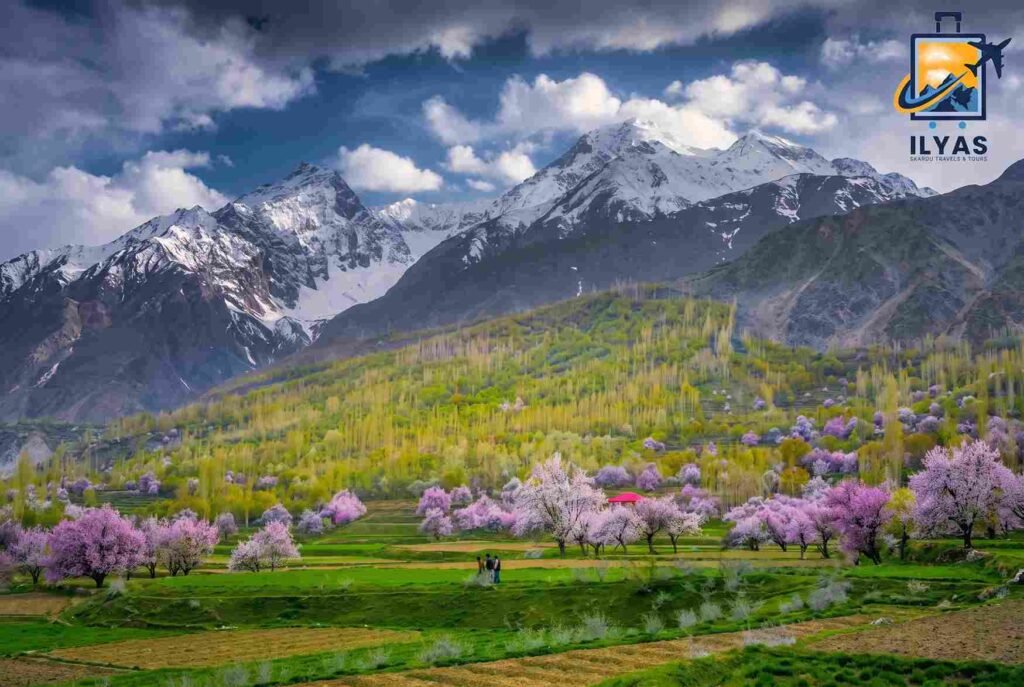
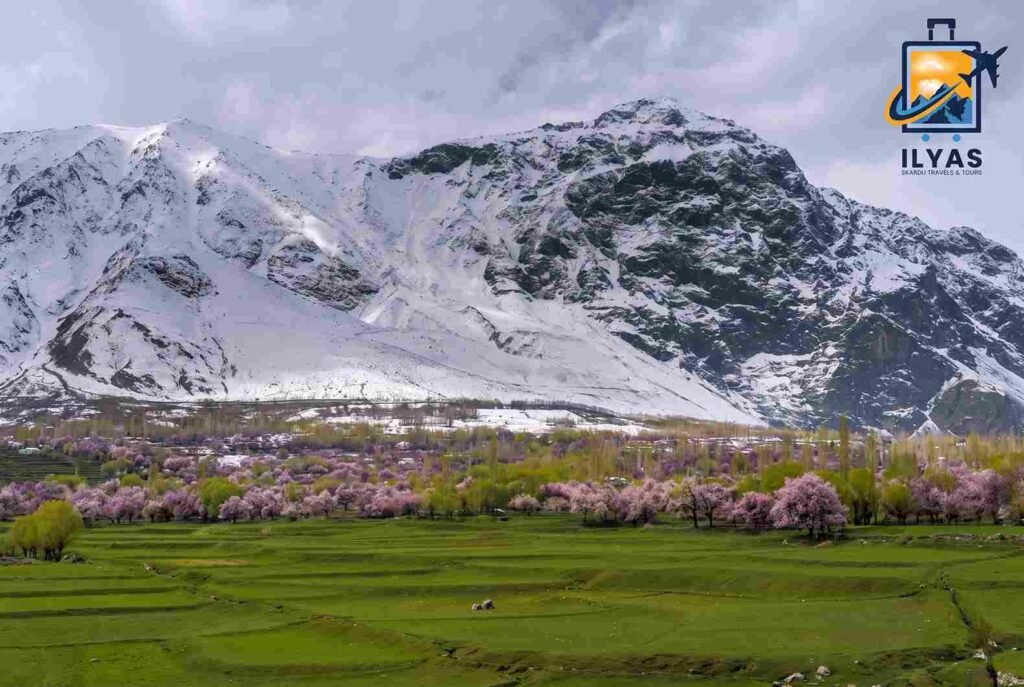
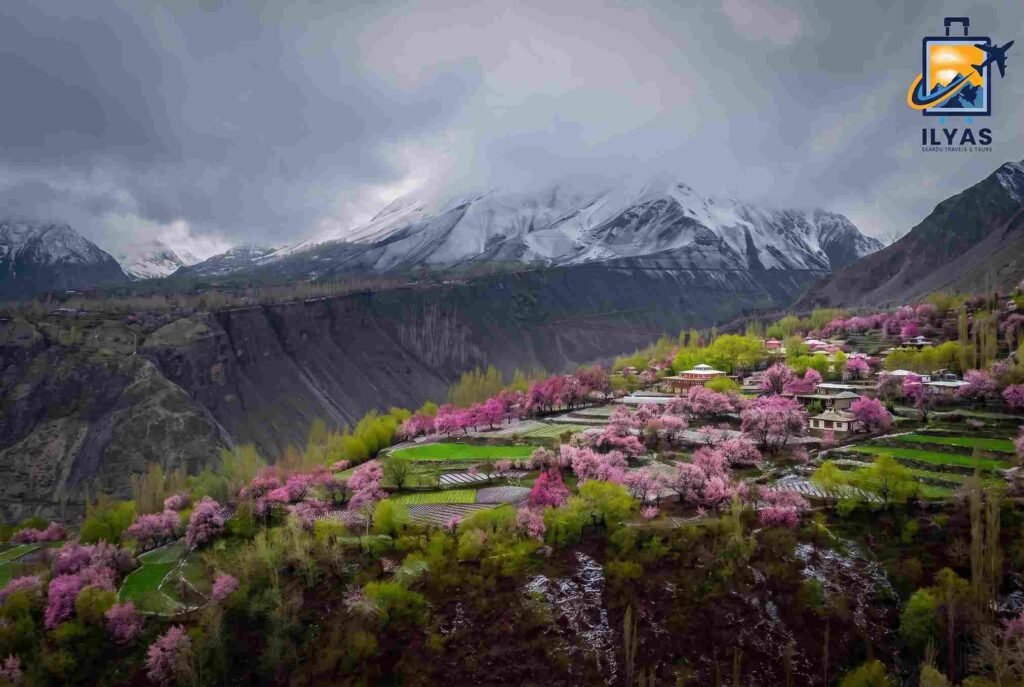
Chunda Valley sits on raised ground above Skardu, and that elevation is really the point of going. The Government of Gilgit-Baltistan Tourism Department places it at roughly 2,500 meters, about 500 meters above Skardu town itself, which is exactly why the valley has become known for its panoramic views over the city. The Chunda Valley Skardu tour is a day trip built around that view, plus whatever else is happening in the valley depending on when you visit: fruit blossoms in spring, green terraced fields and cultivated land in summer, and short walks or hikes on local trails almost any time the road is open.
It’s a different kind of day trip than something like Basho or Deosai. You’re not going for a big single landmark. You’re going for a village-and-viewpoint combination: working orchards, a scattering of homes, Chunda Fort, and wide views back down over the Indus and Shigar river confluence where Skardu sits. That makes it a good fit for travelers who want scenery without a long hike, and a genuinely strong pick for anyone visiting during blossom season, since the timing lines up with one of the more specific, checkable reasons to visit any single valley in the region.
Chunda Valley Skardu Tour Overview
| Detail | Information |
| Tour name | Chunda Valley, Skardu Tour |
| Destination | Chunda Valley, Skardu District |
| Duration | 1 day |
| Tour type | Day trip, nature, family, adventure, photography, cultural exploration |
| Departure | Skardu City |
| Return | Skardu City |
| Approximate elevation | Around 2,500 meters (about 500 meters above Skardu town) |
| Approximate travel time | Around one hour’s drive from Skardu downtown, road conditions permitting |
| Transport |
4×4 Jeep (TX or TZ), suitable for unpaved and rough mountain roads. |
| Accommodation | Not required; travelers return to Skardu City |
| Difficulty | Easy to moderate, depending on how much walking is included |
| Best time to visit | Mid March to April for blossom season; summer for green landscapes and city views |
| Price | Custom quote, contact for current pricing |
A note on distance: online sources give quite different figures for how far Chunda Valley actually is from Skardu, ranging from around 10 km to over 30 km depending on the route and the source. Rather than repeat a specific number that may not hold up, it’s more useful to know that the drive is commonly described as taking around an hour from Skardu downtown, and that the route includes some rough or steep sections near the top.
Tour Overview
The drive up to Chunda starts in Skardu City and climbs steadily, since the whole point of the valley is that it sits well above the town. Road quality varies by season and by exactly which route your driver takes, and the last stretch tends to be steeper and rougher than the rest, which is why some operators prefer an SUV or 4×4 rather than a standard sedan. Once you’re up in the valley, the landscape opens into a mix of cultivated fields, fruit orchards, and scattered village homes, all set against a backdrop of the surrounding peaks.
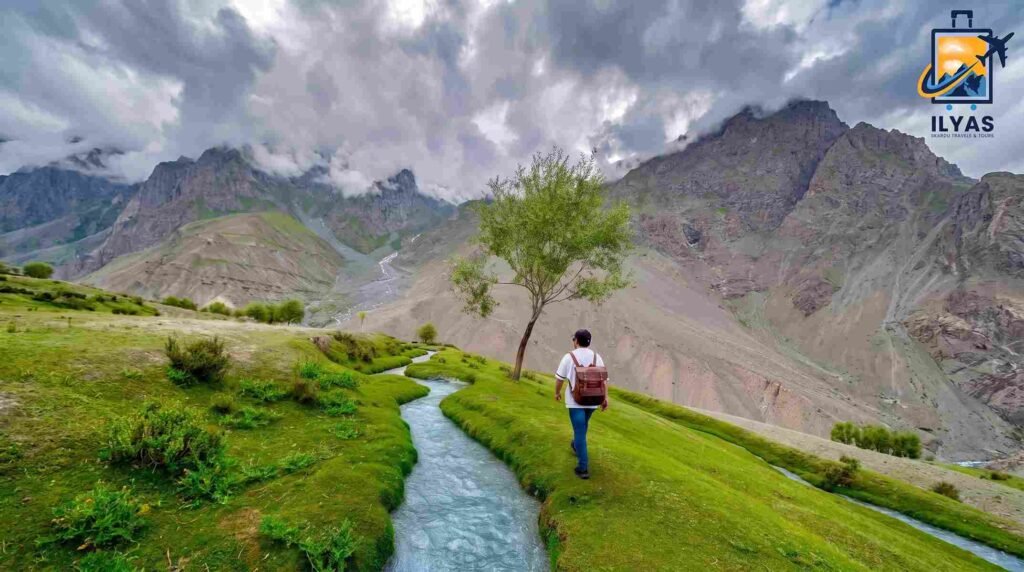
The main draw, and the thing that separates Chunda from most other Skardu day trips, is the view back down over the city. From the valley’s viewpoints you can see Skardu spread out along the Indus and Shigar rivers, which is a genuinely different perspective than anything you get at ground level in town. Trekking and hiking trails run through the area too, with route options ranging from short walks near the viewpoints to longer trails for travelers who want more time on foot. Chunda Fort adds a cultural stop to the day, and the valley’s high-altitude lakes are locally known for boating and fishing, though availability of boating or fishing activities on a standard tour should be confirmed at the time of booking rather than assumed.
Chunda works well for families who want scenery without a long hike, for photographers who want the city-viewpoint shot, and especially for travelers visiting during blossom season, when the orchards are a specific, time-bound reason to prioritize this valley over others nearby.
Detailed Itinerary
Morning: Pick-up and departure from Skardu City The day begins with pick-up in Skardu and the drive toward Chunda Valley. The climb up is gradual at first, then steeper as you get closer to the valley itself.
Late morning: Arrival at the elevated valley area Once you reach the upper section of Chunda, the road opens into the main viewpoint and village area. This is usually the first proper stop, both for the view over Skardu and to get oriented before exploring further.
Midday: Viewpoints and cultivated areas Time is spent at the main viewpoints and walking through the orchards and cultivated land. During blossom season, this stretch of the day is worth extending, since the photography opportunities among the flowering trees are a big part of why people come to Chunda at that time of year.
Afternoon: Local trails and Chunda Fort Depending on group interest and fitness, the afternoon can include a walk on local trails or a visit to Chunda Fort and other accessible cultural features. Travelers who’d rather stay closer to the viewpoints and skip the walking sections can do that instead; this part of the day is flexible.
Late afternoon: Return journey The group heads back down toward Skardu City, retracing the road from the morning.
Evening: Drop-off in Skardu The tour wraps up with drop-off at the agreed point in Skardu.
As with any mountain-road itinerary in this region, exact timings shift depending on road conditions, weather, and how the group wants to pace the day. Treat the sequence above as the shape of the day rather than a fixed clock.
Best Time to Visit
The Government of Gilgit-Baltistan Tourism Department specifically identifies late February through April as Chunda’s spring blossom period, when fruit-bearing trees across the valley come into bloom. This is the strongest single reason to time a Chunda visit deliberately rather than fitting it in whenever convenient, since blossom timing shifts a little year to year depending on weather and shouldn’t be treated as a fixed calendar date.
Summer keeps Chunda relevant for a different reason: with the blossoms gone, the valley is still one of the better spots around Skardu for panoramic city views and green, cultivated landscape. Later in the year, road conditions and weather become more of a factor, and winter access is generally not something to plan around for this tour.
| Season | Months | What to Expect |
| Blossom season | Late March to April | Fruit trees in bloom across the valley; a specific, time-limited window worth planning around |
| Summer | May to September | Green cultivated landscape, reliable road access, strong panoramic views over Skardu |
| Autumn | October | Conditions vary; check current road status closer to your travel date |
| Winter | December to February | Winter is very cold, with snowfall common in the area, so this period is not recommended for this tour. |
Cost, Inclusions, and Exclusions
Pricing for the Chunda Valley Skardu tour is handled on a custom quote basis, since it depends on group size, vehicle type, and the exact route conditions on your travel date. Confirm current pricing directly with the team rather than relying on a figure from elsewhere.
Recommended Skardu Tour Packages for Every Traveler
Explore our recommended Skardu tour packages, carefully designed for solo travelers, families, couples, and groups. Choose from flexible Budget, Standard, and Luxury options to match your travel style and budget.
| Tour(s) | Mode of Transport | Budget | Standard | Luxury |
|---|---|---|---|---|
| Skardu Valley Tour (7 Days) | By Road | PKR 90,500 | PKR 115,000 | PKR 194,000 |
| Skardu Tour Pakages from Lahore (6 Days) | By Air | PKR 100,500 | PKR 140,500 | PKR 220,000 |
| Chunda Valley Skardu Tour (1 Days) | By Road | PKR 9,500 | PKR 12,500 | PKR 15,000 |
| Basho Valley Tour (1 Days) | By Road | PKR 20,000 | PKR 30,000 | PKR 40,000 |
| Gilgit Baltistan Tour – Hunza, Fairy Meadows & Skardu (7 Days) | By Air | PKR 115,000 | PKR 136,000 | PKR 25,000 |
| Gilgit Baltistan Tour – Hunza & Skardu (7 Days) | By Air | PKR 130,000 | PKR 150,000 | PKR 235,000 |
| Gilgit Baltistan Tour (12 Days) | By Road | PKR 168,000 | PKR 250,000 | PKR 390,000 |
Getting There
Chunda Valley is reached by private car, SUV, or local vehicle departing from Skardu City. Because the upper sections of the route can be rough and steep, the right vehicle for the day depends on current road conditions, and a 4×4 is commonly recommended for the more difficult stretches. If you’re arranging your own vehicle rather than booking the full tour, it’s worth checking road status before you commit to a standard car, since conditions can shift after rain or snowfall even outside winter.
Difficulty and Fitness Requirements
Chunda is rated easy to moderate, and where you land on that scale depends almost entirely on how much walking or hiking you add to the day. A sightseeing-focused visit, centered on the viewpoints, orchards, and Chunda Fort, requires only basic fitness. If you extend into the valley’s longer local trails, you should be comfortable walking on uneven, sloping mountain terrain for an extended period. There’s no need to commit to the longer trail options in advance. It’s reasonable to decide once you’re there, based on how the group is feeling and what the weather’s doing.
What to Bring
Chunda sits meaningfully above Skardu town, and the weather up there can shift faster than what you’re used to at lower elevation. Pack:
- Warm layers, even in summer, since conditions above Skardu can be noticeably cooler than in town
- Comfortable walking shoes suited to uneven or sloping ground
- Drinking water
- Sunglasses and su Important Travel Information nscreen
- Any personal medication you might need during the day
- A camera, particularly if you’re visiting during blossom season
Important Travel Information
Chunda is an elevated valley above Skardu, and weather can change quickly, so it’s worth planning the day with that in mind rather than assuming conditions will match what you left behind in town. During the cherry blossom season, the valley becomes especially scenic, with blooming cherry trees adding vibrant colors to the surrounding mountain landscape. Road quality varies, particularly after rain or snowfall, and should be checked shortly before departure if you’re visiting outside peak summer months.
Because Chunda is a working village with agricultural land and private property, please be respectful when walking through cultivated areas and orchards. Photography around homes and sensitive locations should only be done with appropriate permission.
The valley also carries local historical stories worth knowing about, though they should be understood as oral tradition rather than documented fact. One well-known account, passed down through generations and recorded by journalists who’ve spent time in the valley, describes Chunda as having served as a refuge during a devastating flood that once affected the wider Skardu, Shigar, and Khaplu area, with locals pointing to unusual rock formations and desert-like terrain elsewhere in the Skardu valley as supporting evidence. This is a genuinely interesting piece of local culture to hear about from residents if the opportunity comes up, but it hasn’t been independently verified as historical fact, and it’s presented here as a local story rather than a claim about the valley’s actual geological or archaeological history.
Booking Information
Advance booking is recommended during blossom season and through the summer tourism period, when demand for Chunda trips picks up. Before confirming your booking, be ready to share your travel date, number of travelers, preferred vehicle type, pick-up point, meal requirements, any guide requirements, and whether additional local transportation is needed. It’s also worth checking current weather and road conditions shortly before your departure date, since both can affect the route.
Related Tours
If you’re building out a longer Skardu itinerary, Chunda pairs well with other day trips depending on what kind of scenery you’re after. The Basho Valley tour offers a different kind of day, with forest and meadow rather than orchards and viewpoints. The Kachura Lakes tour is a good half-day add-on for travelers who want water scenery alongside mountain views. For longer valley trips, the Shigar Valley tour and Khaplu Valley tour both cover more historical and cultural ground, while the Deosai tour trades village landscape for open high-altitude plateau. The Satpara Lake tour is another easy add-on close to Skardu City itself. If your accommodation and transport for the rest of the trip aren’t sorted yet, check Skardu hotels or arrange a rent-a-car in Skardu, and Skardu airport transfer if you’re flying in or out.
Tour Highlights
- Panoramic viewpoints looking back down over Skardu City and the Indus-Shigar confluence
- Spring blossom season across the valley's fruit-bearing trees, typically late February through April
- Chunda Fort, a cultural landmark within the valley
- Trekking and hiking trails of varying length and difficulty
- Terraced fields, orchards, and village scenery
- High-altitude lakes in the area, known locally for boating and fishing
- Local rock formations and oral history tied to the valley, treated here as local tradition rather than confirmed fact (see Important Travel Information below)
Included
- Pick-up and drop-off within the agreed Skardu area
- Private or local transportation according to the selected package
- Driver
- Basic tour coordination
- Sightseeing as specified in the confirmed itinerary
Excluded
- Meals, unless specifically included in advance
- Personal expenses
- Additional vehicle or jeep charges outside the agreed route
- Camping equipment
- Guide fees, where a dedicated local guide is separately required
- Entrance or activity charges where applicable
- Emergency expenses
- Anything not specifically listed under inclusions
Gallery