Baltistan stands as one of the world’s premier trekking destinations, offering access to five of the fourteen 8,000-meter peaks and countless spectacular high-altitude routes through the mighty Karakoram Range. From the legendary approaches to K2 Base Camp to hidden alpine lakes and challenging high passes, the top trekking trails in Baltistan deliver transformative experiences for adventurers seeking authentic mountain wilderness. Whether you’re planning your adventure through customized Skardu Tour Packages or independently exploring the region, this comprehensive guide provides detailed insights into the most remarkable trekking routes, complete with logistics, technical requirements, and insider knowledge from years of ground experience.
Understanding Baltistan’s Trekking Landscape
Before exploring specific trails, understanding Baltistan’s unique trekking environment is essential. The region’s trails range from moderate valley walks to extreme high-altitude expeditions requiring technical mountaineering skills. Unlike Nepal’s well-developed teahouse network, most top trekking trails in Baltistan operate as camping expeditions, requiring comprehensive logistical planning including porters, cooking staff, and complete camping equipment.
The trekking season typically runs from late May through September, with July and August offering the most stable weather conditions. However, trail-specific variations exist some high passes remain snow-covered until mid-July, while lower valley treks become accessible by late April. Permit requirements vary by destination, with restricted areas near international borders requiring No Objection Certificates (NOCs) obtained through licensed tour operators.
K2 Base Camp Trek: The Ultimate Karakoram Experience
Trail Overview
Distance: 120km round trip | Duration: 12-14 days | Maximum Elevation: 5,150m | Difficulty: Strenuous
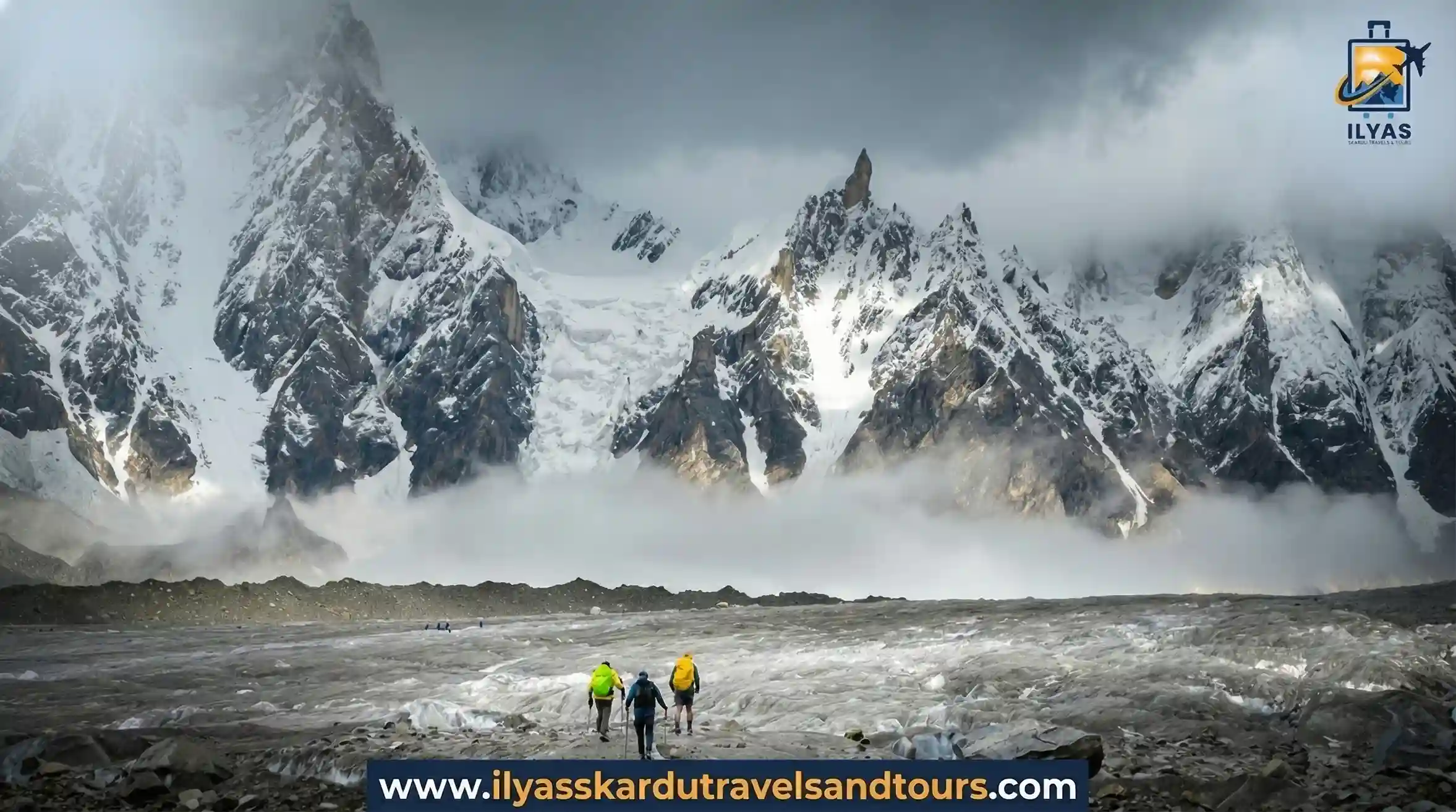
The K2 Base Camp trek represents the crown jewel among top trekking trails in Baltistan, offering unparalleled access to the world’s most spectacular concentration of 8,000-meter peaks. This expedition-style trek follows the Baltoro Glacier to Concordia, often called the “Throne Room of the Mountain Gods,” where K2, Broad Peak, Gasherbrum IV, and numerous other giants create a 360-degree panorama of jaw-dropping mountain scenery.

Detailed Itinerary Breakdown
Days 1-2: Skardu to Askole
Acclimatization in Skardu (2,228m) followed by a scenic jeep journey through Shigar Valley to the trailhead village of Askole (3,040m). This final settlement provides the last opportunity for fresh supplies and porter organization.
Day 3: Askole to Jhola (3,100m) – 18km
The trek begins with a gradual ascent alongside the Braldu River, crossing several suspension bridges and offering first glimpses of the dramatic landscape ahead. Moderate difficulty with 6-7 hours walking time.
Day 4: Jhola to Paiju (3,420m) – 20km
Continuing along the Braldu, this section features desert-like terrain with spectacular rock formations. Paiju serves as the last campsite before glacier travel begins. Essential rest day follows for acclimatization.
Day 5: Rest and Acclimatization at Paiju
Critical day for altitude adjustment. Experienced trekkers explore nearby vantage points including views of Paiju Peak (6,610m) and the glacier snout.
Day 6: Paiju to Khoburtse (3,788m) – 14km
First glacier walking begins on the Baltoro Glacier, requiring careful navigation across moraine and ice. The landscape transforms dramatically as trekkers enter the high mountain zone.
Day 7: Khoburtse to Urdukas (4,020m) – 8km
Short but challenging day ascending steep moraine to reach Urdukas, offering the first spectacular close-up views of Trango Towers and Cathedral Peak. This campsite provides possibly the finest sunset views in the Karakoram.
Day 8: Urdukas to Goro II (4,285m) – 12km
Glacier travel continues with increasingly dramatic mountain scenery. Masherbrum (7,821m) dominates southern horizons while ahead, the giants of the upper Baltoro beckon.
Day 9: Goro II to Concordia (4,600m) – 11km
The landscape opens dramatically as trekkers arrive at Concordia, the junction of the Baltoro and Godwin-Austen glaciers. K2 (8,611m), Broad Peak (8,051m), and the Gasherbrum peaks create an amphitheater of staggering proportions.
Day 10: Concordia to K2 Base Camp and return to Ali Camp (5,150m/4,800m) – 16km round trip
Early morning departure for K2 Base Camp allows optimal photographic light on the mountain. Return to Ali Camp on the Baltoro for overnight.
Days 11-14: Return trek to Askole
Retracing the route with faster progress due to acclimatization and descending elevation.
Essential Requirements
Permits: NOC required, processed through Ministry of Tourism via licensed operators. Processing time: 10-15 days minimum.
Support Team: Minimum requirements include certified trekking guide, cook, kitchen staff, and porters (ratio approximately 1:2 trekker to porter). High altitude porters (HAPs) recommended for gear transport beyond Concordia.
Equipment: Full camping setup, four-season sleeping bag rated to -15°C, high-quality trekking boots, trekking poles, glacier glasses, comprehensive medical kit including altitude medication.
At Ilyas Skardu Travels and Tours, we’ve perfected K2 Base Camp logistics over hundreds of expeditions, maintaining pre-positioned equipment caches, established relationships with experienced Balti porters, and detailed contingency planning for weather delays. Our standard 14-day itinerary includes buffer days and proper acclimatization protocols that significantly reduce altitude-related incidents.
Cost Considerations
Budget: $2,500-$4,000 per person for group treks (4-8 participants) including permits, porters, guide, food, camping equipment, and Skardu-Askole transport. Solo or small group costs increase substantially.
Gondogoro La Pass Trek: Technical Challenge Addition

Trail Overview
Distance: 130km | Duration: 14-16 days | Maximum Elevation: 5,585m | Difficulty: Expert/Technical
For experienced mountaineers seeking to add technical challenge to the K2 Base Camp route, the Gondogoro La Pass represents one of the most demanding yet rewarding variations among top trekking trails in Baltistan. This route combines the classic Baltoro approach with a spectacular high pass crossing requiring glacier navigation, fixed rope work, and crampons.
Technical Requirements
Essential Skills:
- Previous crampon experience mandatory
- Comfort on steep snow slopes (up to 45 degrees)
- Basic ice axe techniques
- Fixed rope ascending/descending
- High altitude experience above 5,000m
Additional Equipment:
- Crampons (12-point)
- Ice axe
- Climbing harness
- Helmet
- Ascender/descender for fixed ropes
- Mountaineering boots with crampon compatibility
Route Description
The trek follows the standard K2 Base Camp itinerary to Concordia, then diverges toward Gondogoro La. The pass ascent typically begins around 2:00-3:00 AM to reach the summit by sunrise when snow conditions are most stable. The descent into Hushe Valley involves approximately 1,200m elevation loss on steep terrain, followed by 2-3 days trekking through the spectacular Hushe and Shyok valleys to reach Skardu.
Critical Success Factors:
- Weather window selection (clear, low-wind conditions essential)
- Proper acclimatization (minimum 10 days above 3,500m before pass attempt)
- Experienced guide with Gondogoro-specific knowledge
- Fixed rope infrastructure in place (season-dependent)
Success rates vary significantly by operator experience and weather timing. Well-prepared expeditions achieve 85-90% success rates, while unprepared attempts face high turn-back percentages.
Deosai Plains Trek: High-Altitude Wilderness
Trail Overview
Distance: 40-60km (route-dependent) | Duration: 3-5 days | Maximum Elevation: 4,200m | Difficulty: Moderate
The Deosai Plains offer an entirely different trekking experience among top trekking trails in Baltistan vast high-altitude plateaus at 4,000+ meters carpeted with wildflowers in summer and home to Himalayan brown bears, Tibetan wolves, and countless bird species. This national park provides accessible high-altitude trekking without technical requirements.
Best Routes
Skardu to Astore Valley Crossing (5 days, 85km)
The classic traverse enters Deosai from Sadpara village near Skardu, crosses the plains visiting Sheosar Lake (one of the world’s highest lakes), and exits via Chilim Valley to Astore. This route showcases maximum scenic diversity.
Sheosar Lake Circuit (3 days, 40km)
A shorter option perfect for acclimatization or time-constrained travelers. The circuit explores the lake region, wildlife observation points, and traditional summer shepherd settlements.
Unique Features
Wildlife Encounters:
Deosai protects approximately 40 Himalayan brown bears. Summer months (June-August) offer regular sightings, particularly at dawn and dusk. Responsible wildlife viewing protocols are mandatory.

Botanical Diversity:
Over 300 flowering species bloom across the plains from mid-June through August, creating spectacular wildflower displays.
Cultural Integration:
Summer shepherd communities maintain traditional pastoral lifestyles. Respectful interaction opportunities provide cultural depth to the trekking experience.
Logistics
Best Season:
June through September only Deosai remains snowbound October through May with road access completely closed.
Accommodation:
Camping required. Basic PTDC rest houses exist at Sheosar Lake but often fully booked in peak season.
Permits:
Deosai National Park entry fee: PKR 100 for Pakistanis, PKR 500 for foreigners. Vehicle entry additional PKR 200.
Access:
4WD vehicle access available via Skardu-Chilim road, allowing partial motorized support and reducing pure trekking days. You can also take advantage of rent a car in Skardu services where a variety of vehicles are available based on your preference, making travel more convenient and flexible.
Rush Lake Trek: Hidden Alpine Gem
Trail Overview
Distance: 35km round trip | Duration: 3-4 days | Maximum Elevation: 4,694m | Difficulty: Moderate-Strenuous
Rush Lake, one of the world’s highest alpine lakes, remains relatively undiscovered compared to more famous Baltistan treks, offering pristine wilderness and spectacular reflections of surrounding peaks including Golden Peak (Spantik, 7,027m). This trek exemplifies the hidden treasures among top trekking trails in Baltistan.

Detailed Route
Day 1: Skardu to Hushey Village (3,050m)
Scenic jeep journey through Shigar and Hushey valleys to the trail starting point.
Day 2: Hushey to Dumsum/Shuwert (3,350m) – 12km
Gradual valley ascent through traditional Balti villages and terraced barley fields. Cultural immersion opportunities with homestay options.
Day 3: Dumsum to Rush Lake Base Camp (4,600m) – 8km
Steep ascent through alpine meadows with increasing elevation gain. Final approach offers stunning lake views with Golden Peak reflections.
Day 4: Lake exploration and return to Hushey – 20km
Early morning photography at the lake followed by descent to Hushey or Skardu.
Advantages for Trekkers
Accessibility:
Shorter duration suits travelers with limited time while still delivering authentic high-altitude experience.
Cost-Effective:
Lower logistics costs due to proximity to Skardu and reduced porter requirements.
Cultural Immersion:
Close interaction with Hushey Valley communities provides cultural depth often missing from longer expeditions.
Off-the-Beaten-Path:
Significantly fewer trekkers than K2 Base Camp route ensures wilderness solitude.
Optimal Timing
Late June through September offers best conditions, with August providing most stable weather. Spring snowmelt can make the final lake approach challenging until early July.
Snow Lake and Hispar La Trek: Extended Expedition
Trail Overview
Distance: 220km | Duration: 18-22 days | Maximum Elevation: 5,151m | Difficulty: Strenuous-Expert
For experienced trekkers seeking one of the world’s great alpine traverses, Snow Lake (Lukpe Lawo) and the crossing of Hispar La Pass from Baltistan to Hunza represents the ultimate extended expedition among top trekking trails in Baltistan. This demanding route traverses the Hispar Glacier to Snow Lake, a vast ice basin surrounded by unclimbed peaks, before crossing into the Hunza Valley.
Expedition Overview
Unique Challenges:
- Extended glacier travel (100+ kilometers)
- Complete self-sufficiency required
- Weather-dependent pass crossing
- No settlement or support for 10+ days
- Significant objective hazards (crevasses, seracs, weather)
Route Highlights:
- Biafo Glacier approach (67km glacier)
- Snow Lake basin exploration
- Hispar La Pass (5,151m) crossing
- Hispar Glacier descent (49km)
- Arrival in Nagar Valley, Hunza
Requirements:
- Previous multi-week expedition experience mandatory
- Glacier travel skills essential
- GPS navigation capability
- Satellite communication device required
- Comprehensive emergency planning
- Experienced expedition leader with route-specific knowledge
Logistics Complexity
This expedition requires extensive planning with full expedition support including guide, assistant guide, cook, kitchen helpers, and substantial porter team for extended duration. Snow conditions vary significantly year-to-year, affecting route finding and safety.
Estimated Cost: $5,000-$8,000 per person for organized group expeditions including all permits, support staff, food, equipment, and transportation.
Shigar Valley Cultural Treks: Heritage Routes
Trail Overview
Distance: 15-30km per route | Duration: 1-3 days | Maximum Elevation: 3,800m | Difficulty: Easy-Moderate
Shigar Valley offers accessible cultural trekking experiences combining moderate walking with deep cultural immersion in traditional Balti villages, ancient forts, and agricultural landscapes. These routes provide excellent acclimatization options and cultural context for longer expeditions.
Recommended Routes
Shigar Fort to Hoto Valley (2 days, 25km)
Starting from the restored Shigar Fort (now a heritage hotel), this route follows irrigation channels through apricot orchards, visits traditional settlements, and offers homestay opportunities in Hoto village.
Shigar to Chongo (1 day, 15km)
Moderate valley walk to Chongo, site of an ancient polo ground and gateway to longer Braldu Valley treks. Return same day or continue toward Askole for multi-day combinations.
Thagas to Mendi Valley Circuit (3 days, 35km)
Loop trek exploring side valleys, high summer pastures, and traditional shepherd camps. Spectacular Karakoram peak views with cultural interaction opportunities.
Cultural Integration Points
These trails emphasize:
- Traditional Balti architecture and irrigation systems
- Local agricultural practices (apricot, walnut, barley cultivation)
- Polo traditions and cultural festivals (seasonal)
- Homestay experiences with local families
- Traditional food preparation and culinary experiences
Accessibility
Perfect for families, older trekkers, or those seeking cultural depth without extreme altitude challenges. Local guides from Shigar villages provide authentic insights unavailable on standard expedition routes.
Essential Trekking Preparation Framework
Physical Conditioning
Recommended Preparation Timeline:
3-6 Months Before:
- Cardiovascular base building: hiking, running, cycling 4-5x weekly
- Gradual increase to 8-10 hour hiking days with pack weight
- Hill repeats and stair climbing for elevation gain simulation
- Core strengthening and balance work
1-3 Months Before:
- Pack weight training (15-20kg for multi-day simulation)
- Back-to-back long days to simulate consecutive trekking
- Altitude training if accessible (or altitude simulation masks)
- Technical skill practice if route requires crampons/ice axe
Gear Selection Essentials
Footwear:
- High-quality trekking boots (fully broken in)
- Camp shoes/sandals
- Multiple sock options (wool/synthetic blend)
Clothing Layers:
- Moisture-wicking base layers
- Insulating mid-layers (fleece/down)
- Waterproof/windproof shell
- Insulated jacket for high camps
- Trekking pants and shorts
- Warm hat, sun hat, gloves
Technical Equipment (route-dependent):
- Sleeping bag (-15°C rating minimum for high routes)
- Trekking poles (highly recommended)
- Headlamp with extra batteries
- Water purification system
- GPS device/smartphone with offline maps
- Sunglasses (Category 4 for glacier travel)
Safety Equipment:
- Comprehensive first aid kit
- Altitude medication (Diamox)
- Emergency communication device
- Whistle and emergency shelter
Porter and Guide Considerations
Porter Regulations:
Licensed operators follow Pakistan Alpine Club guidelines for porter welfare:
- Maximum load: 25kg per porter
- Appropriate clothing and footwear provided
- Fair wages (PKR 1,500-2,500 daily depending on route difficulty)
- Insurance coverage
- Adequate food and shelter
Guide Qualifications to Verify:
- Pakistan Alpine Club certification
- First aid training current
- Route-specific experience
- Emergency evacuation protocols
- Communication equipment
- References from previous clients

Working with experienced local guides provides safety advantages, route knowledge, cultural interpretation, and supports local economies. Ilyas Skardu Travels and Tours employs only PAC-certified guides with minimum 5 years Karakoram experience and mandatory annual refresher training in emergency protocols.
Seasonal Trail Condition Variations
Spring (Late April-May)
Accessible Trails:
- Shigar Valley cultural routes
- Lower Deosai approaches (late May)
- Hushe Valley to Rush Lake (late May)
Challenges:
- High passes snow-covered
- River crossings difficult due to snowmelt
- Unpredictable weather
- Limited porter availability early season
If you’re planning a seasonal trip, especially in spring, don’t miss our detailed guide on spring adventure in Skardu read the blog to explore the best experiences, activities, and travel tips for an unforgettable spring adventure.
Summer (June-August)
Peak Season Advantages:
- All trails accessible
- Most stable weather (July-August)
- Wildflower displays (Deosai)
- Longest daylight hours
- Full support infrastructure operational
Considerations:
- Popular routes more crowded
- Higher costs during peak
- Afternoon thunderstorms possible
- Glacier melt increases river crossings difficulty
Autumn (September-Early October)
Optimal Conditions:
- Clearest skies of year
- Excellent photography light
- Lower tourist numbers
- Comfortable temperatures
- Stable weather patterns
Limitations:
- Shorter days
- Colder high camp temperatures
- Deosai closes late September
- Porter availability decreases
- Some lodge/teahouse closures
Safety and Risk Management
Common Hazards and Mitigation
Altitude Illness:
- Prevention: Gradual ascent, proper acclimatization, adequate hydration
- Recognition: Headache, nausea, fatigue, sleep disturbance
- Treatment: Stop ascent, descend if severe, medication (Diamox, dexamethasone)
- Evacuation: Helicopter services available from Skardu (weather-dependent)
Glacier Travel Risks:
- Crevasses: Rope teams, probe poles, experienced navigation
- Rockfall: Early morning travel, avoid afternoon warmth periods
- Weather: Early starts, monitoring forecasts, tent-bound wait capability
River Crossings:
- Timing: Early morning before peak melt
- Techniques: Unbuckle pack straps, use poles/rope, identify safe crossing points
- Support: Porters experienced with local river patterns
Wildlife (Deosai):
- Bears: Make noise while hiking, proper food storage, maintain distance
- Dogs: Village dogs can be territorial carry stick, avoid confrontation
Emergency Protocols
Communication:
- Satellite phones for extended expeditions
- Check-in schedules with operators
- Emergency contact lists pre-shared
Evacuation Routes:
- Helicopter accessible points identified
- Ground evacuation options planned
- Insurance verification for helicopter costs ($5,000-$15,000)
Medical Support:
- Comprehensive expedition medical kits
- Guides trained in wilderness first aid
- Nearest medical facilities: Skardu CMH for serious cases
- Telemedicine consultation capability for expedition medicine
Cost Breakdown and Budgeting
Trek Cost Components
Independent Trekking:
- Permits: $50-$200 depending on route/area
- Porters: $25-$40 per porter per day
- Guide: $40-$60 per day
- Cook: $30-$40 per day
- Food: $15-$25 per person per day
- Equipment rental: $200-$500 for full kit
- Transportation: $100-$300 Skardu-trailhead return
Organized Group Expeditions:
- K2 Base Camp: $2,500-$4,000 per person
- Gondogoro La: $3,500-$5,000 per person
- Snow Lake: $5,000-$8,000 per person
- Deosai: $500-$1,000 per person
- Rush Lake: $800-$1,500 per person
Cost Variables:
- Group size (larger groups reduce per-person costs)
- Season (peak season premiums)
- Service level (standard vs premium camping equipment)
- Buffer days (weather delays add costs)
- Insurance and medical provisions
Value Considerations
Choosing established operators with strong safety records, appropriate porter treatment, and environmental responsibility provides better value than cheapest options. Failed expeditions due to inadequate preparation or inexperienced guides ultimately cost more than premium, well-organized treks.
Environmental Responsibility and Leave No Trace
Baltistan’s pristine wilderness requires committed environmental stewardship from all trekkers:
Pack Out All Waste:
- Human waste management in high camps
- Complete trash removal (including toilet paper)
- Micro-trash vigilance (wrappers, cigarette butts)
Minimize Campfire Impact:
- Use camping stoves instead of wood fires
- Existing fire rings only if absolutely necessary
- Dead/downed wood only (never cut living trees)
Respect Wildlife:
- Maintain safe distances (100+ meters from bears)
- No feeding of animals
- Minimize noise pollution
- Observe nesting/denning area closures
Support Local Communities:
- Fair porter wages and treatment
- Purchase supplies from local sources
- Respect cultural practices and private property
- Contribute to community development initiatives
Responsible operators like Ilyas Skardu Travels and Tours implement comprehensive environmental protocols including porter-carried waste management systems, low-impact camping practices, and support for local conservation initiatives through portions of trek fees. For travelers planning eco-friendly adventures, explore our detailed guide on best travel agency in Skardu to learn more about responsible trekking options and sustainable travel in Baltistan.
Conclusion: Choosing Your Baltistan Adventure
The top trekking trails in Baltistan offer experiences ranging from accessible cultural valley walks to extreme high-altitude expeditions matching any in the world. Whether you’re drawn to the legendary approach to K2 Base Camp, the wildlife-rich expanses of Deosai Plains, the technical challenge of Gondogoro La, or the hidden beauty of Rush Lake, Baltistan delivers transformative mountain experiences for properly prepared adventurers.
Success in Baltistan requires honest assessment of your experience level, appropriate physical preparation, comprehensive logistics planning, and respect for the mountains’ inherent challenges. Working with experienced local operators who prioritize safety, environmental responsibility, and fair treatment of support staff creates the foundation for extraordinary adventures.
The Karakoram awaits with landscapes and experiences that will fundamentally change your understanding of mountain wilderness. Choose your trail wisely, prepare thoroughly, trek responsibly, and return home transformed by one of Earth’s most spectacular mountain regions. For personalized guidance and trip planning, feel free to contact us for your Baltistan adventure.
Frequently Asked Questions
What is the best trek in Baltistan for first-time high-altitude trekkers?
Rush Lake trek offers an ideal introduction to Baltistan’s high-altitude environment. At 3-4 days duration with maximum elevation of 4,694m, it provides manageable altitude gain, spectacular scenery, cultural immersion in Hushey villages, and reasonable logistics costs. This trek builds confidence and acclimatization for future more demanding expeditions while delivering authentic Karakoram experiences.
Do I need technical climbing skills for top trekking trails in Baltistan?
Most popular trails including K2 Base Camp, Deosai Plains, and Rush Lake require no technical skills just strong hiking fitness and altitude tolerance. However, Gondogoro La Pass and Snow Lake expeditions demand technical skills including crampon use, ice axe techniques, rope work, and glacier navigation. Assess trail requirements honestly against your skill level before committing.
What is the best season for trekking in Baltistan?
July through mid-September offers optimal conditions for most top trekking trails in Baltistan, with stable weather, accessible high passes, and full support infrastructure operational. Late September provides exceptional clarity for photography but colder temperatures. June experiences more precipitation but fewer crowds. Deosai Plains are accessible June-September only, while some high passes remain snow-covered until mid-July.
How much does it cost to trek K2 Base Camp?
Organized group expeditions (4-8 participants) to K2 Base Camp typically cost $2,500-$4,000 per person including permits, experienced guide, porters, cook, camping equipment, food, and Skardu-Askole transportation. Solo trekkers or small groups face significantly higher costs ($4,000-$6,000) due to fixed costs across fewer participants. Budget additionally for personal gear, insurance, and contingency funds for weather delays.
Can I trek independently in Baltistan or do I need a guide?
Legally, guides are not mandatory for most trails except restricted areas requiring NOCs (like K2 Base Camp). However, independent trekking presents significant challenges: permit navigation, porter negotiation without Urdu/Balti language, route finding on glacier sections, emergency support absence, and logistical complexity. Even experienced trekkers benefit enormously from local guides’ route knowledge, weather interpretation, cultural mediation, and emergency management capabilities.
What permits are required for trekking in Baltistan?
Permit requirements vary by destination. K2 Base Camp, Gondogoro La, and restricted border areas require No Objection Certificates (NOCs) processed through the Ministry of Tourism via licensed tour operators—allow 10-15 days minimum. Deosai National Park requires park entry fees collected at entry points. Rush Lake, Shigar Valley cultural treks, and most non-restricted areas require only general Pakistan visa compliance.
How difficult is the K2 Base Camp trek compared to Everest Base Camp?
K2 Base Camp demands significantly more from trekkers than Everest Base Camp. Differences include: longer daily walking hours (7-9 hours vs 5-6), extensive glacier travel requiring navigation skills, complete camping logistics (no teahouse infrastructure), higher maximum elevation (5,150m vs 5,364m but more sustained high altitude), more remote location complicating evacuations, and more technical terrain. K2 Base Camp suits experienced trekkers who’ve completed multiple high-altitude treks successfully.
What is the success rate for completing top trekking trails in Baltistan?
Success rates vary significantly by trail and preparation level. K2 Base Camp expeditions with proper acclimatization see 85-90% completion rates, with most turn-backs due to altitude illness from inadequate preparation. Gondogoro La success rates range 70-85% depending on technical skills, weather conditions, and operator experience. Well-prepared trekkers with experienced operators, appropriate fitness levels, and flexible schedules achieve the highest success rates across all Baltistan trails.
