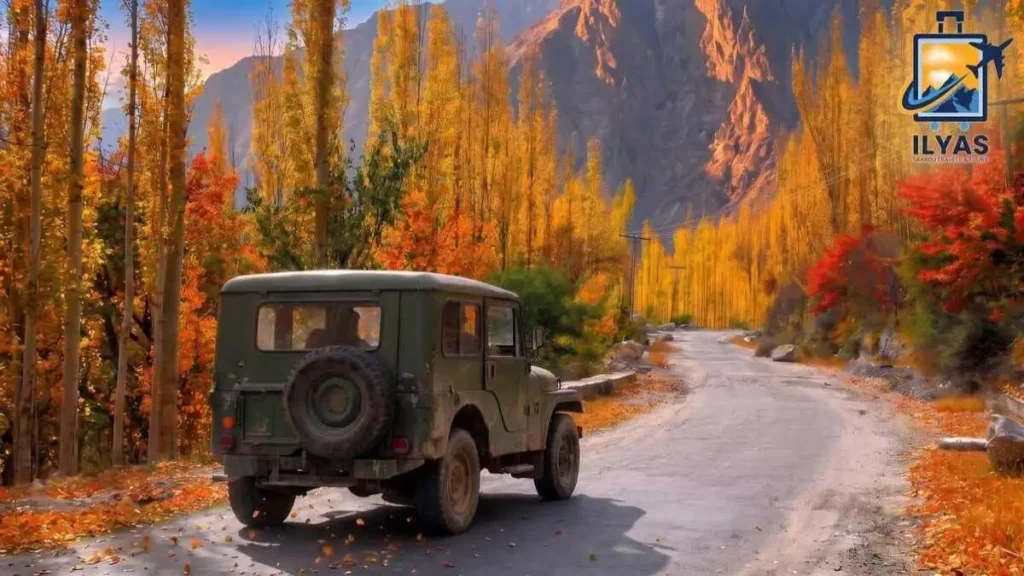
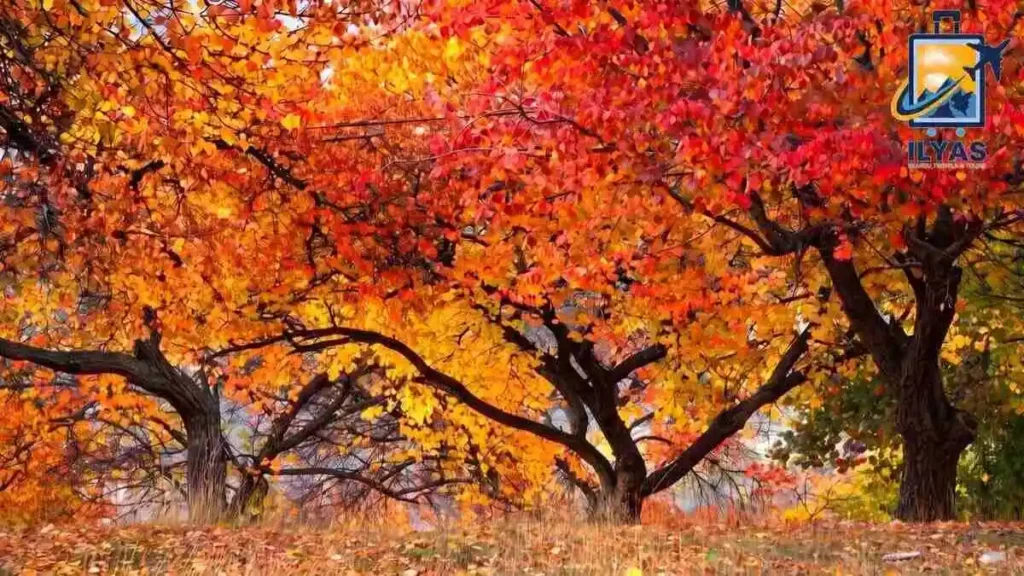
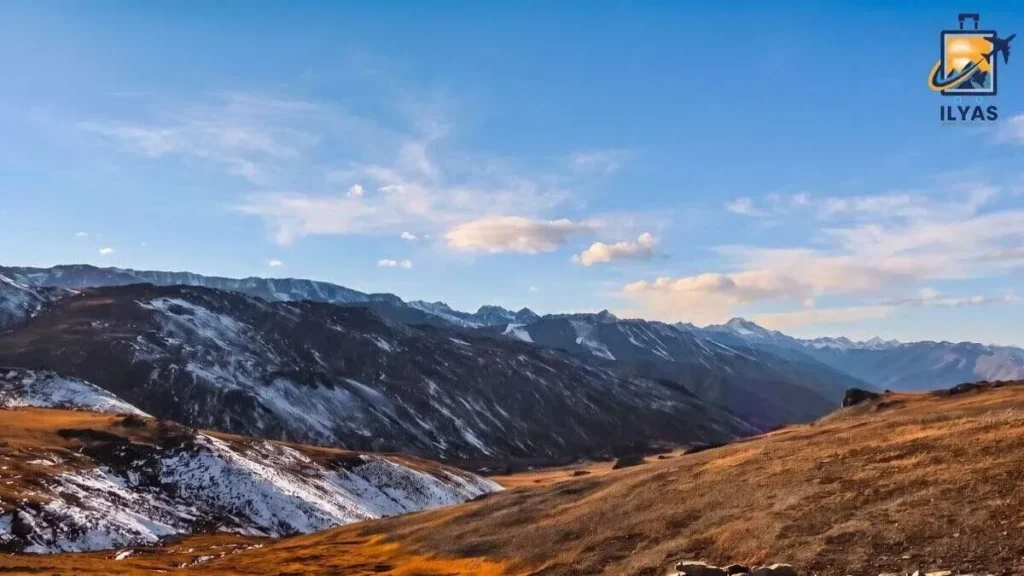
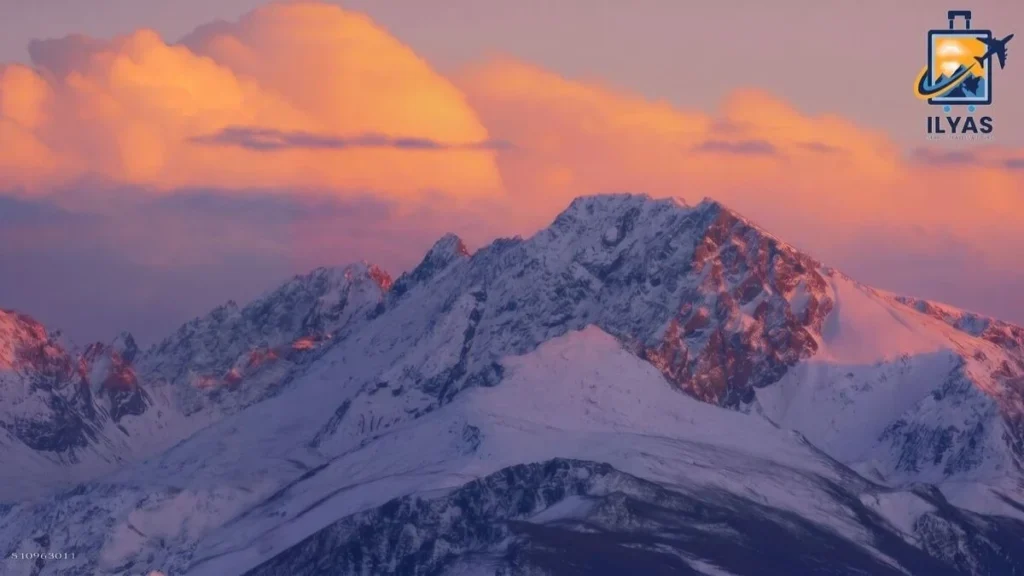
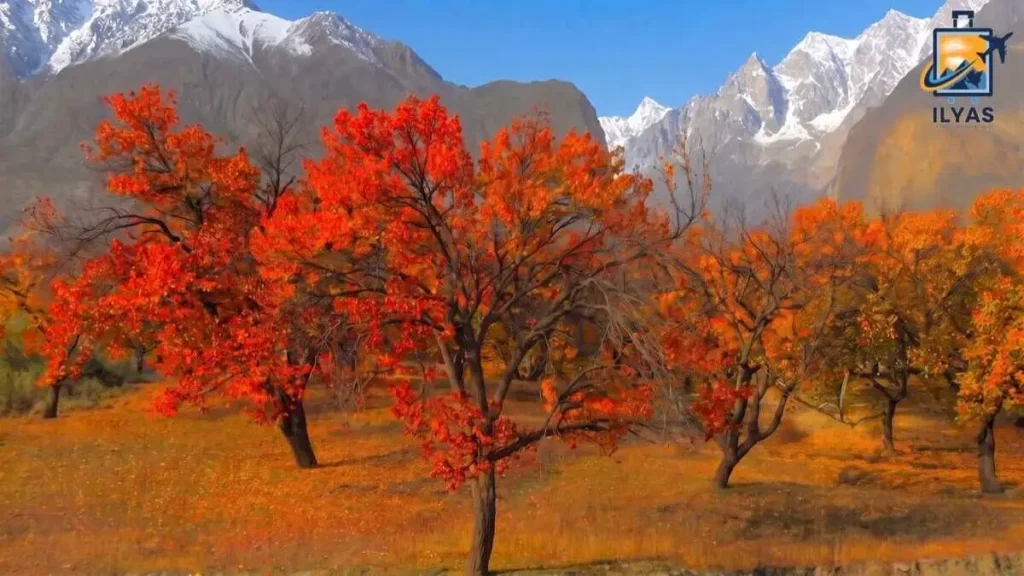
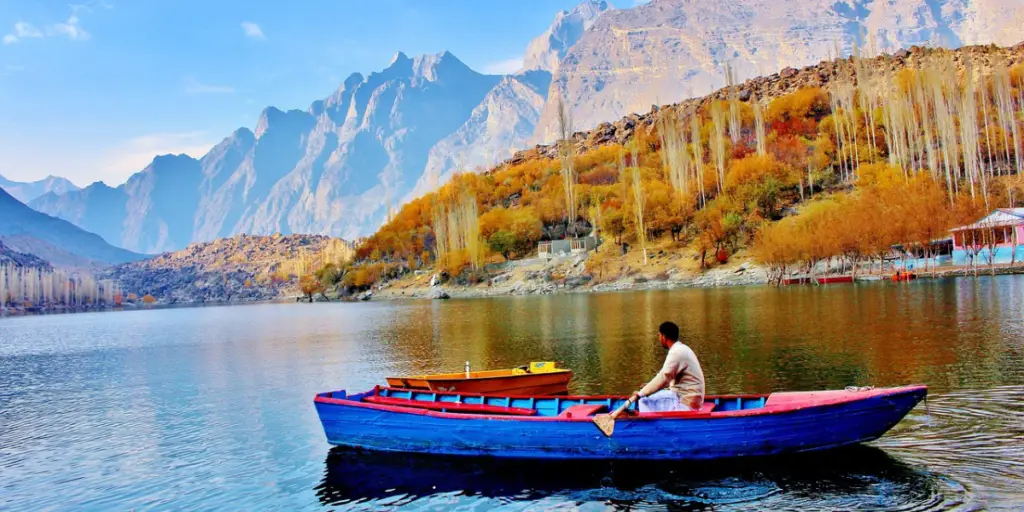
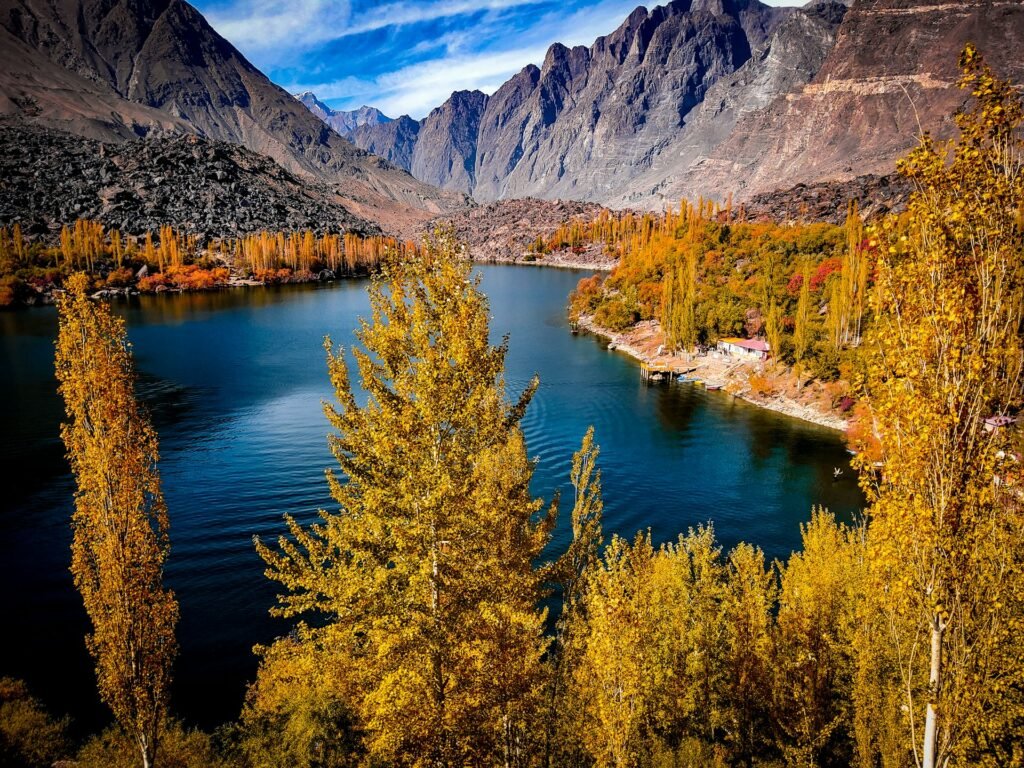
Autumn is the quiet season in Skardu. The summer rush of trekkers heading to K2 base camp has thinned out, the poplar and willow trees along the valley turn shades of yellow and orange, and the air loses that hazy summer heat. This 7-day, 6-night Skardu autumn tour package runs from Islamabad or Rawalpindi and covers Skardu city, Shigar Valley, the Katpana and Sarfaranga cold deserts, and Khaplu, timed to catch the fall colors before winter starts closing roads at higher elevations.
Skardu Autumn Tour Package Overview
| Detail | Information |
| Tour name | Skardu Autumn Tour Package 7 Days |
| Destination | Skardu, Shigar, Khaplu (Gilgit-Baltistan) |
| Duration | 7 Days / 6 Nights |
| Departure / Return | Islamabad / Rawalpindi |
| Best months | September to October |
| Transport | Private tourist vehicle throughout |
| Accommodation | Hotels/guesthouses in Skardu and other overnight stops |
| Difficulty | Easy to moderate |
| Price | Varies by group size, vehicle, and hotel category; confirm current rates before booking |
Quick tour facts
This isn’t a trekking trip. It’s built around sightseeing, short walks, photography, and getting a real sense of Baltistan’s valleys, forts, and lakes at a pace that works for families, couples, and anyone who wants to see the region without needing a mountaineering background.
What this tour actually covers
The route stays mostly at valley level rather than pushing up to the high plateaus, which is part of what makes it workable in autumn. You’ll spend time in Skardu city itself, visit the lakes at Shangrila, cross into Shigar Valley to see its restored fort, head out to the cold desert near Katpana and Sarfaranga, and finish with a day in Khaplu before the drive back. Along the way there’s a mix of ancient rock carvings, working farmland, river confluences, and a couple of buildings that are genuinely several centuries old.
Because the pace is sightseeing and short walks rather than trekking, most days involve more time in the vehicle moving between stops than time spent hiking. That’s normal for this kind of itinerary in Gilgit-Baltistan, where the interesting places are often a valley apart from each other.
Detailed itinerary
Day 1: Islamabad/Rawalpindi to Skardu
The journey to Skardu is the first real part of the trip, not just a transfer. Depending on the route and road conditions, expect somewhere in the range of 16 to 22 hours of actual driving time, which most operators split across two days with an overnight stop in a town like Chilas. In September, some tours use the Naran-Babusar route for the scenic pass views, but this option becomes less reliable as the season goes on, since Babusar Pass tends to close with the first heavy snowfall. For most autumn departures, especially anything in October or November, plan on the Karakoram Highway route through Mansehra and Chilas, which stays open year-round and is the more dependable choice once the weather turns.
Day 2: Skardu city and Manthal Buddha Rock
The first full day is spent around Skardu itself, including a visit to Manthal Buddha Rock, a large granite boulder carved with an image of the Buddha, generally dated to around the 8th century. It’s a reminder that Baltistan was a Buddhist region long before Islam arrived here in the 14th and 15th centuries, and the carving is one of the more accessible pieces of that history still visible today. The rock sits just off Sadpara Road, a short drive from town, and the stop itself takes maybe half an hour including the walk up to it.
Day 3: Upper Kachura Lake, Lower Kachura Lake, and Shangrila
This is a lake day. Upper Kachura Lake has that deep blue-green color you see in photos of the area, framed by steep rock walls that reflect in the water on a calm day. Lower Kachura Lake, home to the Shangrila Resort, is more developed and a common stop for boat rides and photos. Neither location involves serious walking, just a short stroll from the parking area to the water’s edge, which makes this an easy day for families or anyone who’d rather not do much climbing.
Day 4: Shigar Valley and Shigar Fort
Shigar Valley is greener and more agricultural than Skardu itself, with apricot and apple orchards that turn color nicely in autumn. Shigar Fort is the main stop here: originally built for the local rulers of Shigar, it was restored a number of years ago and now functions partly as a heritage hotel, but the building and its grounds are open to visitors passing through even if you’re staying elsewhere. The old wooden architecture and carved details are worth the stop on their own, separate from anything you might have planned for the following days.
Day 5: Katpana and Sarfaranga Cold Deserts
This is one of the stranger landscapes in the itinerary: a genuine cold desert, sitting at high altitude and surrounded by mountains rather than the flat horizon you’d expect from a desert. The sand dunes are real and walkable, and some visitors do ATV rides or short jeep runs across them, though that’s usually arranged locally rather than included by default. Wind picks up in the afternoon here more than in the sheltered valley stops, so plan on it if you’re set on photography.
Day 6: Khaplu Valley and Khaplu Palace
Khaplu sits further east along the Shyok River and was its own small kingdom before becoming part of Baltistan. The main stop is Khaplu Palace, a restored royal residence, along with the nearby Chaqchan Mosque, which dates to the 14th century and is one of the older mosques in the region. This day depends more than most on road and weather conditions since it’s the furthest point from Skardu on the itinerary, so treat the exact timing as flexible rather than fixed.
Day 7: Return journey to Islamabad/Rawalpindi
The return trip retraces the outbound route, again usually split across two days depending on how the first leg went and current road conditions. Build in some flexibility here rather than booking tight onward travel for the evening you’re due back.
Best time to visit and seasonal notes
| Season | Months | General conditions |
| Autumn (this tour) | September to November | Foliage color, cooler days, cold nights, generally stable road access on the main valley routes |
| Late autumn | November | Increasing chance of early snow at higher points; Babusar Pass typically closed by this point |
Late September into October is usually the best window for actually seeing the foliage at its most colorful, though this shifts a bit year to year depending on when the first cold snap arrives. If you’re looking for November, treat it as a valley-level trip rather than one where you’ll also reach the higher plateaus.
One-point worth being direct about: Deosai Plains often shows up on Skardu tour pages as a can’t-miss stop, but it’s genuinely not accessible for most of this tour’s autumn window. The road to Deosai typically closes by mid to late October due to snow, sometimes earlier depending on the year, and stays closed until around June. That’s why Deosai isn’t scheduled as a fixed day on this itinerary. If you’re traveling in September, ask about adding it as an extension, since it may still be open, but don’t count on it for anything past early to mid-October.
Daytime temperatures during this window are usually comfortable for sightseeing in a light jacket, but nights get properly cold at this altitude, more so than most visitors expect if they’re used to lowland Pakistani weather. The gap between day and night temperature is the thing to plan around, not the daytime high.
Recommended Skardu Tour Packages for Every Traveler
Explore our recommended Skardu tour packages, carefully designed for solo travelers, families, couples, and groups. Choose from flexible Budget, Standard, and Luxury options to match your travel style and budget.
| Tour(s) | Mode of Transport | Budget | Standard | Luxury |
|---|---|---|---|---|
| Skardu Tour Packages from Islamabad | By Road | PKR 90,500 | PKR 115,000 | PKR 194,000 |
| K2 Base Camp Trek | By Air | PKR 100,500 | PKR 140,500 | PKR 220,000 |
| Soq Valley Skardu Tour | By Road | PKR 9,500 | PKR 12,500 | PKR 15,000 |
| Skardu Tour Packages from Karachi | By Road | PKR 20,000 | PKR 30,000 | PKR 40,000 |
| Marsur Rock Skardu Tour | By Air | PKR 115,000 | PKR 136,000 | PKR 25,000 |
| Upper Kachura Trip Skardu | By Air | PKR 130,000 | PKR 150,000 | PKR 235,000 |
| Deosai National Park Skardu Tour | By Road | PKR 168,000 | PKR 250,000 | PKR 390,000 |
Cost, inclusions, and exclusions
Pricing for this package depends on group size, the vehicle type needed, and the hotel or guesthouse category you choose, along with how close to peak foliage season you’re traveling. Rather than list a fixed number that would likely be wrong by the time you read this, confirm current pricing directly, and ask specifically about the vehicle type, meal plan, accommodation grade, and cancellation policy before paying anything.
Getting there and transportation
Private tourist vehicle is used for the full trip, with the vehicle type selected based on group size and expected road conditions. As covered in the Day 1 section, the road route matters more in autumn than in summer: The Karakoram Highway through Mansehra and Chilas is the dependable year-round option, while the Naran-Babusar route is shorter and more scenic but becomes unreliable once the weather turns, generally from mid-autumn onward. If you’d rather handle transport separately, renting a vehicle locally in Skardu is also an option once you’ve arrived, though the tour package handles the full Islamabad-to-Skardu leg either way.
Difficulty and fitness requirements
Rated easy to moderate. This is a sightseeing and road-travel itinerary rather than a trekking one, so basic fitness is enough for the vast majority of stops. A few locations do involve short walks over uneven ground, including the dunes at Sarfaranga and the paths around some of the forts, so travelers with significant mobility limitations should mention this when booking so the pace and stops can be adjusted.
What to bring
- Layered clothing, since day and night temperatures differ more than expected at this altitude
- A proper jacket for evenings and early mornings, even if daytime is mild
- Comfortable, closed walking shoes for uneven ground at forts and lake edges
- Sunglasses and sunscreen, since UV exposure is stronger at altitude
- Basic personal medicines, since pharmacies are limited outside Skardu town
- A camera or phone with spare storage, given how much of this trip is genuinely photogenic
Important travel information
Mountain roads in this region can be affected by weather, landslides, or temporary closures, and the itinerary may need to shift day to day as a result. This isn’t unusual and isn’t a sign of a poorly run trip, it’s how travel works in Gilgit-Baltistan. Check current road and weather conditions before departure, and stay in touch with your operator if anything changes en route. Some areas may have permit or registration requirements that vary by traveler nationality and change periodically, so confirm current rules with the Gilgit-Baltistan tourism department or your operator ahead of time rather than assuming last year’s requirements still apply.
Booking information
Advance booking is worth doing for an autumn trip, since hotel and vehicle availability tightens up during the peak foliage weeks in late September and October. Before paying anything, confirm the final price, accommodation category, vehicle type, meal plan, cancellation policy, and itinerary in writing.
Related tours
If this itinerary isn’t quite the right fit, it’s worth looking at the broader Skardu tour packages hub for other durations and seasons, or the dedicated Skardu sightseeing guide if you want to build a custom trip around specific stops. Travelers specifically chasing the high plateaus should look into a summer window for Deosai National Park, since that’s genuinely outside what an autumn trip can offer.
FAQs
How long does the drive from Islamabad to Skardu actually take?
Plan for somewhere between 16 and 22 hours of real driving time, usually split across two days with an overnight stop in a town like Chilas. The distance is roughly 630 to 700 km depending on the exact route, but the road itself, not the distance, is what determines how long the trip takes.
Is Deosai Plains included in this autumn tour?
No, it isn’t scheduled as a fixed day, because the road is typically only open from around June through mid to late October and closes earlier in some years. If you’re traveling in September it may still be reachable and can sometimes be added as an extension, but by late October or November it’s usually closed. Confirm current status before planning around it.
Is the Babusar Pass route used for this tour?
Sometimes for September departures, but it isn’t dependable later in the season. Babusar Pass tends to close with the first significant snowfall, so most autumn dates, especially October and November, use the Karakoram Highway route through Chilas instead.
What’s the weather like in Skardu in autumn?
Days are generally mild and comfortable for sightseeing. Nights get cold, more than most visitors expect, since the gap between day and night temperature is larger at this altitude than in lowland Pakistan. Layering is more useful than one heavy jacket.
Why isn’t there a fixed price listed?
Because it genuinely depends on group size, vehicle type, hotel category, and how close to peak season you’re traveling. Contact the team directly for a quote based on your actual dates and group size.
Is this tour suitable for families or older travelers?
Yes, the itinerary is rated easy to moderate and built around sightseeing and short walks rather than trekking. A few stops involve uneven ground, so mention any mobility concerns when booking so the pace can be adjusted.
Can the itinerary be customized?
Yes, day order and specific stops can usually be adjusted around road conditions, group preferences, and available time. Get in touch with your preferred dates and the team can confirm what’s realistic for your group.
Ready to plan your trip?
If autumn colors and a slower-paced trip through Baltistan sound right for you, get in touch to check current availability and pricing for your dates, or ask about customizing the itinerary around what your group wants to see most.
Tour Highlights
- Manthal Buddha Rock, a granite carving of the Buddha that predates the arrival of Islam in the region by several centuries
- Upper and Lower Kachura Lakes, including the Shangrila area, known for calm water reflecting the surrounding cliffs
- Shigar Fort, a restored 17th-century fort that now operates partly as a heritage hotel, worth seeing even if you're not staying there
- Katpana and Sarfaranga Cold Deserts, high-altitude sand dunes that look out of place against the surrounding mountains
- Khaplu Palace and the nearby Chaqchan Mosque, dating to the 14th century, from Khaplu's history as an independent kingdom before it became part of Baltistan
- Autumn foliage along the valley roads, which is really the reason to time a trip for this specific window rather than summer
Included
- Accommodation according to the selected package
- Private transportation according to the package
- Sightseeing according to the itinerary
- Driver and transport services
- Basic trip coordination
- Applicable hotel taxes, where included by the operator
Excluded
- Air tickets
- Personal expenses
- Meals not specifically mentioned
- Entry tickets where applicable
- Jeep charges for locations requiring special vehicles
- Activities not included in the package
- Travel insurance and emergency expenses
- Anything not listed under inclusions
Gallery