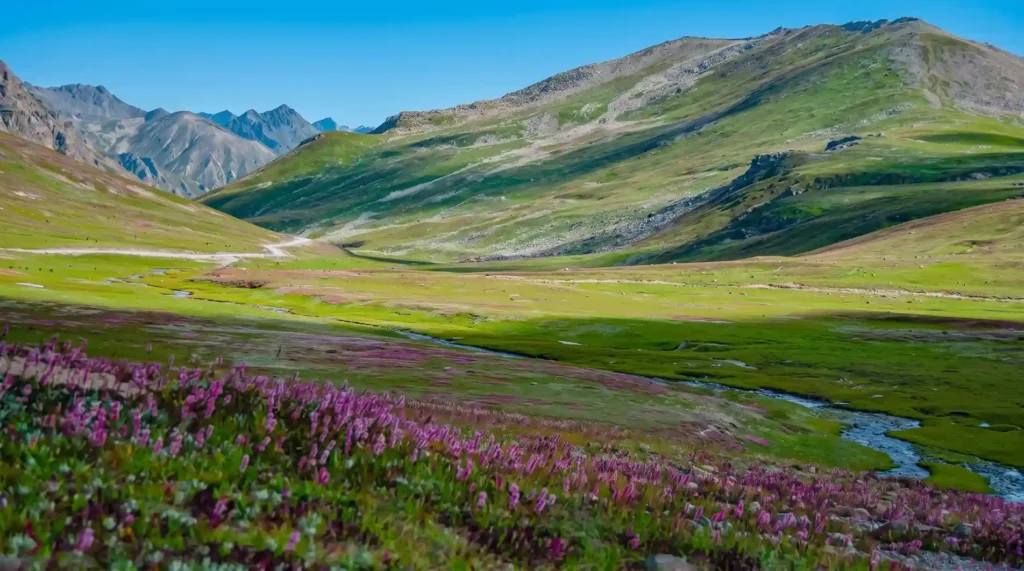
Deosai National Park sits above Skardu on a wide, treeless plateau that most first-time visitors are not really prepared for. You leave the Indus valley in the morning, climb through a series of switchbacks, and within a couple of hours you are standing on open grassland at roughly 4,100 to 4,500 metres, with almost no trees, no buildings, and mountains on every horizon. The Deosai National Park Skardu tour is built around a single long day: drive up, spend several hours on the plateau, visit Sheosar Lake, look for wildlife, and come back down before dark. It suits nature lovers, families already based in Skardu, photographers, and anyone who wants to see one of the highest and least crowded landscapes in Pakistan without committing to a multi-day trek.
Deosai National Park Skardu Tour Overview
The road out of Skardu runs past Sadpara Lake and Sadpara village before it starts climbing toward the pass that separates the Indus valley from the plateau. This is the part of the drive most people underestimate. The distance from Skardu to the park entrance area is short on paper, somewhere around 30 to 40 kilometres, but the road gains close to 2,000 metres in elevation over that stretch, and the surface shifts from paved to loose gravel and dirt track well before you reach the top. That combination of altitude gain and rough surface is the actual reason drive-time estimates vary so much across different sources online. Some quote an hour, some quote two to three hours, and a few quote up to five. All of them can be technically correct depending on which point they are measuring to (the park boundary, Chota Pani, or all the way to Sheosar Lake) and what the road looked like on the day they measured it. For planning purposes, it is more realistic to expect two to three hours each way from Skardu to Sheosar Lake in normal summer conditions, and to build in extra time if there has been recent rain.
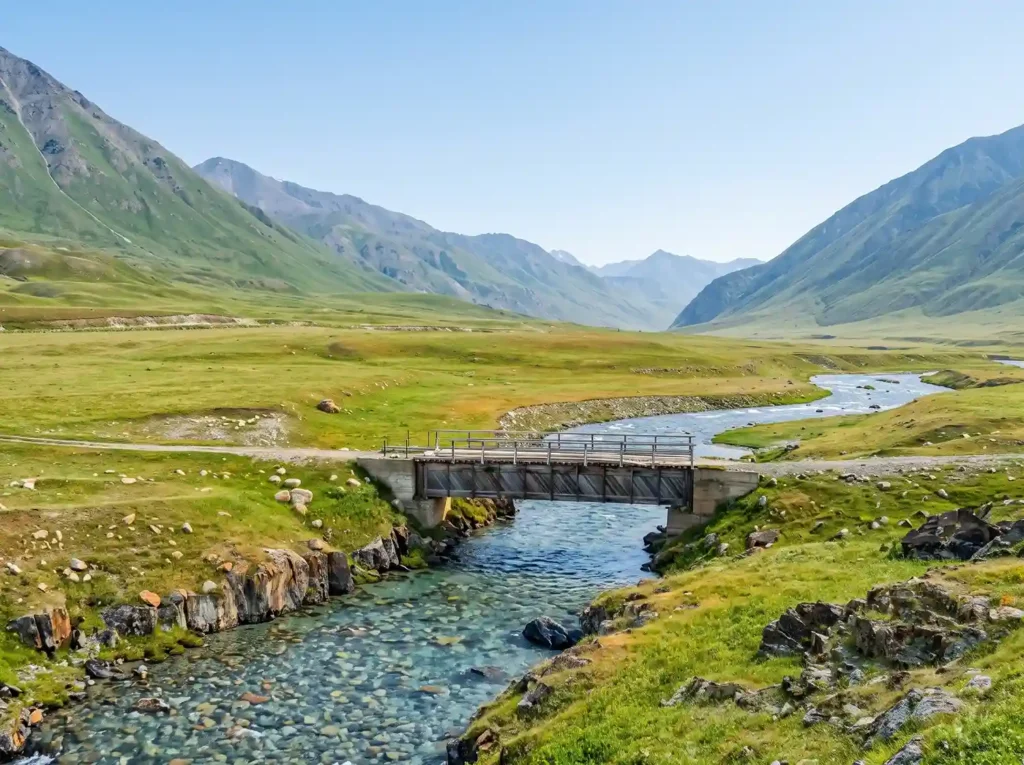
Once you are on the plateau itself, the character of the trip changes completely. The road flattens out into a wide, open track through grassland, with streams cutting across it and small herds of grazing animals in the distance during summer. The first major stop most itineraries make is Chota Pani, a viewpoint that gives a first proper look at the scale of the place. From there the route continues toward Bara Pani, one of the larger rivers on the plateau, and on to Sheosar Lake near the western edge of the park.
This is not a destination with dramatic peaks or waterfalls. What Deosai offers instead is scale and openness: kilometres of rolling grassland, wildflowers in season, and a silence that is hard to find elsewhere in Gilgit-Baltistan. It is a good fit for people who want a genuinely different landscape from the valleys and villages that make up most of a Skardu itinerary, and it does not require any hiking experience since almost all of it is seen from the vehicle or short walks near the stops.
Quick Tour Facts
| Detail | Information |
| Tour name | Deosai National Park Skardu |
| Destination | Deosai National Park, Deosai Plateau |
| Duration | 1 day |
| Tour type | Day trip, adventure, nature, family, sightseeing |
| Departure | Skardu city |
| Return | Skardu city |
| Distance (Skardu to Sheosar Lake area) | Roughly 30 to 40 km, depending on the exact route and stop |
| Transport | Private 4×4 vehicle |
| Accommodation | Not required for a day trip |
| Difficulty | Moderate |
| Best time to visit | June to September |
| Price | Contact for current price |
Early Morning: Departure from Skardu
The vehicle leaves Skardu city early, usually before 8 AM. An early start matters here for two practical reasons rather than just tradition: mountain weather on the plateau tends to be more stable in the morning before afternoon cloud or wind builds up, and wildlife, including bears and marmots, is generally more active earlier in the day.
Morning: The Climb to the Plateau
The drive follows the road past Sadpara Lake and village, then climbs steadily toward the pass. This is the roughest section of the route, and it is normal for the pace to slow considerably here regardless of the vehicle. The first stop on the plateau is typically Chota Pani, where the terrain opens out and the scale of Deosai becomes obvious for the first time.
Midday: Sheosar Lake
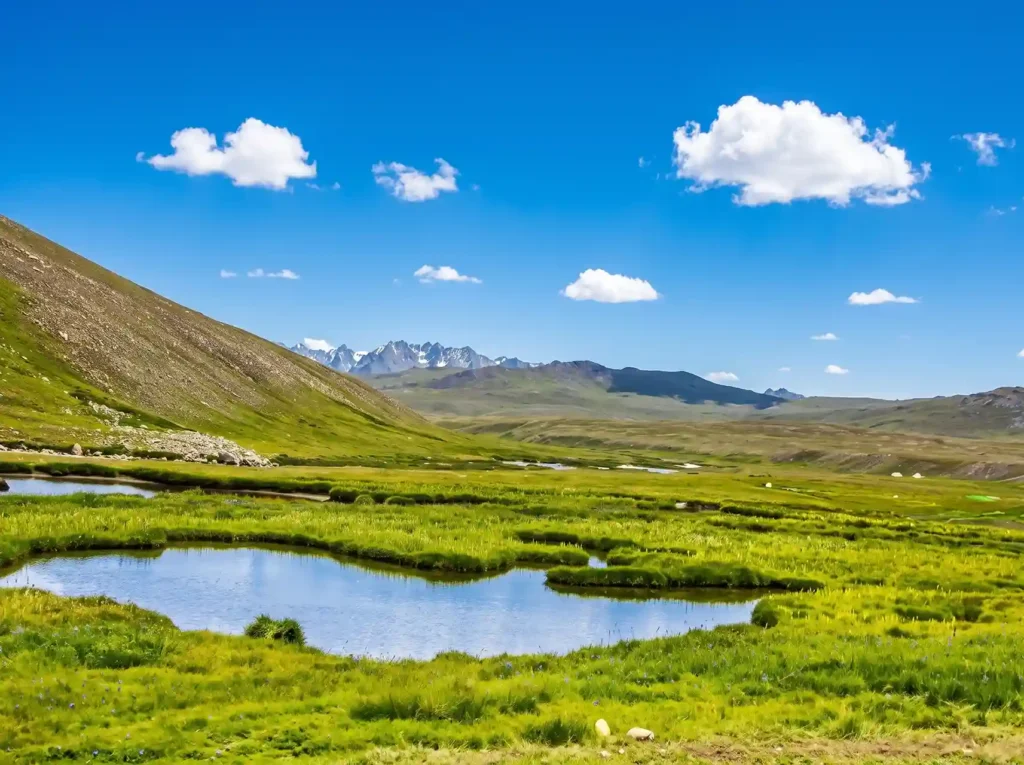
The main stop of the day is Sheosar Lake, on the western side of the park. Visitors usually spend an hour or more here for photography and a short walk along the accessible parts of the shoreline. This is also the best single spot on the route to look out for Nanga Parbat if the sky is clear.
Afternoon: Bara Pani and Wildlife Watching
From Sheosar Lake the route moves toward Bara Pani, where the group typically stops for lunch (brought or arranged separately, since meals are not included in the tour price) and spends time looking across the open plain for brown bears, ibex, or marmots. Sightings depend on timing, season, and some luck. Guides generally keep a respectful distance from any animal spotted, both for safety and because approaching wildlife on the plateau is discouraged.
Evening: Return to Skardu
The group begins the return drive with enough daylight margin to get back down the pass and into Skardu before dark, since the descent is the same rough, narrow track used on the way up and is not a road you want to be driving after sunset.
Best Time to Visit and Seasonal Notes
| Season | Months | General Conditions | Recommended For |
| Early summer | June | Road recently reopened, plateau still greening up, some snow patches possible at higher points | Fewer crowds, cooler weather, early wildflowers |
| Peak summer | July to August | Full wildflower bloom, most stable road access, warmest daytime temperatures | Best overall window for a day trip and photography |
| Early autumn | September | Grassland starting to turn golden, cooler and quieter | Good light for photography, fewer tourists |
| Closed season | Late October to May | Deep snow covers the plateau, road is closed | Not accessible |
Deosai National Park is only open for part of the year. In recent seasons the road has typically opened in the second or third week of June and closed again around the last week of October, but the exact opening and closing dates shift from year to year based on snowfall, so this should always be confirmed close to your travel date rather than assumed. Even within the open season, weather on the plateau changes quickly. A clear, warm morning can turn windy and cold by early afternoon, and light rain or even sleet is possible in July and August despite it being the height of summer. This is genuinely a place where you should be ready for four seasons of weather within a single day.
Cost, Inclusions, and Exclusions
Pricing for the Deosai National Park Skardu tour depends on group size, vehicle type, and current fuel and road conditions, so we are not listing a fixed figure here. Contact the team directly for current pricing and to check vehicle availability for your dates, especially if you are travelling during the July and August peak.
A note on entry fees: Deosai charges an entry fee at its checkpoints, generally the Sadpara check post on the Skardu side, with different rates for Gilgit-Baltistan residents, other Pakistani nationals, and foreign visitors. Published figures for these fees vary noticeably between sources online, which usually means the rates have changed at some point and not every page has been updated. Rather than quote a number that may already be out of date, we recommend confirming the current entry fee, along with any separate fishing permit fee if you plan to fish at Bara Pani, when you book or at the checkpoint itself.
Getting There and Transportation
A private 4×4 is not optional for this trip. The road from Sadpara village onward is unpaved for long stretches, narrow in places, and in some sections deliberately left rough rather than graded smooth, which keeps vehicle speeds low on a route with limited visibility around curves. A standard sedan cannot make this drive safely, and most tour operators, including ours, will not run the trip in anything other than a proper 4×4.
A few practical logistics matter more here than on most Skardu day trips. Skardu city has the last fuel station on the route; there is no fuel available at Sadpara, on the plateau, or anywhere until you return. Mobile phone coverage is generally reliable in Skardu city itself but drops off noticeably past Sadpara village, and coverage on the plateau is unreliable or absent for most networks, so do not plan to rely on your phone for navigation or communication once you are past that point. There are no medical facilities along the route past Skardu city, so a basic first-aid kit is worth carrying, and anyone with existing heart or lung conditions should discuss the trip with a doctor before going, given the altitude involved.
Recommended Skardu Tour Packages for Every Traveler
Explore our recommended Skardu tour packages, carefully designed for solo travelers, families, couples, and groups. Choose from flexible Budget, Standard, and Luxury options to match your travel style and budget.
| Tour(s) | Mode of Transport | Budget | Standard | Luxury |
|---|---|---|---|---|
| Skardu Tour Packages from Islamabad | By Road | PKR 90,500 | PKR 115,000 | PKR 194,000 |
| K2 Base Camp Trek | By Air | PKR 100,500 | PKR 140,500 | PKR 220,000 |
| Soq Valley Skardu Tour | By Road | PKR 9,500 | PKR 12,500 | PKR 15,000 |
| Skardu Tour Packages from Karachi | By Road | PKR 20,000 | PKR 30,000 | PKR 40,000 |
| Soq Valley Skardu Tour | By Air | PKR 115,000 | PKR 136,000 | PKR 25,000 |
| Upper Kachura Trip Skardu | By Air | PKR 130,000 | PKR 150,000 | PKR 235,000 |
| Deosai National Park Skardu Tour | By Road | PKR 168,000 | PKR 250,000 | PKR 390,000 |
Difficulty and Fitness Requirements
The Deosai day tour is rated moderate, not because of physical exertion (there is no significant hiking involved) but because of the altitude and the length of the drive. Most of the day is spent seated in the vehicle or standing near it for photography, so this is accessible to most fitness levels, including families with older children. The real factor to plan around is altitude. Skardu itself sits at roughly 2,200 metres, and the plateau climbs to around 4,100 to 4,500 metres, which is a significant jump to make in a single day. Mild symptoms such as headache, shortness of breath, or slight dizziness are common and usually manageable; more serious symptoms like severe headache, vomiting, or confusion mean it is time to head back down. If you are not used to high altitude, avoid strenuous activity on the plateau itself, drink more water than you think you need, and mention any relevant medical history to your guide before departure.
What to Bring
- Warm layers, including a proper jacket, even in July and August (nights and early mornings are cold, and weather can turn quickly)
- Comfortable, closed walking shoes
- Sunglasses and a strong sunscreen (UV exposure is significantly higher at this altitude)
- Drinking water, more than you would normally carry for a day trip
- A packed lunch and snacks, since no food is included in the tour price
- A basic first-aid kit, including any personal medication
- A camera or phone with a full charge and spare battery, since there is nowhere to recharge en route
- Cash in small denominations for entry fees, fishing permits, or any local purchases
Important Travel Information
Deosai is a high-altitude protected area, and a few points are worth understanding before you go rather than discovering on the road. Weather can change within an hour, so the itinerary and turnaround time may be adjusted by your driver or guide if conditions require it; this is a safety decision, not a shortcut. Wildlife sightings, particularly of the Himalayan brown bear, should always be observed from a safe distance and from the vehicle where possible. The bear population here has recovered from roughly 19 individuals when the park was established in 1993 to somewhere in the range of 70 to 80 today, following a long-running conservation program, but the species remains endangered, and approaching or disturbing bears is both dangerous and harmful to the ongoing conservation work. Camping inside the park, where allowed, generally requires either a permit or at least advance notice to park authorities depending on the location, so anyone extending the day trip into an overnight stay should confirm the current rules rather than assume camping is unrestricted.
Booking Information
Advance booking is strongly recommended during the peak season of July and August, when 4×4 vehicles in Skardu get booked out early. Contact our team for current pricing, vehicle availability, up-to-date road status, and to arrange a customized itinerary if you would like to combine the Deosai day trip with an overnight stay, additional stops, or a longer Skardu itinerary.
Tour Highlights
- Sheosar Lake: A heart-shaped alpine lake at roughly 4,100 to 4,250 metres, one of the highest lakes in the world, with wildflowers along parts of its shoreline and, on clear days, a distant view of Nanga Parbat
- Himalayan brown bear habitat: Deosai is the last stable stronghold of the Himalayan brown bear in Pakistan, and while sightings are not guaranteed, this is one of the only places in the country where a wild sighting is genuinely possible
- Bara Pani and Kala Pani: Two of the plateau's main rivers, used for picnicking, photography, and licensed trout fishing at Bara Pani
- Wildflower season: From late June through August the grassland fills with dozens of wildflower species, changing the look of the plateau week to week
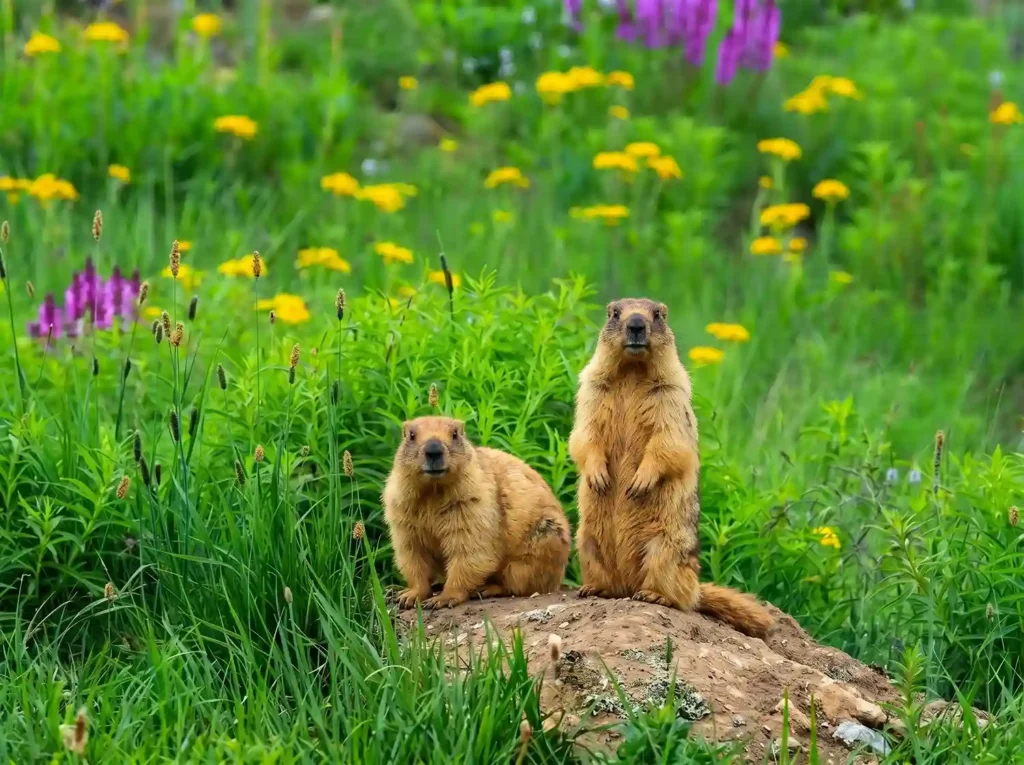
- Marmots and birdlife: Golden marmots are common and easy to photograph; the park also sits inside a recognised endemic bird area, with golden eagles, lammergeiers, and Himalayan snowcocks among the residents
- Genuine remoteness: No shops, no permanent settlements, and for most of the year, no phone signal past Sadpara village
Included
- Private 4x4 transportation from Skardu and back
- Driver and guide assistance for the day
- Trip coordination and basic tour support
Excluded
- Meals and drinking water
- Personal expenses
- Camping equipment, unless separately arranged
- Accommodation
- Park entry fees and any activity permits (fishing, camping), where applicable
- Anything not specifically listed as included in your package
Gallery